
 E-Paper



India gifted Saudi Crown Prince Mohammed Bin Salman Quran verse plaque
Kovind gifted Salman a wooden plaque with one of the most well-known verses, Ayatul Kursi, or also known as the Throne Verse of the Holy Quran engraved on it.


Last week, the Internet was abuzz with details of the gift presented to Saudi Crown Prince and defence minister Mohammed Bin Salman by Pakistan (Senate Chairman Sadiq Sanjrani ) — a gold plated Heckler and Koch machine gun.
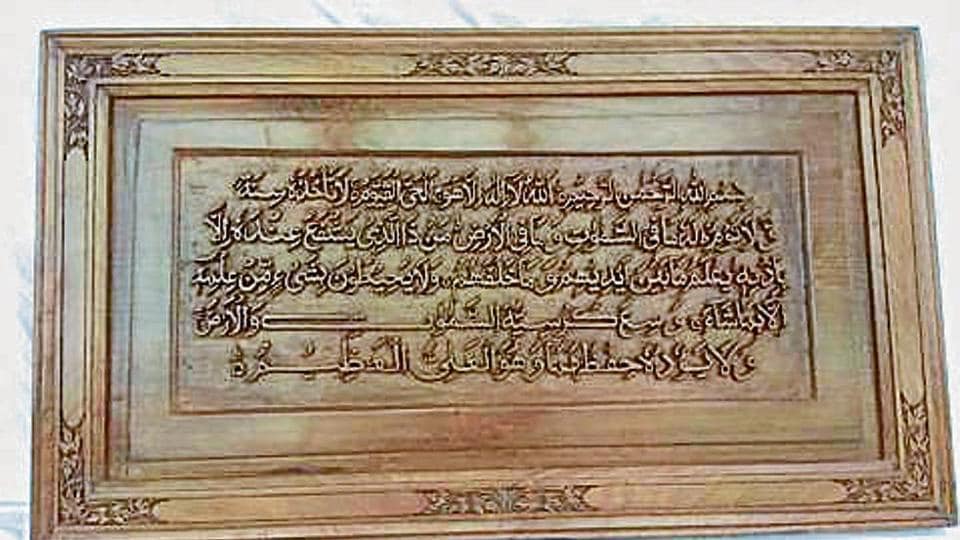
Perhaps so much so, that details of the gift he received from India (from the President Ram Nath Kovind) went unnoticed. Kovind gifted Salman a wooden plaque with one of the most well-known verses, Ayatul Kursi, or also known as the Throne Verse of the Holy Quran engraved on it.
Analysts say visits to high-level visiting dignitaries, including heads of governments is decided by the host country after taking into account the preferences (or likely preferences) of the high-profile guest – but also that they say something about the giver.
This is also true of gifts carried by visiting Indian dignitaries to foreign nations. For instance, Prime Minister Narendra Modi recently presented a Bodhi-tree sapling to the mayor of Gimhae in South Korea during his visit to the country last week. Gimhae and Ayodhya are sister cities. The Buddha attained enlightenment under the shade of a holy Bodhi tree in Gaya (Bihar).
The analysts add that Pakistan’s gift of a gun to Salman isn’t surprising. They point out that the Saudi -Pakistan bromance with Afghan mujahideen and their descendants was bonded by the gun for much of the 1980s and 1990s – till the September 11, 2001 terror attacks in the US.
Last week, in a previously planned visit, Salman visited both India and Pakistan in quick succession, although the meeting came soon after the terror attack in Pulwama, Kashmir by a terrorist owing allegiance to the Pakistan-based Jaish-e-Mohammed terror group.
The Saudi-Pakistan joint statement talked about avoiding politicization of the UN listing regime in the context of Masood Azha, the chief of the proscribed Jaish-e-Mohammed.
The India -Saudi condemned the Pulwama attack and renounced the use of terrorism as an instrument of state policy. The analysts say that the release of 850 Indian prisoners in Saudi Arabia was not on the agenda but the decision still taken in a one-to-one meeting between Modi and Salman.
The analysts also say that one of the key outcomes of the close personal friendship between the Saudi Prince and the Indian Prime Minister PM is the invitation to Foreign Minister Sushma Swaraj to address the Organisation of Islamic Countries’ Council of Foreign Ministers Meeting in Abu Dhabi on March 1-2 as a special guest.
This diplomatic breakthrough has only been achieved due to Modi’s personal relationships with the Crown Princes of the United Arab Emirates and Saudi Arabia, they add.


