
 E-Paper


Rhythma Kaul is the national health editor of the Hindustan Times. She has been reporting on public health, medicine, and medical research, with a particular focus on how government decisions and health system reforms shape people’s lives. Rhythma has over 25 years of journalistic experience. She joined Hindustan Times in 2008, and has since covered everything from pandemics and infectious diseases to cutting‑edge medical research and climate‑related health challenges. Her stories routinely track the work of the Ministry of Health and Family Welfare, department of pharmaceuticals, and key national health programmes, making complex medical science and policy accessible to a wide audience. One of her prominent news breaks has been the 2012 Baby Falak case: A two-year-old brutally battered baby girl was admitted to AIIMS-Delhi with severe head injuries, multiple fractures, human bite marks, and burns. The police investigation revealed this to be a case of multi-state human-trafficking racket. She was profiled by The Wall Street Journal for breaking this story. Rhythma holds a Master’s degree from Jawaharlal Nehru University, Delhi. Prior to Hindustan Times, she worked with the India Today Group. Rhythma can be contacted at rhythma.kaul@hindustantimes.com. Her X handle is @RamblingBrook.
India gives 10 million HPV vaccine doses, covers 87% of target girls in nine months, health ministry
India has administered over 10 million HPV vaccine doses in nine months, covering nearly 87% of the target girls under its nationwide cervical cancer prevention drive.


India has administered more than 10 million doses of the human papillomavirus (HPV) vaccine, covering nearly 87% of the target population, within nine months of launching its nationwide campaign to protect 14-year-old girls against cervical cancer, the Union health ministry said on Saturday.
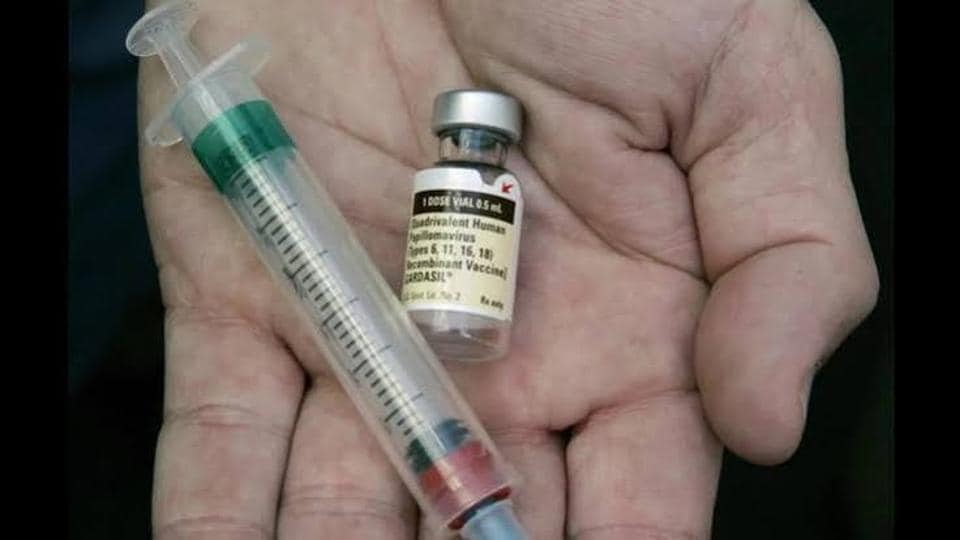
The National HPV Vaccination Campaign, launched by Prime Minister Narendra Modi in February 2026, provides free, voluntary single-dose HPV vaccination to 14-year-old girls at government health facilities across the country, with parental consent. The vaccine protects against HPV infections that can cause cervical cancer, the second most common cancer among women in India after breast cancer.
“India has achieved a major milestone in its efforts to prevent cervical cancer... The achievement marks a significant step towards protecting adolescent girls against HPV infections that can cause cervical cancer and reflects the growing reach of preventive healthcare services across the country,” said the health ministry in a statement.
“The initiative represents a major advancement in India’s preventive healthcare approach, with a focus on safeguarding the health and well-being of future generations of women,” the statement read.
According to data shared by the health ministry, the campaign has achieved nearly 87% cumulative coverage against the identified annual target cohort of approximately 12 million girls, based on the Registrar General of India (RGI) 2021 population estimates.
“Reaching the 10 million-dose milestone within nine months underscores the scale and momentum of the initiative, supported by coordinated efforts of States and Union Territories, healthcare professionals, frontline workers, teachers, parents and local communities,” said the health ministry.
Six states — Gujarat, Uttar Pradesh, Andhra Pradesh, Mizoram, Madhya Pradesh and Bihar — have achieved 100% coverage of their identified target populations under the campaign, data show.
Among other high-performing states, Assam has recorded 95.63% coverage, followed by Telangana (95.28%), Karnataka (93.16%) and Uttarakhand (90.17%).
Chhattisgarh (86.21%) and Rajasthan (85.23%) have crossed the 80% coverage mark, while Kerala (77.02%), Tamil Nadu (76.12%), Odisha and the Union Territory of Dadra and Nagar Haveli and Daman and Diu (72.99%) have achieved more than 70% coverage.
In terms of absolute numbers, Uttar Pradesh leads the country with at least 29.33 lakh 14-year-old girls vaccinated, followed by Bihar with over 13.70 lakh and Gujarat with over 7.75 lakh girls vaccinated.
“The milestone reflects sustained coordination between the Union ministry of health and family welfare and state and Union territory governments, supported by district administrations, public health institutions and frontline healthcare teams who adopted tailored approaches to expand access to vaccination across rural, urban, remote, and geographically challenging areas,” said the health ministry.
In addition, the ministry said that digital health infrastructure has been an important enabler of the nationwide campaign, with the U-WIN platform supporting real-time monitoring and beneficiary tracking.
Cervical cancer remains a significant public health concern and an important cause of cancer-related illness and mortality among women. Persistent infection with certain high-risk types of human papillomavirus is responsible for the vast majority of cervical cancer cases.
HPV vaccination is among the most effective preventive interventions available to reduce the risk of HPV infections that can lead to cervical cancer, experts said.
At least 800 million HPV vaccine doses have been administered worldwide, while nearly two decades of scientific research and real-world experience have demonstrated strong protection against vaccine-targeted HPV infections and associated precancerous conditions, the health ministry said.
“By providing vaccination to girls at the age of 14 years, the campaign seeks to offer protection well before potential exposure to HPV, thereby contributing to the long-term prevention of cervical cancer,” it said, adding that ensuring the safety and well-being of every beneficiary remains a fundamental priority of the campaign.
“With the 1 crore-dose milestone achieved, the Ministry of Health and Family Welfare remains focused on reaching the remaining eligible girls and further strengthening vaccination coverage across all States and Union Territories. The Ministry will continue towards addressing coverage gaps, strengthening awareness, and ensuring equitable access to HPV vaccination,” said the statement.


