E-Paper



India holds talks with Australia to source and process critical minerals
In order to reduce dependence on China for critical minerals and rare earth magnets, India is also working on a two-prong strategy, a senior official said

 Prefer HTon Google


India is in talks with Australia to source and jointly process critical minerals and rare earth materials, two government officials said on Sunday, adding that New Delhi also plans to source raw materials essential for electric motors, smartphones and missile technology from other potential free trade partners such as Chile, Peru and Argentina.
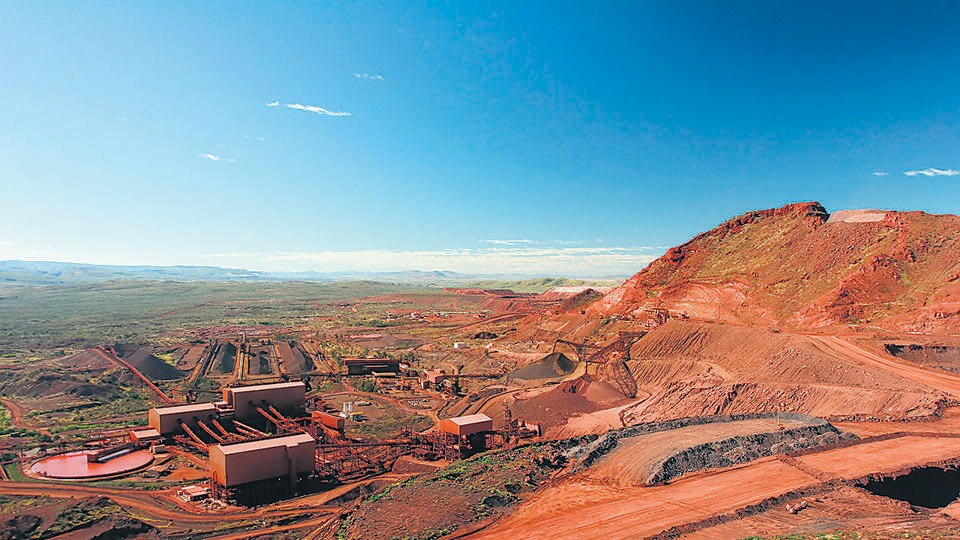
This could be part of India-Australia talks to further expand bilateral economic cooperation, they said requesting anonymity because of the confidential nature of the negotiations. New Delhi and Canberra are currently negotiating a Comprehensive Economic Cooperation Agreement (CECA) to further expand the scope of their recently signed free trade agreement, called the India-Australia Economic Cooperation and Trade Agreement (ECTA). It was signed in 2022.
In order to reduce dependence on China for critical minerals and rare earth magnets, India is also working on a two-prong strategy, a senior official said. The first is to diversify sourcing through trade deals with resource-rich countries like Peru, Chile, and Argentina. The second strategy is to forge alliances with countries having processing technology, for example Japan and Korea, he said.
Also Read | Indian government mulls separate window for critical minerals
South American countries are rich in critical minerals, particularly lithium and copper. India and Chile on May 8 signed the terms of reference for a free trade agreement. India and Peru have been negotiating an FTA since 2017 and have so far held eight rounds of talks.
According to the officials, their FTAs will help in reducing the dependence on Chinese supplies. “We are cognizant of the fact that we have to diversify our import value chains so that dependency on certain countries comes down,” the first official said referring to China. Recently, Beijing put curbs on the supply of critical minerals, including rare earth magnets, due to geopolitical reasons that disrupted production in several sectors across countries. China has a near monopoly in processing and supply of these key items.
“India is also looking to develop its own processing facilities as it also has untapped rare earth reserves,” a second official said. He said India may collaborate with countries like Australia to build a robust supply chain, he added.
Also Read | Quad launches new critical minerals initiative during Washington Summit
Australia’s Critical Minerals Strategy 2023-30 talks about a possible collaboration depending on the mutually beneficial outcome of the CECA negotiations. “Australia is also progressing negotiations with the EU to establish a free trade agreement, and with India on a Comprehensive Economic Cooperation Agreement, both of which will consider critical minerals,” the document said. So far, the two partners have completed 10 formal rounds of CECA talks.
The second official confirmed that the India-Australia critical minerals investment partnership is part of the larger bilateral economic cooperation. “Talks are progressing in a positive direction and both may join hands to produce and process critical minerals as well as rare earth materials, either onshore or offshore, or both,” he said. In an interview published in HT on June 4, Australian deputy prime minister Richard Marles said Australia is hopeful that a CECA would be concluded with India in the “not too distant future” to build on the gains from the ECTA.
Australia has these minerals in abundance, the official said, citing the country’s data. Australian resources include lithium, magnesium, antimony, arsenic, cobalt, gallium, germanium, niobium, silicon, tantalum, titanium, tungsten, vanadium, zirconium and rare earth elements. Rare earth elements include yttrium, lanthanum, cerium, praseodymium, neodymium, promethium, samarium, europium, gadolinium, terbium, dysprosium, holmium, erbium, thulium, ytterbium and lutetium.