E-Paper



On EU official call against India over Russian oil, Jaishankar’s blunt response
India, one of the biggest buyers of Russian crude, ships refined fuel produced from the crude to European states.

 Prefer HTon Google


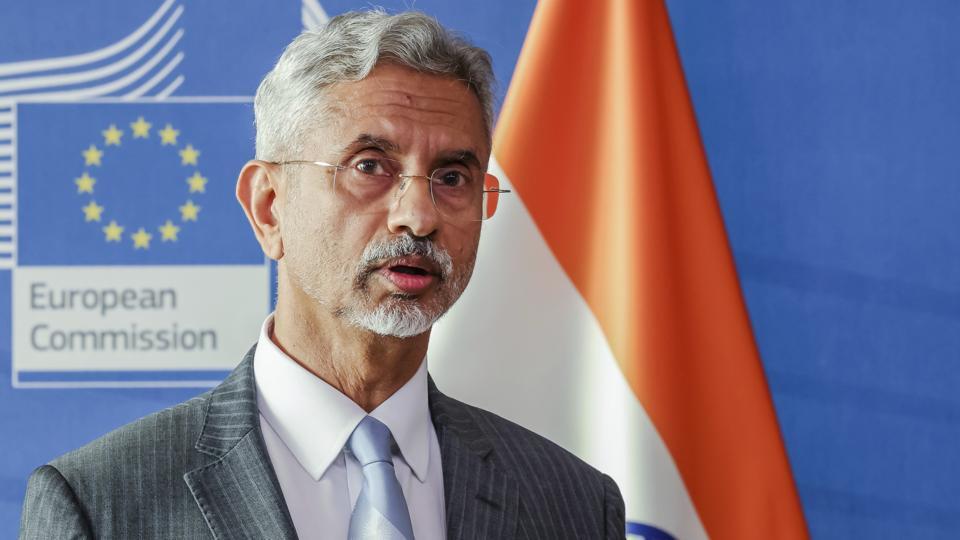
NEW DELHI: India has pushed back against a suggestion by a top European Union (EU) official for a crackdown on Russian oil resold by Indian firms as refined fuels, with external affairs minister S Jaishankar saying such exports don’t violate EU regulations.
EU foreign and security policy chief Josep Borrell said on Tuesday that Brussels is aware Indian refiners are buying large volumes of Russian crude oil and processing it into fuels for sale in Europe. For the first time since India significantly ramped up purchases of discounted Russian oil, Borrell also said the EU should act to stop this practice.
Borrell made the remarks to the Financial Times before he held a bilateral meeting with Jaishankar and participated in the inaugural meeting of the India-EU Trade and Technology Council in Brussels. Jaishankar pushed back against the suggestion while addressing a joint news conference with senior EU officials.
Asked about Borrell’s remarks by a reporter, Jaishankar replied: “I really don’t see the basis for your question because my understanding of the [European] Council regulations is that if Russian crude is substantially transformed in a third country, then it’s not treated as Russian any more.”
He added, “I would urge you to look at Council regulation 833/2014.”
This regulation, which is part of measures put in place by the EU to restrict Russia’s earnings from crude oil following the invasion of Ukraine, bans the import of crude oil and petroleum products originating in Russia.
European Commission executive vice-president Margrethe Vestager, who also addressed the news conference, said: “There is...no doubts about the legal basis of the sanctions. Of course, it is a discussion that we will have with friends but it will be with an extended hand and...not with a pointed finger.”
Borrell earlier told the Financial Times that if diesel or gasoline is entering Europe from India “and being produced with Russian oil, that is certainly a circumvention of sanctions and member states have to take measures”.
India is currently one of the biggest buyers of Russian crude. The sale of refined fuels produced from the crude to European states is legal under EU embargoes but has been criticised by those backing harsher sanctions against Russia.
At his bilateral meeting with Jaishankar, Borrell reiterated the EU’s “unwavering resolve” to support Ukraine, including efforts to “secure a comprehensive, just and lasting peace based on the UN Charter”.
According to an EU readout, Borrell recalled the bloc’s commitment to addressing the global consequences of “Russia’s war of aggression against Ukraine, focusing on food security”. He asked Jaishankar “for India to support Ukraine’s peace initiative, and to urge Russia to agree on the crucial extension of the Black Sea Grain Initiative”.