
 E-Paper



India slams Pakistan over deadly crackdown on protesters in PoK
The remarks came after more than 27 people were killed and several others injured in clashes between protesters and security forces in different parts of PoK.

 Prefer HTon Google


India on Tuesday sharply criticised Pakistan over reports of deadly violence in Pakistan-occupied Kashmir (PoK), accusing Islamabad of attempting to conceal its failures through a campaign of misinformation and calling on the international community to hold it accountable for alleged human rights abuses. The remarks came amid escalating unrest in PoK, where clashes between protesters and security forces have left several people dead — raising further questions also over Pak Army chief Asim Munir's Kashmir dreams.
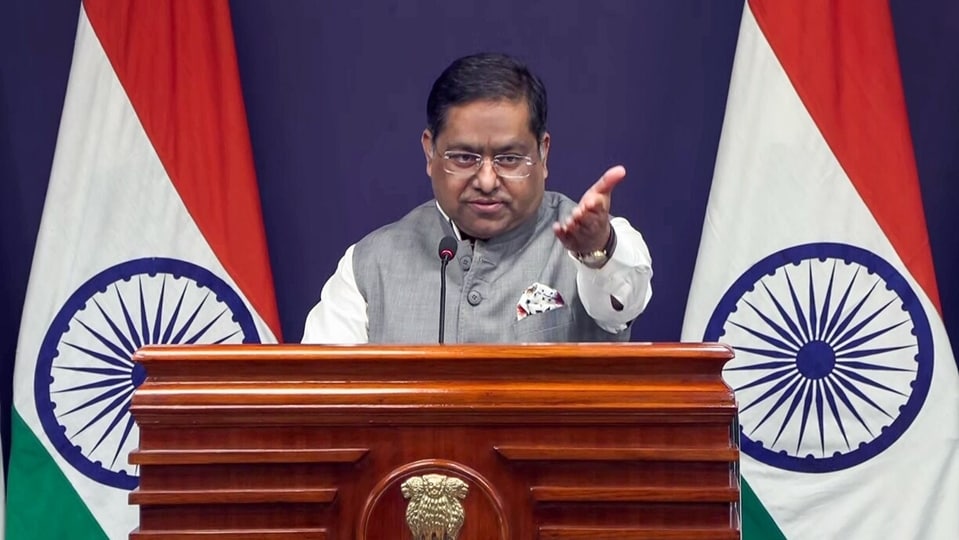
Addressing a weekly media briefing, Ministry of External Affairs (MEA) spokesperson Randhir Jaiswal said Pakistan was resorting to "fake news and videos" to divert attention from developments in the region.
ALSO READ | Pak-occupied Kashmir has erupted over a ban. Pakistani forces fire tear gas, shutdown continues
"We continue to see in this context a pattern of fake news and videos emanating from Pakistan. It is a desperate attempt by Pakistan to cover up its own failings and deflect attention away from its human rights abuses," Jaiswal said.
"There are reports of severe police brutality in Pakistan-occupied Kashmir in which several protestors have been killed and many injured. We hope the international community will hold Pakistan accountable for its misdeeds and abuses," he added.
Ban on JAAC sparks fresh unrest in PoK
The latest wave of violence was triggered after the PoK administration on June 6 banned the Joint Awami Action Committee (JAAC) under anti-terrorism laws. The JAAC, formed in September 2023, is a coalition of traders, transporters, lawyers and student groups that has emerged as the main platform for public protests in the territory.
The organisation had called for a region-wide shutdown and a long march on June 9 to press a 38-point charter of demands. Among its key demands is the abolition of 12 seats in the PoK Assembly reserved for refugees from Jammu and Kashmir. The JAAC argues that these seats enable Pakistani political parties to influence government formation in Muzaffarabad.
Tensions escalated further after a trader was allegedly shot dead during a confrontation with police on the night of June 6, triggering widespread anger and protests across the region.
In a video message issued before the planned shutdown, JAAC central leader Shaukat Nawaz Mir accused authorities of using excessive force against protesters.
"The state has begun a massacre of our people in Rawalakot," Mir said, vowing to continue the movement despite the ban on the organisation. He warned that if the crackdown, arrests and alleged harassment did not stop before June 9, the territory-wide shutdown and wheel-jam strike would be brought forward and enforced immediately.
ALSO READ | Canada issues travel advisory for PoK
Rawalakot becomes epicentre of clashes
The deadliest violence was reported from Rawalakot in Poonch district on June 8, when security forces confronted JAAC supporters gathered around a hospital mortuary and attending funerals for those killed in earlier clashes.
The unrest quickly spread to several towns, including Muzaffarabad, Mirpur, Bhimber, Kotli, Tata Pani and Plandari, with reports of strikes, demonstrations and confrontations with security personnel.
Pakistani officials have said at least 11 people — seven civilians and four law enforcement personnel — were killed in the violence. However, the JAAC has claimed that at least 27 people died, while several Indian media reports have put the death toll at more than 30.
Official figures put the number of injured at over 70, including 23 police personnel. The JAAC and Indian media reports have estimated the number of injured at around 200. Around 30 people were reportedly detained during overnight operations on June 8.
ALSO READ | ‘Organised factory of hate’: India blasts Pakistan at UN over ‘Fitna al-Hindustan’ designation to groups
Opposition groups accuse Pakistan of military build-up
The unrest has also prompted strong reactions from political groups in the region.
Mahmood Kashmiri, chairman of the Jammu and Kashmir National Independence Alliance, accused Pakistan of deploying thousands of security personnel into PoK and carrying out what he described as massacres against local residents.
He appealed to local Kashmiri police personnel to continue performing their duties and resist pressure to stand down until Pakistani forces withdrew from the region. Kashmiri also alleged that large quantities of weapons and armed individuals had entered PoK from Pakistan and claimed that local youth had intercepted two vehicles allegedly carrying weapons.
The allegations could not be independently verified by Hindustantimes.com.
Internet curbs, restrictions imposed ahead of polls
Authorities have imposed sweeping restrictions across PoK in response to the unrest. Mobile data and internet services have been suspended, public gatherings prohibited and the JAAC's central office sealed.
Reports also indicate that tourists have been advised to leave the region by June 20 as security measures are tightened.
The unrest comes less than two months before elections scheduled for July 27 and follows earlier episodes of violence and protests in May 2024 and September-October 2025.
India seeks international attention over PoK crackdown
Against this backdrop, India renewed its criticism of Pakistan's handling of the situation and urged the international community to take note of the developments.
Jaiswal said the reports emerging from PoK pointed to a pattern of human rights abuses and excessive use of force against protesters.
India has repeatedly raised concerns over the situation in Pakistan-occupied territories and on Tuesday reiterated its demand that Islamabad be held accountable for alleged abuses and violations of fundamental rights in the region.


