E-Paper



India urges restraint, avoiding escalation as the US and Israel attack Iran
New Delhi’s response came hours after the US and Israeli military targeted Tehran and other cities in Iran, drawing retaliation


India urged all stakeholders in West Asia on Saturday to exercise restraint and avoid escalation in the aftermath of US and Israeli attacks on Iran, calling for dialogue and diplomacy to address underlying issues while emphasising the importance of respecting sovereignty and territorial integrity of all states.
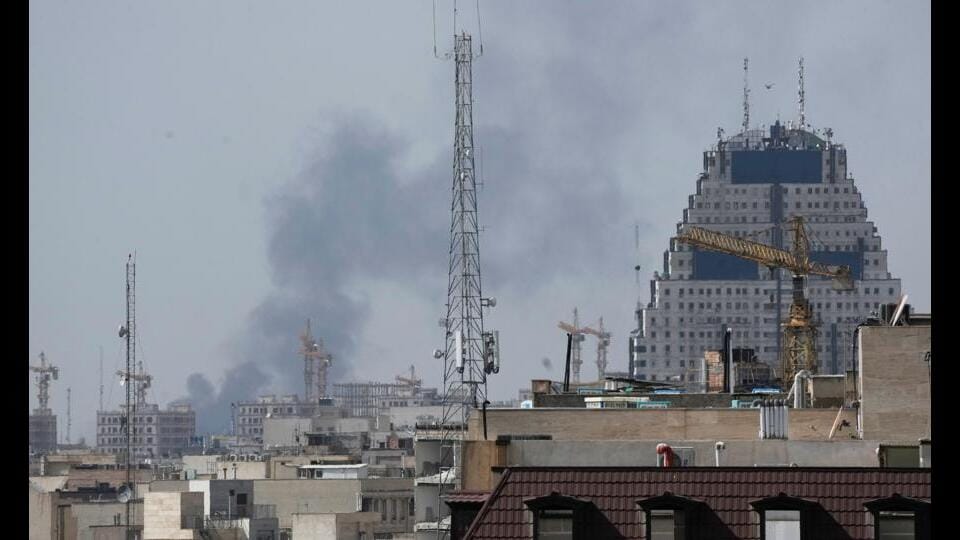
New Delhi’s response came hours after the US and Israeli military targeted Tehran and other cities in Iran, drawing retaliation from the Islamic Revolutionary Guard Corps, which fired missiles and drones at Israel and military facilities in Bahrain, Jordan, Kuwait, Qatar and the United Arab Emirates used by the US military. Follow LIVE updates on the US-Iran conflict here
The external affairs ministry expressed deep concern at recent developments in Iran and the Gulf region and said in a statement: “We urge all sides to exercise restraint, avoid escalation, and prioritise the safety of civilians. Dialogue and diplomacy should be pursued to de-escalate tensions and address underlying issues.
“Sovereignty and territorial integrity of all states must be respected,” the statement added.
Indian missions in the region are in touch with Indian nationals and have issued advisories asking them to remain vigilant, stay in contact with the embassies and follow local security guidance, the statement said.
External affairs minister S Jaishankar also spoke with his Israeli and Iranian counterparts and conveyed India's concerns over the hostilities and pushed for dialogue and diplomacy.
“Reiterate India’s call for dialogue and diplomacy to de-escalate tensions,” Jaishankar said on social media after his phone call with Israeli foreign minister Gideon Sa’ar.
“Shared India’s deep concern at the recent developments in Iran and the region,” Jaishankar said in a social media post after speaking with Iranian foreign minister Seyed Abbas Araghchi on Saturday evening.
Jaishankar also spoke with Bahrain’s foreign minister Abdullatif bin Rashid Al Zayani, Qatari foreign minister Sheikh Mohammed bin Abdulrahman bin Jassim Al Thani, UAE foreign minister Sheikh Abdullah Bin Zayed Al-Nahyan and Kuwaiti foreign minister Sheikh Jarrah Jaber Al-Ahmad Al-Sabah and discussed the situation in the region and the welfare of Indian nationals.
Jaishankar said he appreciated the assurances from his counterparts regarding the well-being of the Indian community.
The attacks came two days after Prime Minister Narendra Modi completed a visit to Israel, during which he held talks with his counterpart Benjamin Netanyahu. At a joint media interaction with Netanyahu on Thursday, Modi had said that peace and stability in West Asia are “directly linked to India’s security interests”.
India has supported dialogue and a peaceful resolution of issues from the beginning, and this is also the call of the Global South and humanity, he said. Modi also reiterated India’s support for the Gaza Peace Plan, which has opened a pathway towards peace.
The Indian side has had to maintain a balance between its growing security and strategic relations with Israel, which is home to some 40,000 Indian workers, and its long-standing dependence on West Asian countries for energy and commerce. More than 10 million Indians live and work in West Asian countries, and are a source of billions of dollars in remittances. Iran too is home to close to 10,000 Indians, including students and professionals.
Indian missions in Bahrain, Israel, Iraq, Jordan, Kuwait, Oman, Qatar, Saudi Arabia, Syria and the United Arab Emirates issued advisories urging Indian citizens to be cautious and to avoid unnecessary travel. The embassy in Jordan also advised Indian tourists to leave the country immediately before commercial flights get disrupted.
People familiar with the matter said the Indian side is keeping a close watch on the situation and will take appropriate action to secure Indian nationals. There were, however, no immediate plans to evacuate Indians from the region, though authorities are prepared for all contingencies, they said.