E-Paper



‘India’s action on climate is already impressive’: British High Commissioner
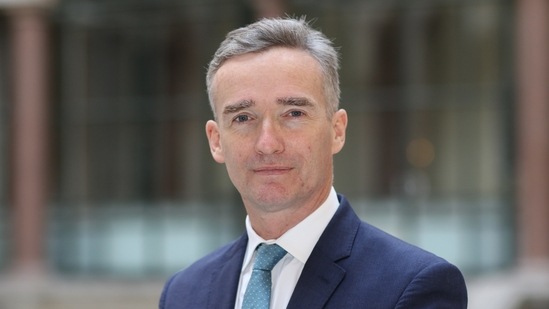
British High Commissioner to India Alex Ellis says the joint initiative of India and the UK will help develop a more interconnected grid that enables the sun to become a secure and reliable source of energy


The joint initiative of India and the UK, dubbed the Green Grids Initiative – One Sun One World One Grid, is one of the biggest announcements expected at the United Nations climate summit in Glasgow. The initiative will stimulate green investments and create green jobs, Alex Ellis, British High Commissioner to India, said in an interview to Jayashree Nandi. Edited excerpts:
The UK is the host of the climate summit. It’s the most important climate conference, after Paris in 2015. What are your expectations?
The international scientific consensus is that the world is running out of time to avert great harm to ourselves and our planet through climate change. The COP26 summit is our last best chance to avert this by putting the world on the path to limiting global warming to 1.5 degrees.
The UK, as hosts of COP26, is asking all countries together to keep the path to 1.5 degrees alive, enhancing their emissions targets for this decade and setting out long-term strategies... We also want to ensure that countries are supported in adapting to climate change and that developed countries deliver climate finance, and technology flows to support green economic transformation in developing countries.
Glasgow’s success is India’s success and the world’s success.
How are the UK and India collaborating ahead of COP26?
The UK and India work closely on climate change. It’s one of the five pillars of the India-UK 2030 Roadmap agreed by prime ministers Narendra Modi and Boris Johnson in May this year. India’s action on climate is already impressive, with wind and solar capacity quadrupling in the last decade and the PM’s recent announcement of the new National Hydrogen Mission.
The UK is investing in India’s renewable and clean transport sectors, including through our joint Green Growth Equity Fund. We have joint research and innovation partnerships to develop the next generation of solar buildings and energy efficiency solutions.
We are working not just bilaterally but also to support other countries adapt to and reduce climate change, through the International Solar Alliance and Coalition for Disaster Resilient infrastructure, both launched by India.
One of the major initiatives at COP26 will be the UK and India’s green grids initiative. Could you share some details about it?
The Green Grids Initiative is due to be launched by our two prime ministers during the World Leaders Summit at COP26. The objective is to help develop a more interconnected grid that enables the sun to become a secure and reliable source of energy for all. These efforts will stimulate green investments and create green jobs.
There is a lack of trust among developing countries like India because the promised $100 billion a year climate finance has not come through. Yet, at the same time, developing nations are being expected to commit to net-zero emissions targets. What are your thoughts on this trust deficit?
The UK agrees that the goal of securing $100 billion is a priority to help developing countries grow in a clean way, and to protect those affected by climate change. We have led by example, doubling our international climate spend to at least £11.6 billion between 2021-25. We now have pledges by major developed countries like the US, Germany, Canada, Japan, Denmark, Sweden, and New Zealand, as well as the European Union, among others. The UK COP26 presidency have recently published a delivery plan, which shows that developed countries will make significant progress towards the $100 billion goal in 2022 and provides confidence that it will be met in 2023. The data also provides confidence that developed countries can mobilise more than $100 billion per year thereafter through to 2025.