
 E-Paper



Covid-19: Infections with no symptoms raise concerns across states
An analysis by HT found that 65% of Maharashtra’s 3,648 cases and 75% of Uttar Pradesh’s 974 cases did not show symptoms at the time of testing.

 Prefer HTon Google


Roughly two-thirds of all Covid-19 cases in 10 major states comprise people who did not show any symptoms at the time of testing, according to state government data that reinforced growing evidence that “silent spreaders” were possibly unknowingly infecting others, and underlined the need for extensive testing to isolate such patients.
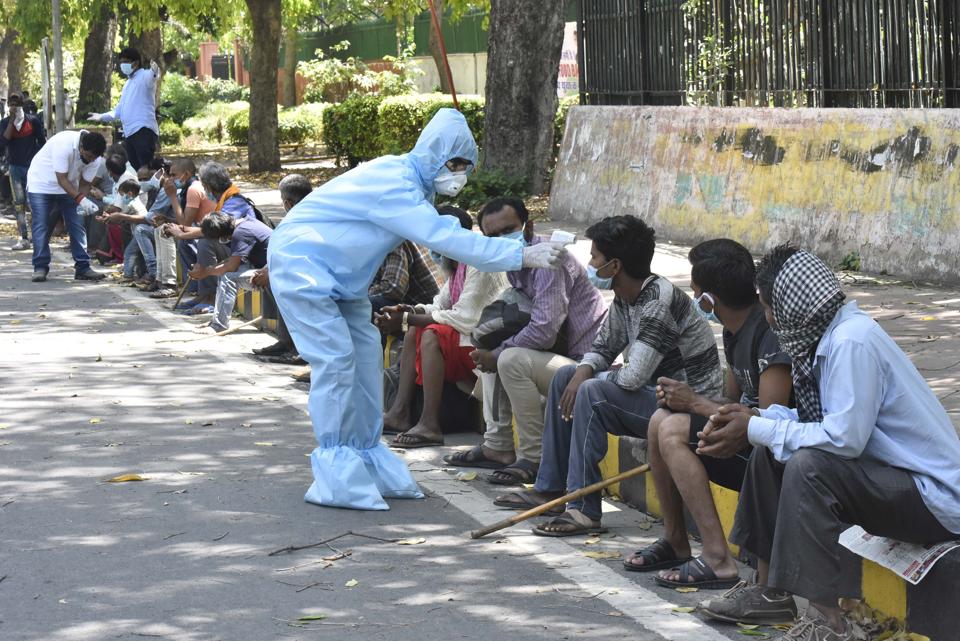
An analysis by HT found that 65% of Maharashtra’s 3,648 cases and 75% of Uttar Pradesh’s 974 cases did not show symptoms at the time of testing.
In Assam, 82% of 34 cases were of people with no symptoms “They didn’t show any of the typical symptoms associated with the disease during treatment,” health minister Himanta Biswa Sarma said on Saturday.
In Delhi, chief minister Arvind Kejriwal said on Sunday that all 186 people diagnosed with Covid-19 the previous day had exhibited no symptoms of illness.
”Most of the Covid-19 positive cases in Haryana are asymptomatic,” Dr Suraj Bhan Kamboj, nodal officer for Covid-19 in Haryana, said.

To be sure, these numbers could include people who were both asymptomatic and pre-symptomatic, which means that a person was tested before they started showing symptoms.
Doctors said exhibiting symptoms of Covid-19 depended on the virus load, age and immunity. “If the load is not very high and virus is not virulent, the symptoms may not be there. But, it can be detected through test,” Kamboj added.
Dr C Nagaraja, director of the Rajiv Gandhi Institute of Chest Diseases in Bengaluru, said younger people with good immunity may not show any signs of Covid-19 and that most asymptomatic patients were between 20 and 45. “Even older persons taking certain medicines may not show any signs initially. Those with weak immunity and co-morbid conditions show Covid signs faster,” he said.
Globally, research has shown that people remain very infectious in the period before they show symptoms. In central Kerala’s Pathanamthitta district, a woman student who travelled with some members of the Tablighi Jamaat remained asymptomatic for 22 days while under observation but showed signs towards the end of the observation period, said district medical officer, Dr N Sheeja.
Identifying such people is difficult unless extensive testing is done, say experts, and the numbers are expected to rise because rapid and pool testing mechanisms have been introduced by most states. In rapid test, a person’s blood is tested for Covid-19 antibodies, whose presence indicates that the person was infected by the virus and is now immune. In pool testing, samples of up to 64 people are tested together. If the combined test is positive, then all persons are individually tested to identify Covid-19 patients.
Internationally, countries such as South Korea and China, where the number of Covid-19 have declined, started identifying the asymptomatic carriers early. In China, reports say around 43,000 asymptomatic persons have been identified and isolated. Similarly, in South Korea, more than 30,000 such people were traced, local reports said.
Dr. Karan Peepre, medical superintendent, AIIMS, Raipur, said the only way to deal with asymptomatic people is quick identification through massive testing and isolation. Uttar Pradesh health secretary Amit Mohan Prasad said identifying hot spots was crucial to prevent the spread by disease by symptom-free patients.
Andhra Pradesh Covid nodal officer, D Arja Sreekanth, said the state is conducting door-to-door survey to identify such patients. “We are also testing all those above 60 years having co-morbid issues like diabetes, hypertension, past history of tuberculosis etc, though they might not have Covid-19 symptoms,” he said.
Some experts, however, said asymptomatic patients are not a big threat if the chain of transmission is broken and the ongoing lockdown is an effective way to do that. “Lockdown is effective in breaking the (transmission) chain,” said Balram Bhargava, head of the Indian Council of Medical Research.
(with inputs from state bureaus)


