
 E-Paper





Follow the latest breaking news, major developments and agenda-setting stories from India and around the world with the newsdesk at Hindustan Times. Operating round the clock, the desk brings together experienced editors, reporters and correspondents to deliver fast, accurate and contextual reporting across subjects that influence public policy, governance, business, society and international affairs. The HT News Desk covers politics, elections, government policies, the economy, business and markets, science and technology, the environment, law and order, infrastructure, education, climate issues and geopolitics, while closely tracking developments across states, institutions and global capitals. The team also leads coverage of major breaking news events, policy announcements, court proceedings, natural disasters, public emergencies and significant international developments. Reports published by the newsdesk are based on information gathered from reporters on the ground, official statements, government agencies, court records, regulatory filings, recognised institutions and other authoritative sources. Stories undergo editorial scrutiny and verification processes to ensure accuracy, fairness and relevance, and are updated as events evolve and additional information becomes available. Whether covering a key political decision in New Delhi, an economic policy shift affecting millions, a landmark court ruling or a major global event, the HT News Desk aims to provide readers with reliable, fact-based journalism that delivers not only the latest developments but also the context and analysis needed to understand their wider implications.
SpiceJet’s Kabul flight intercepted by Pak’s F-16 jets due to ‘misunderstanding’
One official said Pakistani authorities mistook the SpiceJet flight for a military aircraft. The airliner was intercepted by two F-16 jets and escorted for almost half an hour.


A SpiceJet flight from New Delhi to Kabul with 120 people on board was intercepted last month by Pakistani fighter jets due to a misunderstanding, officials of the Directorate General of Civil Aviation (DGCA) said on Thursday.
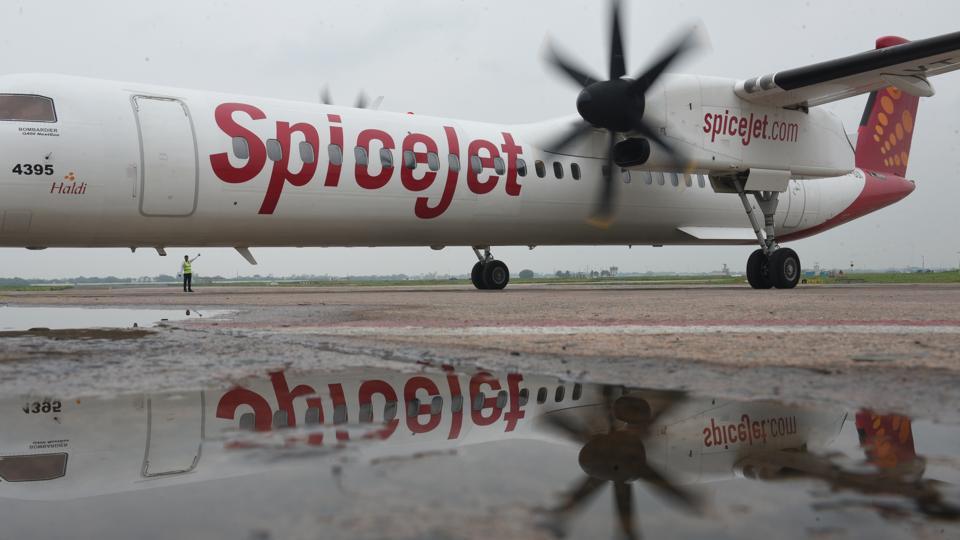
The “call sign” assigned to the Boeing 737 resulted in confusion about whether it was a military or civilian aircraft, said the officials who declined to be named. The incident, which occurred on September 23, ended with the Pakistan Air Force jets escorting the SpiceJet flight out of Pakistani airspace.
One official said Pakistani authorities mistook the SpiceJet flight for a military aircraft. The aircraft was intercepted by two F-16 jets and escorted for almost half an hour.
“There was confusion about whether it was a civilian or a military aircraft,” the official said. “We cannot give details as it is a sensitive matter pertaining to a bilateral relationship.”
SpiceJet didn’t comment on any aspect of the incident and there was no word from the external affairs ministry.
One report said that the 120 passengers that were on board could see the accompanying Pakistan aircraft but were told to shut their windows. While the return flight was delayed due to the confusion, the DGCA official confirmed that the flights to Kabul are running normally now. Spicejet flies daily to the Afghanistan capital.
Pakistan closed its airspace to flights originating from or transiting through India after the air strikes on a Jaish-e-Mohammad (JeM) facility at Balakot on February 26 but it subsequently eased these restrictions for all civilian flights. At the time of the incident, there were no restrictions in place for Indian airlines.
During the incident, the F-16 jets flanked the airliner and asked its pilot to decrease its altitude. The F-16s escorted the flight out of Pakistani airspace after the confusion was sorted out.
Last month, Pakistan had refused to allow special flights carrying Prime Minister Narendra Modi and President Ram Nath Kovind to allow its airspace following India’s decision to revoke Jammu and Kashmir’s special status.


