
 E-Paper



Jamaat-e-Islami behind the pandal violence in Bangladesh, say officials
According to diplomats in Dhaka and New Delhi, there were attacks on mandaps, pandals and temples in Cumilla, starting the afternoon of October 13 after rumours started circulating that a copy of the Quran was placed near the feet of the idol of Durga at a pandal.

 Prefer HTon Google


The needle of suspicion for the violent attacks against Durga Puja pandals in southern Bangladesh points towards the Jamaat-e-Islami (JEI), people familiar with tyhe matter said, with the motive being to embarrass the Sheikh Hasina government and stoke communal fires over the alleged desecration of the Quran in Cumilla, southeast of Dhaka.
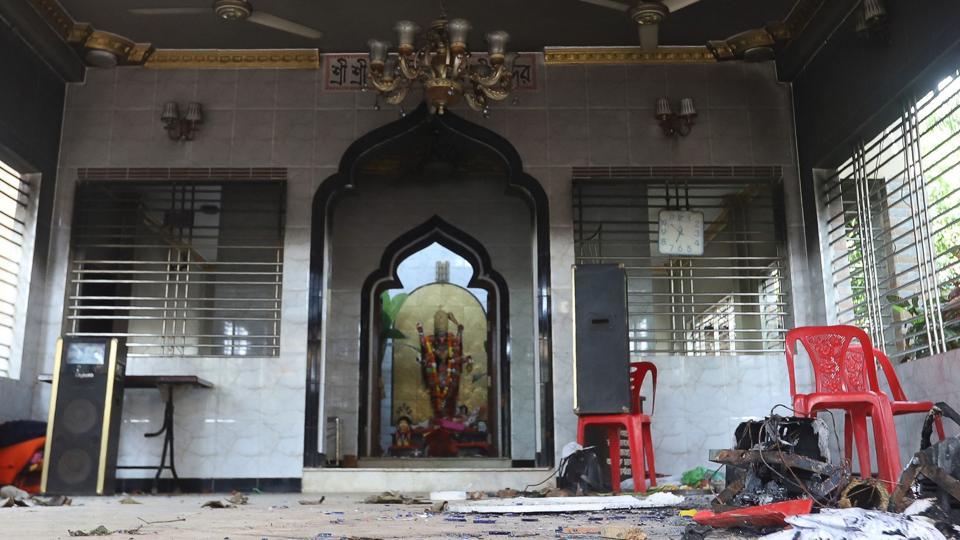
According to diplomats in Dhaka and New Delhi, there were attacks on mandaps, pandals and temples in Cumilla, starting the afternoon of October 13 after rumours started circulating that a copy of the Quran was placed near the feet of the idol of Durga at a pandal. There are more than 3,000 pandals in Bangladesh observing Durga Puja, one of the biggest festivals on both sides of the border in Bengal -- in Bangladesh as well as West Bengal.
As the news spread through digital media, there were violent attacks on pandals in Noakhali, Chandpur, Cox’s Bazaar, Chattogram, Chapainawabganj, Pabna, Moulvibazara and Kurigram. However, there were none in Dhaka, Brahmanbaria, Jashore and other major cities.
The police were initially slow to react but after the high commissioner of India spoke to the government, there was heavy deployment of armed police and local enforcement agencies. Three people, including two of those involved in the attacks, were killed in Chandpur and dozens were injured after the forces fired with rubber bullets in Cumilla.
While Dhaka has ensured that heavy police deployment will continue till Friday, when the Durga Puja ends, it is quite evident that communal flames were being fanned by the opposition JEI, which, analysts say, has been encouraged by the Taliban taking over Afghanistan. JEI coined the slogan “ Bangladesh Banega Afghanistan” in a bid to radicalise the youth towards ultra-conservative Islam to achieve political objectives.
“The basic idea behind October 13 incident was to embarrass Bangladesh’s government and force a reaction from India,” said a diplomat based in Dhaka. The Jamaat thrives on radicalised youth to oppose the Sheikh Hasina government and is networked with other pro-Taliban outfits in Bangladesh, this person added.


