
 E-Paper



JD(U) goes on overdrive to highlight Nitish Kumar work for women empowerment
JD(U) leaders have been highlighting Kumar’s initiatives amid a battle for credit for the legislation to reserve a third of seats in Lok Sabha and state assemblies for women

 Prefer HTon Google


Bihar’s ruling Janata Dal (United) or JD(U) has gone on an overdrive to highlight chief minister’s Nitish Kumar work for the empowerment of women amid a battle for credit for the landmark legislation tabled in parliament on Tuesday to reserve a third of seats in Lok Sabha and state assemblies for them.
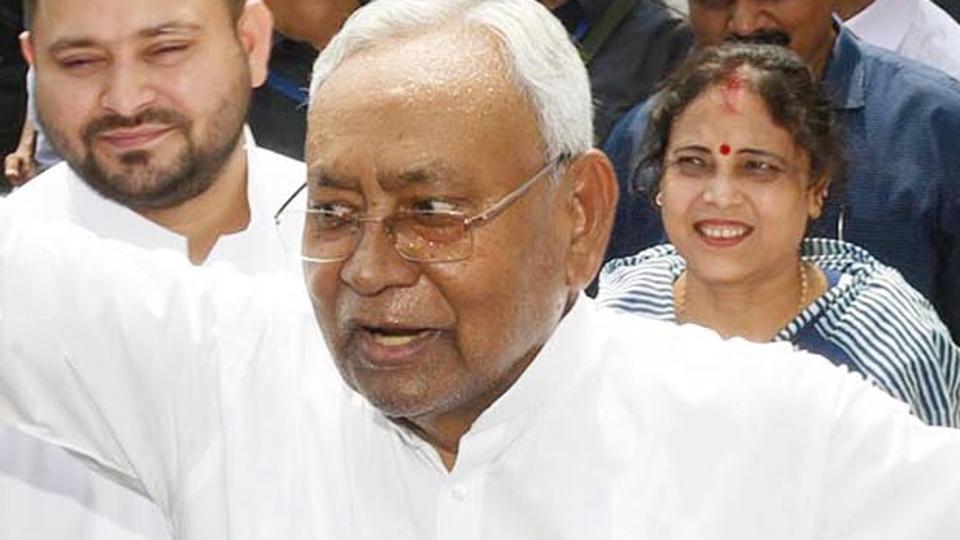
JD(U) leaders have been highlighting on social media Kumar’s initiatives since 2005 when he was first voted to power.
Kumar, who welcomed the introduction of the bill even as Opposition parties have criticised the absence of a timeline for the implementation of the reservation, said on Wednesday said his government implemented the 50% quota for women in Panchayats in 2006. “...in 2007, the quota was extended to urban local bodies and later to jobs. The number of women in the workforce in Bihar is the highest in the country,” he said.
Bihar was the first state to provide the 50% quota, which has ensured a greater participation of women in the grassroots democracy.
Kumar’s move to impose prohibition in the state has been credited for consolidating his support base among women. JD(U), which has a limited core support base, has remained in power for over 15 years. Caste-neutral women supporters are believed to have played a key role in it.
In the 2020 assembly election, woman voters outnumbered men by 5%. The voting percentage of men was 54.68% while that of women was 59.69%. In the 2019 Lok Sabha elections, 60% of the eligible women voted. The overall voting was 57.46%.
Former AN Sinha Institute of Special Studies director of DM Diwakar said even in the remotest corners of the state, girls can be seen cycling to schools, colleges, and coaching institutes. “The biggest change is that they now dream and strive to realise their dreams. This change in mindset is the biggest achievement of Kumar even though he may not have reaped the political dividends in the same proportion.”
He said Kumar’s model of inclusive development has led to gender parity at the secondary school level. He said the number of girls taking secondary school exams has gone up five times since 2005-06. Diwakar said girls’ education also has helped population control. “[There is] a direct link between fertility rate and education levels.”
Diwakar said ₹25,000 is paid to girls for passing matriculation and ₹50,000 for completing graduate studies.
Bihar minister Sanjay Jha said be it the scheme under which a girl gets over ₹1 lakh from cradle to college, the creation of nearly 1.1 million self-help groups involving 13 million women, 50% reservation for women in panchayats and educational institutions, and 35% quota in the government jobs, women have been at the forefront of Kumar’s government’s policies.
“Women are today at the forefront in Bihar...Kumar started working for their empowerment without politics. They are in the police, administration, education, panchayats, and everywhere...making their presence felt. Their empowerment is getting reflected through the statistics.”
Jha said women are the real change-makers. “Everyone will acknowledge it sooner or later. It could happen because Kumar never saw it from the political prism. He believed women-led development is the key and worked on it,” said Jha.
Education for women has been incentivised and made free up to the post-graduation level. Female literacy in Bihar went up from 37% in 2005-06 to 60% in 2015-16 even though it is still the lowest in the country.


