
 E-Paper



Korea and Spain defence majors ready to participate in 75 (I) submarine project
South Korean Daewoo and Spanish Navantia have proven air independent propulsion technology and are willing to build long endurance submarines under strategic partnership model with Indian MDL and L&T defence majors.

 Prefer HTon Google


Even though the Defence Ministry has again extended the deadline for submitting the Request for Proposals (RFP) for the advanced submarine project to November 30, South Korean Daewoo and Spanish Navantia has shown interest in building the long endurance diesel submarine under the strategic partnership model with India. The RFP was first issued in July 2021 and extended to November 30, 2022, from June 30, 2022, deadline.
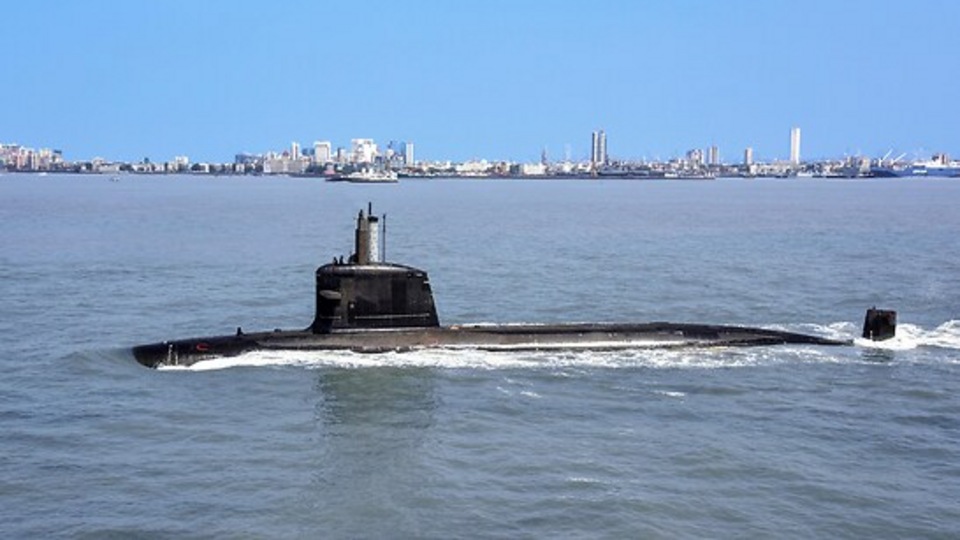
The decision to extend the deadline was taken as certain clauses relating to “joint and several penalties” needs to be amended in the RFP document. The amended clauses will be taken up by the Defence Acquisition Committee (DAC) for approval shortly. Under the strategic partnership model, India has identified Mazagoan Docks Limited (MDL) and Larsen & Toubro (L&T) to tie up with foreign defence majors in South Korea, Spain, Germany, France, and Russia to build six air independent propulsion (AIP) diesel attack submarines for the Indian Navy at the cost of over ₹40,000 crore.
As of now, South Korean Daewoo Shipbuilding and Marine Engineering and Spanish company Navantia, who have proven AIP technology has shown interest in building the submarines under Project 75 India of the Indian Navy.
While the national security planners had considered to extend the on-going Project 75 diesel attack submarine project by extending the production line at MDL to three more submarines, the move was over-ruled in favour of the fuel-based AIP project as the latter have higher endurance and more potent.
In layman terms, a diesel attack submarine must come to surface once a day to charge its diesel batteries, while the AIP submarine must surface once a week to do the same. Hence, the AIP equipped submarine with land attack ballistic missile onboard is a more potent weapon in equatorial waters due to lateral inversion in the tropics.
While French Naval Group, Russian Rosoboronexport and TKMS Germany have not shown interest with French now focusing on nuclear powered sub-surface platforms and Germany using latest lithium cell technology, the South Korean and Spanish defence majors are keen to participate in the project.
The South Korean defence major Daewoo has already commissioned the first AIP equipped submarine Dosan Ahn Changho in 2019, while Spanish Isaac Peral was launched in April 22, 2021 at Cartagena Shipyards. Both the submarines have land attack missiles including ballistic and cruise missiles on board.
The Indian Defence Research and Development Organization (DRDO) has also developed the AIP technology and will be retrofitted on Project 75 submarines when they come for mid-life upgrade. The first of the six indigenous Scorpene class submarine, INS Kalveri, was commissioned in the Indian Navy in 2017. Three more have been commissioned in the Indian Navy since then.


