
 E-Paper



Longer lockdown period may help curb spread
India first clamped the curbs on March 25, and the lockdown will now be 41-days long by the time the government is ready to lift it. Prime Minister Narendra Modi on Tuesday said the country needed more time to contain the disease.


India extended its ongoing 21-day lockdown to May 3 on Tuesday, and indicated that if the spread of Covid-19 was contained in the next week, relaxations could be in the offing.
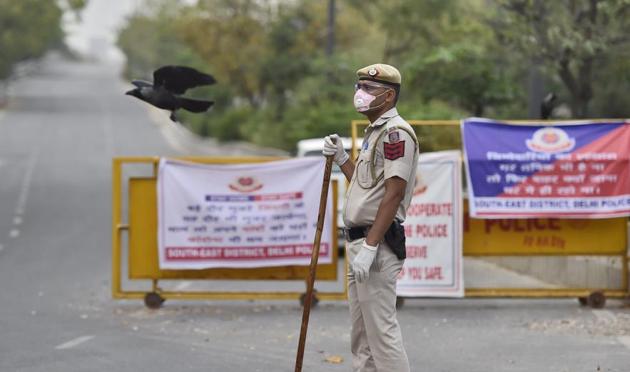
India first clamped the curbs on March 25, and the lockdown will now be 41-days long by the time the government is ready to lift it. Prime Minister Narendra Modi on Tuesday said the country needed more time to contain the disease.
A similar prediction was made in a modelling study by two researchers at the University of Cambridge two weeks ago. The paper, based on mathematical modelling of disease and demographic data, suggested that one 21-day lockdown period was inadequate to reverse the rise in Covid-19 cases.
The researchers found that while the 21-day lockdown led to an immediate decrease in the number of cases, the number rose after the curbs were lifted. A second scenario where a 28-day lockdown was imposed after five days of relaxations also showed that the number of infected people increased once the second set of restrictions were lifted.
The researchers found that in two scenarios, the rate of new infections could be contained. The first was three consecutive lockdowns of 21 days, 28 days and 18 days with a difference of five days between them. The other was a single lockdown of 49 days.
“The study highlighted the need to think of long-term containment strategies because our study showed that the rate of infection was steeper than the rate of recovery,” said Ronojoy Adhikari, one of the authors of the paper.


