
 E-Paper



Madras HC directs pending Pocso cases to be revised; bans 2-finger test
A special bench of the Madras High Court has called for the replacement of the two-finger test and potency test in cases of sexual assault. The court also directed the police chief to identify consensual relationships in pending cases under the Protection of Children from Sexual Offences Act.

 Prefer HTon Google


Chennai Investigating blood samples to establish cases of sexual assault should completely replace the infamous two-finger test for woman survivors, and the potency test should be replaced by collecting the semen sample of a suspected offender, a special bench of the Madras high court has said.
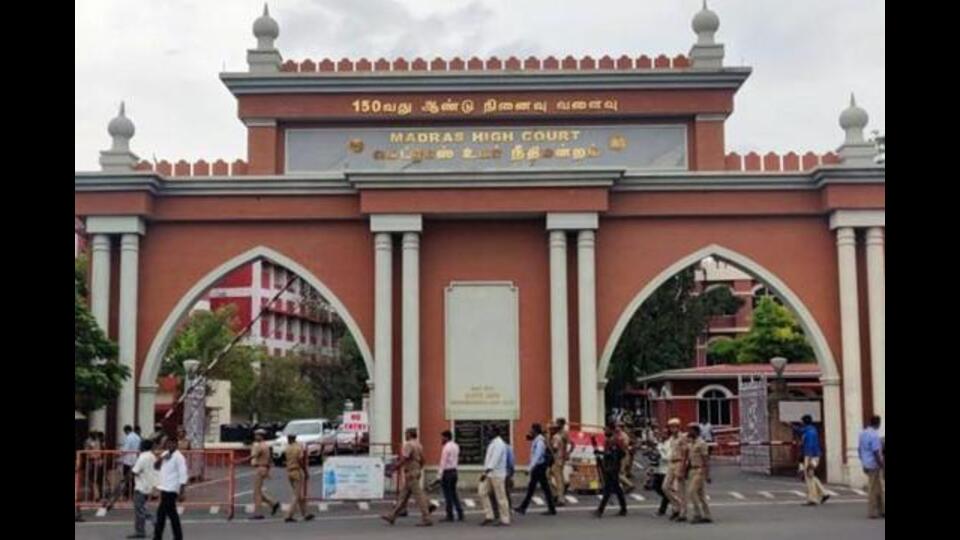
The court also directed Tamil Nadu’s police chief to identify consensual relationships in the 1,274 pending cases under the Protection of Children from Sexual Offences (POCSO) Act across the southern state. It will hear the matter again on August 11.
“We want to ensure that the two-finger test and the archaic potency test are discontinued,” said a special bench of justices Anand Venkatesh and Sunder Mohan constituted by the high court earlier this year to monitor the implementation of the provisions of the Pocso Act and the Juvenile Justice Act.
The court directed the director general of police to collect data from January to see if any report has referred to a two-finger test so that the court can pass appropriate orders. It also asked police to come up with a standard operating procedure to conduct a potency test by just collecting blood samples.
“Science has improved leaps and bounds and it is possible to conduct this test by just collecting the blood sample. Such advanced techniques are being followed across the world and we should also fall in line,” said justice Venkatesh, who authored the order pronounced on July 7.
The bench heard a habeas corpus petition filed in 2022 about a missing woman in Cuddalore district, only to find it was a case of elopement and there was no offence. While passing an earlier order on this, the judges’ attention was also drawn to a case at Dharmapuri where a boy and a girl born in 2005 had eloped last year, married and finally stayed in Chennai. The girl became pregnant and when the boy took her to a government hospital, he was arrested. Though their parents were ready to take them home without filing a complaint, the pregnant minor was kept at a child care home for a month and the boy spent 20 days in a place of safety.
This is “a sample case”, the court said, which illustrates that the instructions given by the Pocso committee and the circular issued by the police chief to not be hasty while making arrests in Pocso cases have not percolated into the system.
“We find that there is a lack of sensitivity/empathy on the part of the CWC (Child Welfare Committee) and the Juvenile Justice Board, in some of the cases,” the justices said, expressing shock that while they are both children in the eyes of the law, the boy was treated as a child in conflict with law, while the girl was treated as a victim. “This case must be taken to be a wake-up call to ensure that such incidents at least do not happen in the future.”
The court went on to quash the case, describing it as an “abuse of process of law and the continuation of such proceedings will adversely affect the interest and future” of the boy and girl given that they have “already undergone mental trauma”.
The court exercised its jurisdiction under Article 226 of the Constitution, read with Section 482 of code of criminal procedure to quash the case. The court has now undertaken an exercise to quash similar pending cases across Tamil Nadu.
Following an earlier order, the police chief had submitted that from 2010 to 2013, a total of 1728 cases were registered before the courts and the Juvenile Justice Board pertaining to victims and the children in conflict below the age of 18 years. Out of these, 1,274 cases are pending in various stages.
The court directed the director general to ascertain the category of consensual relationship out of the 1,274 cases. “If those cases are segregated from the pending cases, it will be easy for this Court to deal with them and in appropriate cases, this Court can also exercise its jurisdiction and quash the proceedings if the proceedings are ultimately going to be against the interest and future of the children involved in those cases and it is found to be an abuse of process of Court / abuse of process of law,” the bench said.
Similarly, the court directed the police chief of the neighbouring Union territory of Puducherry to carry out the same exercise in 29 pending cases. The matter will be heard again on August 11.


