E-Paper



Maharashtra to Odisha: Tiger travels 2000 km in search of new home, mate
An adult male Royal Bengal Tiger from Maharashtra traveled 2,000 km across four states before landing in Odisha in search of territory or a mate.

 Prefer HTon Google


Bhubaneswar: An adult male Royal Bengal Tiger from Tadoba landscape of Maharashtra travelled 2,000 km across four states over the past five months before landing in the forests of Odisha in search of a suitable territory or a potential mate, officials said.
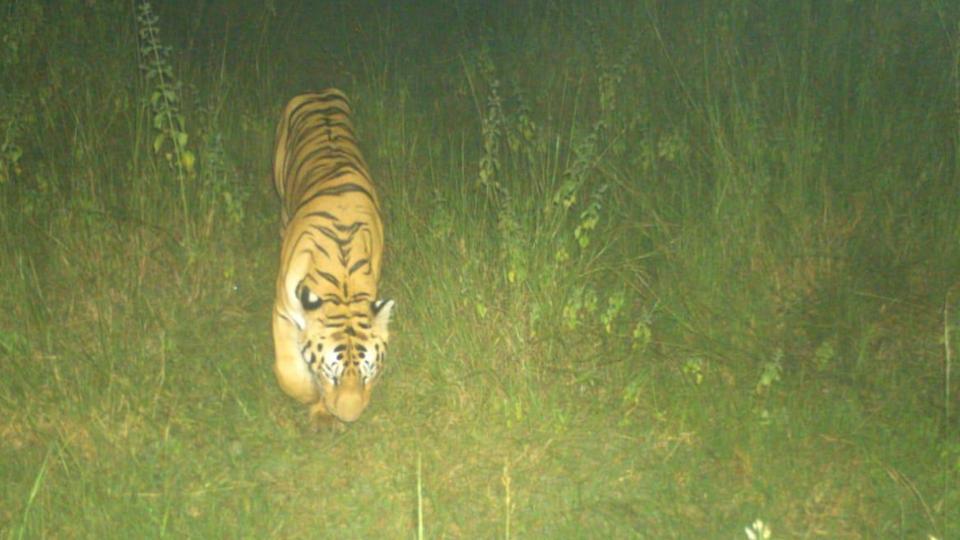
Odisha forest officials said though the tiger was first sighted in the state’s forests in June 2023, they were not sure where it came from. “It kept alternating between Rayagada division of Odisha and Manyam division of Andhra Pradesh since then. In September in entered Parlakhemundi forest division of Gajapati district in September and that’s when villagers started talking about seeing a tiger,” said Anand S, divisional forest officer of Parlakhemundi.
“On October 18, the tiger reportedly dragged a cow from a shed and the owner of the cow, was shocked to find the half-eaten remains upon his return. As there has been no record of any tiger sighting in Gajapati in last 30 years, we were a little bit sceptical whether it was a tiger or leopard. As Odisha was doing its own tiger census, we installed camera trap and the camera caught its image three times,” said Anand said.
The forest department sent the image to the Wildlife Institute of India (WII) in Dehradun for mapping, and they confirmed that the camera-trapped image matched with a tiger previously photographed in the Brahmapuri forest division of Maharashtra. “As tigers have unique stripe patterns we were sure that this particular tiger originated from Maharashtra,” said the DFO.
Also Read: Tadoba reserve’s tigress Maya may have died; DNA sample sent for confirmation
Though radio-collaring a tiger is the best possible way to track its dispersal, officials said the tiger must have travelled over 2,000 km as it must have passed through Telangana, Andhra Pradesh and Chhattisgarh before reaching Odisha. In the past month, the tiger has covered more than 500 km, moving from Parlakhemundi to Srikakulam, then to Ichhapuram, and finally returning to Parlakhemundi. Forest officials said this is the first time a tiger has reached Odisha from Maharashtra.
“It seems the tiger is in search of a territory with a thriving prey population and a potential mate. If it finds suitable conditions, it may stay in Odisha. We are keeping a close watch in the tiger as it is moving 25-30 km daily and is hunting cattle. It is 4-5 years old. If it attacks any human being we may have think of radio collaring it to track its movement,” said a senior forest official who did not wish to be named.
Though the tiger is known for preying on deer and wild boar, it is now preying on livestock. However, it has not shown any aggression towards humans though it is moving in a landscape dominated by humans.
Assistant Conservator of Forests Ashok Behera said the department has deployed five teams consisting of 35 members to alert people living in the bordering areas and instruct them not to step out of their homes at night. The teams also advised the villagers to properly tie their cattle to save them from the predator.
Tigers disperse to establish their own territories. Male tigers disperse an average distance of 27 km while females disperse an average distance of 5.7 km.
In 2019, wildlife officials in Maharashtra radio-collared a tigress from the Tipeshwar wildlife sanctuary in Maharashtra named TWLS-T1-C1 to tracks its dispersal. Over next 13 months it logged 3,017 km before the battery died. This is the longest distance covered by any tiger in the country in search of territory and mate.