
 E-Paper



Mandatory for scholarships but not passport: All you need to know about use of Aadhaar
Find out what the Aadhaar will be mandatory for in this financial year.


Biometric based Aadhaar is envisioned as a single-window mechanism to seek government benefits, ranging from mid-day meals and skill training to scholarships from the next financial year. The decision, activists say, violates a Supreme Court order asking the government to keep Aadhaar “voluntary” for availing entitlements.
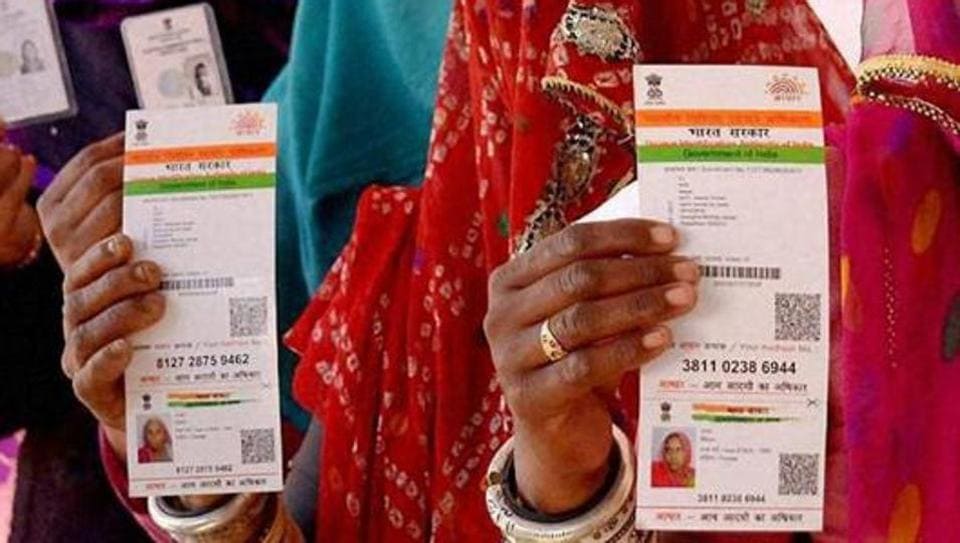
In the last month, the social welfare ministries of the central government have issued similarly worded notifications making Aadhaar or enrolling for the 12-digit number mandatory. Most of the ministries have set June 30 as the deadline to submit Aadhaar number or provide an enrolment slip for the 12-digit number. Some ministries have set March 31 as the deadline.
The overdrive to make Aadhaar mandatory is part of the government’s decision to transfer Rs 2.02 lakh crore in 2017-18 to beneficiaries only through Aadhaar payment bridge. And for that, getting an Aadhaar number is necessary.
This would mean that Aadhaar would be a must for a farmer to seek subsidy or any other benefit from the government, a rescued sex worker to enrol for skill training, a pregnant women to get nutrients and children to have mid-day meals in schools.
Reetika Khera, a development economist with the Indian Institute of Technology, Delhi, said the notifications issued by central ministries were in violation of the Supreme Court’s order which said “Aadhaar cannot be made compulsory for any services to which people are otherwise entitled”.
She also claimed the court orders cannot be superseded by Aadhaar law under which the government has issued the order. The law was enacted in September 2016, a few days before the court asked the government to wait till its final verdict on legality of Aadhaar.
In the financial year 2017-18, Aadhaar will be mandatory for:
• Enrolling in any government-run skill development programmes, including programmes for rescued sex workers
• Getting free books, dress, stationery and any other benefit from schools and universities
• Getting fellowships and scholarships from school and universities, including those for disabled and weaker sections
• Pregnant mothers will need Aadhaar for cash transfer, free medicines, nutrients and dry ration; for mothers to get free meals from Integrated Child Development Service centers
• Senior citizens will need it to enrol in adult education programmes of the Central government and old-age pension schemes
• Providing mid-day meal to children in all schools. States will get money only for students who have an Aadhaar card
• Teachers, contractual staff and students to have Aadhaar to seek any benefit under the Sarva Siksha Abhiyan (SSA)
• All Asha workers, paramedics, contractual employees and individual beneficiaries need to have an Aadhaar card under the National Health Mission
• Anganwadi workers under the Integrated Child Development Scheme (ICDS) to get remuneration transferred to Aadhaar-linked bank account
• For seeking money to construct home under the Pradhan Mantri Awas Yojana
• Farmers will need Aadhaar for getting soil tested or availing subsidised fertilisers or seeking any subsidy under a Central scheme
• Disabled people for fitting aids and appliances from a government agency
• For seeking financial benefit under the Centre’s scheme for inter-caste marriages
• For providing relief to victims of human trafficking and those rescued from red-light areas.
• NGOs/Institutions seeking funds from 84 central government schemes
• Subsidised cooking gas connection
• Compensation and rehabilitation of rescued bonded labourers
What is Aadhaar already mandatory for?
• For registration of property in most states
• For getting enrolled under MGNREGA and getting wages
• For getting ration at subsidised rates under the public distribution system
• For opening a bank account in a nationalised bank
• Online filing of Income Tax return
• Some states have made Aadhaar mandatory for getting a driving license
• In many states, to register a marriage, at least of the two partners need an Aadhaar card
• For admission of children from economically weaker sections in private schools
What is Aadhaar currently not mandatory for?
• For getting a passport but having one can speed up the process
• For general category seeking admission in private schools
• For seeking birth or death certificate


