
 E-Paper





Follow the latest breaking news, major developments and agenda-setting stories from India and around the world with the newsdesk at Hindustan Times. Operating round the clock, the desk brings together experienced editors, reporters and correspondents to deliver fast, accurate and contextual reporting across subjects that influence public policy, governance, business, society and international affairs. The HT News Desk covers politics, elections, government policies, the economy, business and markets, science and technology, the environment, law and order, infrastructure, education, climate issues and geopolitics, while closely tracking developments across states, institutions and global capitals. The team also leads coverage of major breaking news events, policy announcements, court proceedings, natural disasters, public emergencies and significant international developments. Reports published by the newsdesk are based on information gathered from reporters on the ground, official statements, government agencies, court records, regulatory filings, recognised institutions and other authoritative sources. Stories undergo editorial scrutiny and verification processes to ensure accuracy, fairness and relevance, and are updated as events evolve and additional information becomes available. Whether covering a key political decision in New Delhi, an economic policy shift affecting millions, a landmark court ruling or a major global event, the HT News Desk aims to provide readers with reliable, fact-based journalism that delivers not only the latest developments but also the context and analysis needed to understand their wider implications.
Mass bird deaths in Rajasthan, Madhya Pradesh prompt remedial measures
Officials said 175 crows and other birds were reported dead across Rajasthan on Monday alone. In neighbouring Madhya Pradesh, over 500 crows have died over the last week


Mass bird deaths in Rajasthan and Madhya Pradesh have prompted authorities to take remedial measures, issue alerts, and enhance surveillance, officials in the two states said.
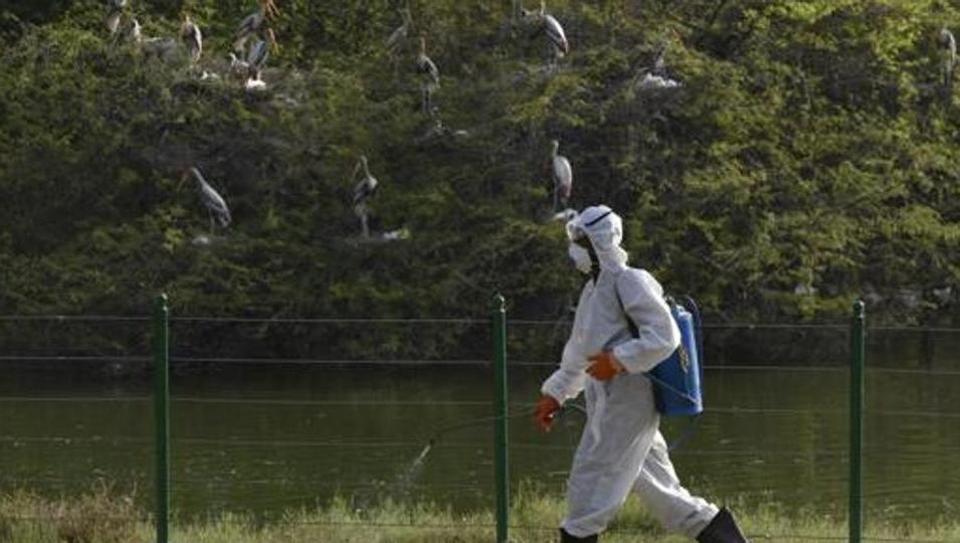
Officials said 175 crows and other birds were reported dead across Rajasthan on Monday alone. In neighbouring Madhya Pradesh, over 500 crows have died over the last week.
Officials in Madhya Pradesh said they were mixing antibiotics in water bowls for the birds in the affected areas. In Rajasthan, expert teams have been rushed and surveillance enhanced especially around poultry farms.
Rajasthan’s animal husbandry department officials said they were collecting 10 samples each from wetlands in Rajasthan like Keoladeo National Park in Bharatpur and Jaipur’s Sambhar Lake.
Over 250 bird deaths were reported dead in the state on Sunday. They include 24 pigeons in Kota.
Rajasthan’s additional director (animal husbandry) Bhawani Singh said migratory birds seem to be the possible source of the disease even as Bhopal’s National Institute of High-Security Animal Diseases has confirmed the death of a bird in Jhalawar was due to bird flu. Officials said they were following the protocol and burying the birds.
Microbiologist AK Kataria said the mass deaths are not unusual and happen annually. “The pattern of mortality and environmental conditions suggest these deaths of crows are due to cold shock. There are no clinical signs of bird flu,” he said. He added the poultry birds are more susceptible to bird flu. “But so far no deaths of poultry have been reported.” Kataria said in 2020, too, over 300 crows were reported dead. He added dead crows are usually found under the trees. “Crows migrate to warmer areas in winter, and do not reside in residential areas.”
In Madhya Pradesh, an animal husbandry department official said birds there have died of bird flu. The state’s principal secretary (animal husbandry), JN Kansotia, said the situation is under control and they have sounded an alert in all districts. “We have started a sanitisation process in the affected area.”
Dr Shailesh Sakallaye, the integrated disease surveillance programme additional director, said a survey is being conducted in the affected four districts to check the impact of bird flu among humans.
Humans can be infected with avian influenza, or bird flu, primarily through direct contact and may cause disease ranging from mild fever and cough, early sputum production and rapid progression to severe pneumonia, sepsis with shock, acute respiratory distress syndrome and even death, according to the World Health Organisation.


