E-Paper



Mizoram Bill to detect illegal immigrants sent to President
Besides identifying illegal immigrants, the Bill aims to provide a credible individual identification system and prevent appropriation of benefits of development schemes by “those who are not entitled”.


Mizoram Governor Jagadish Mukhi has sent a Bill that seeks to detect illegal immigrants residing in the state to President Ram Nath Kovind, Speaker Lalrinriana Sailo informed on Wednesday.
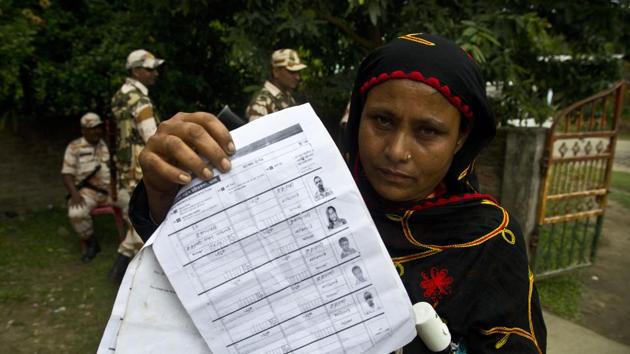
The Mizoram Maintenance of Household Registers Bill, 2019 was passed by the state assembly in March this year. The legislation is somewhat similar to the National Register of Citizens (NRC) for Assam, which was made public last month.
“The Bill was passed in March and was sent to the Governor the same month. I met the Governor last week and enquired about it and he informed that it has been referred to the President recently. I don’t know why it took six months for the Governor to refer the Bill to the President,” said Sailo.
Despite repeated attempts, Raj Bhawan officials in Aizawl were not available for comments.
Jagadish Mukhi, who is also Governor of Assam, has been holding additional charge of Mizoram since March this year after Kummanam Rajasekharan resigned from the post.
Besides identifying illegal immigrants, the Bill aims to provide a credible individual identification system and prevent appropriation of benefits of development schemes by “those who are not entitled”.
It proposes to maintain a register of every household in the state. The records to be kept by designated officials, village councils, municipal bodies and town committees will be updated every three months.
The Bill will have two categories: a) citizen residents and b) non-citizen residents. The legislation defines “citizens” as a person registered as such or having requisite qualification as prescribed under the Citizenship Act, 1955.
Mizoram shares a 700 km-long boundary with Myanmar and Bangladesh.
Presenting the Bill in parliament Chief Minister Zoramthanga said it was needed as the state is witnessing influx of foreigners who have “assimilated with local residents” and are eating away benefits of schemes and could pose a security threat.
“The benefits of development and welfare programmes are found eaten away to a large extent by such foreigners who stayed back clandestinely and got assimilated with people of the state by taking advantage of mistaken identity and difficulties in detecting them,” he said.