
 E-Paper



Modi-Kishida summit this week, Ukraine and Indo-Pacific on agenda
The March 19-20 summit called at the behest of Japan is basically a continuation of the cancelled 2019 Modi-Abe summit in Guwahati due to orchestrated CAA protests

 Prefer HTon Google


Japan and India are expected to cement economic cooperation and share assessments on the crisis in Ukraine and Indo-Pacific during Prime Minister Fumio Kishida’s visit to India this Saturday. The Japanese PM arrives on an official visit on March 19 afternoon and leaves the next day for Cambodia.
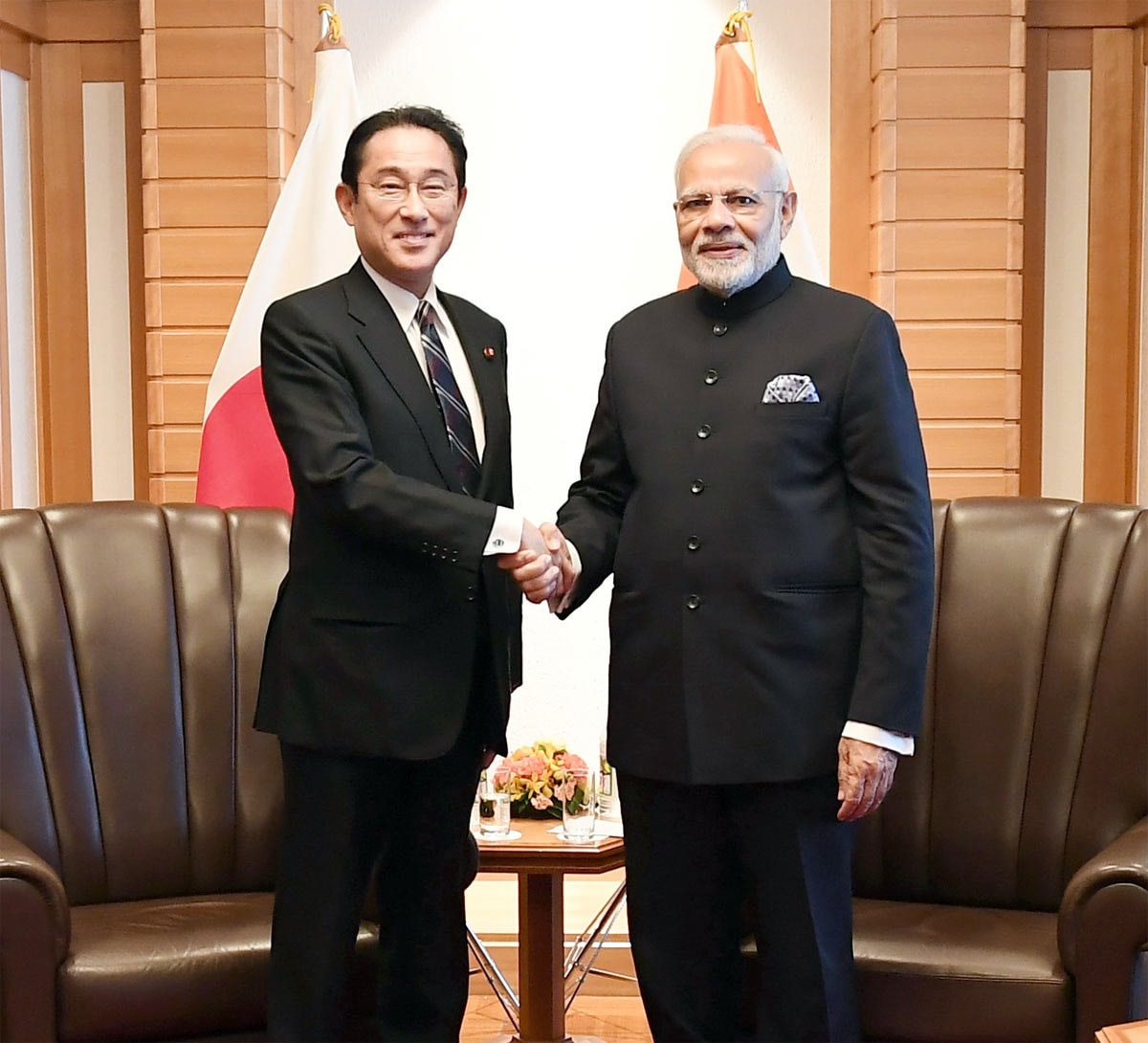
Kishida’s visit is a continuation of the cancelled physical summit between Prime Minister Narendra Modi and then Japanese Prime Minister Shinzo Abe in Guwahati on December 15-17 due to orchestrated protests in Assam due to Citizenship Amendment Act. An early date for the Modi-Kishida meeting was sought by the Japanese side despite global turmoil due to the Russian invasion of Ukraine.
Also Read| India pushes for dialogue as Quad takes up Ukraine war
While PM Modi is expected to exchange notes with PM Kishida on the ongoing crisis with India calling for the cessation of violence, the main topic of discussion will be the Indo-Pacific with a belligerent China threatening anyone who provides military support to Taiwan, participating in joint air exercises with the Russian air force in the Sea of Japan and sending warships into territorial waters of Philippines in the Sulu Sea.
Although Japan has increased conventional deterrence in wake of Chinese belligerence in the Indo-Pacific, PM Kishida is totally opposed to Japan acquiring nuclear weapons or shedding its pacifist doctrine as he represents the city of Hiroshima in the Japanese House of Representatives. Hiroshima was bombed by the US using a nuclear device on August 6, 1945, in the final year of World War II. Japan, in the meantime, has increased defence cooperation with both the Philippines and Australia.
During his New Delhi visit, PM Kishida is expected to address a business event even as the two close allies will discuss the possibility of expanding the bullet train project beyond the Mumbai-Ahmedabad corridor. The two leaders will also exchange notes on building resilient supply chains between partner countries so that they are not impacted by vagaries of global politics and dependency on any adversarial country.
Also Read| Officials involved in bullet train project to take course in Japanese
The two leaders will also discuss the upcoming QUAD summit in Tokyo after the Australian general elections in May 2022 with the Chinese routinely taking potshots at the security grouping by calling its Asian NATO against Beijing and a Cold war instrument. This was dismissed as a lazy analogy by External Affairs Minister S Jaishankar at the Munich Security Conference last month.
While Chinese military activity in East Ladakh and around the Japanese Senkaku Islands will be shared at the summit, the two leaders will also discuss the situation in the Af-Pak region with the Taliban in control of Kabul and the so-called Islamic State raising its head against Shia Muslim community in Pakistan.


