E-Paper



MP govt writes to Centre seeking change in industrial corridor route
A 1,080-km ‘fastest’ route of the Delhi-Nagpur Industrial Corridor passes through Nauradehi Wildlife Sanctuary and Pench Tiger Reserve between Seoni and Nagpur districts.

 Prefer HTon Google


The Madhya Pradesh government has urged the Centre to change the proposed fastest route for the Delhi-Nagpur Industrial Corridor with a longer one to save the forests of Pench Tiger Reserve and Nauradehi Wildlife Sanctuary in the state, people familiar with the development said.
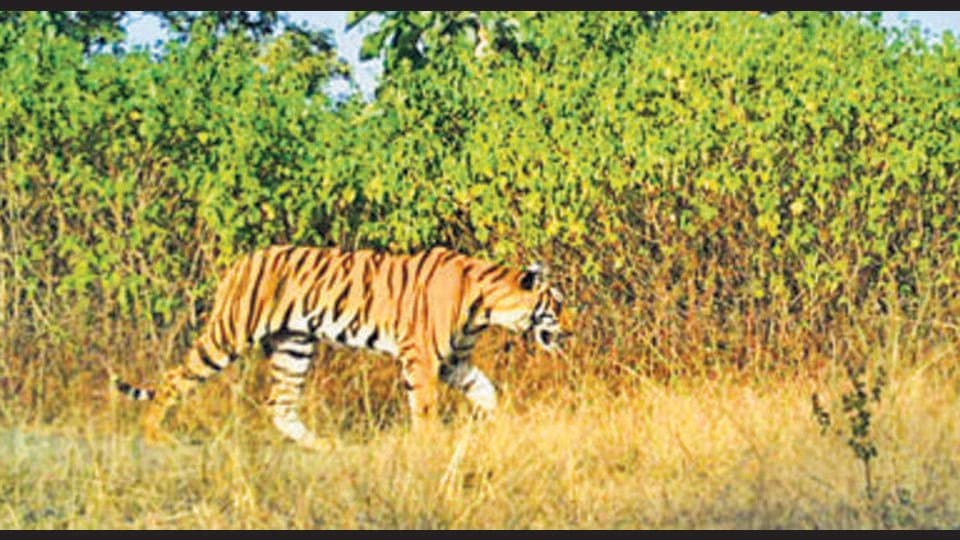
Earlier, agencies appointed by the National Industrial Development Corporation (NIDC) proposed a 1,080-km fastest route between Delhi and Nagpur for industrial corridor, but it passes through Nauradehi Wildlife Sanctuary — the largest wildlife sanctuary of Madhya Pradesh located between Sagar and Narsinghpur districts — and Pench Tiger Reserve between Seoni and Nagpur districts.
“We have given a presentation of the new route because we can’t destroy the forest of Madhya Pradesh for the development,” said Sanjay Shukla, principal secretary, MP industrial development department. “We got a positive response from the NIDC. The proposal will be finalised by September.”
According to the project plan, green field industrial cities with multi-modal connectivity will be developed along the corridor. The Delhi-Nagpur Industrial Corridor will connect north and south India and cover part of Bundelkhand region of MP.
“The objective of Delhi-Nagpur Industrial Corridor would be to optimise the present economic and employment potential of the region, stimulate investments particularly in the manufacturing, agro-processing, services and export-oriented units and promote overall economic development of the area through creation of high standard infrastructure and an enabling pro-business environment,” according to the plan proposal of the project.
In its proposal to the NIDC, the state industrial development department has suggested a route that will divert from Lalitpur in Uttar Pradesh, pass through Bina, Vidisha, Bhopal and Betul in Madhya Pradesh before reaching Nagpur in Maharashtra. The proposed fastest route covers parts of Sagar, Narsinghpur and Seoni districts and passes through Pench Tiger Reserve — from which Rudyard Kipling brought the inspiration to write ‘The Jungle Book’ — and Nauradehi Wildlife Sanctuary, which is the probable site for the translocation of Cheetah after Kuno National Park.
“The new route will take two hours longer but the development work will be completed swiftly,” said an official of the MP industrial development department.
“Statutory clearances, including the environment clearance, will be taken beforehand for the proposed site to avoid any delays. Industries can be set up in area up to 150km from the highway,” the official said, requesting anonymity.
“We know it is very hard to get forest clearance and there are great chances of court cases and protests by environmentalists. When the agencies of NDIC shared the map, we informed them that despite being the shortest route between Delhi and Nagpur, it is impossible to take permission to set up industries in MP in major parts of the corridor,” he added.
If the route does not change, the corridor will never get completed, said environmentalists.
“NH-44 is located between Seoni and Nagpur and it took 10 years to build four lane and i.e., with an extra cost of more than ₹200 crore to save Pench Tiger Reserve. It was halted twice on the order of Supreme Court and Wildlife Institute of India. So, there is no chance of development of any space for industries,” said environmentalist Ajay Dubey. “If the state and central government make any attempt to convert it into industrial areas, they will face the protests.”