E-Paper



NDFB disbands itself after 34-year fight to carve Bodoland out of Assam
The NDFB was formed on October 3, 1986 under the name of Bodo Security Force with the aim of launching an armed movement to form a separate state for Bodos — the largest tribe in Assam.

 Prefer HTon Google


Thirty four years after it was formed with the aim of carving out a separate Bodoland state from Assam, all the four factions of National Democratic Front of Bodoland (NDFB) disbanded themselves this week.
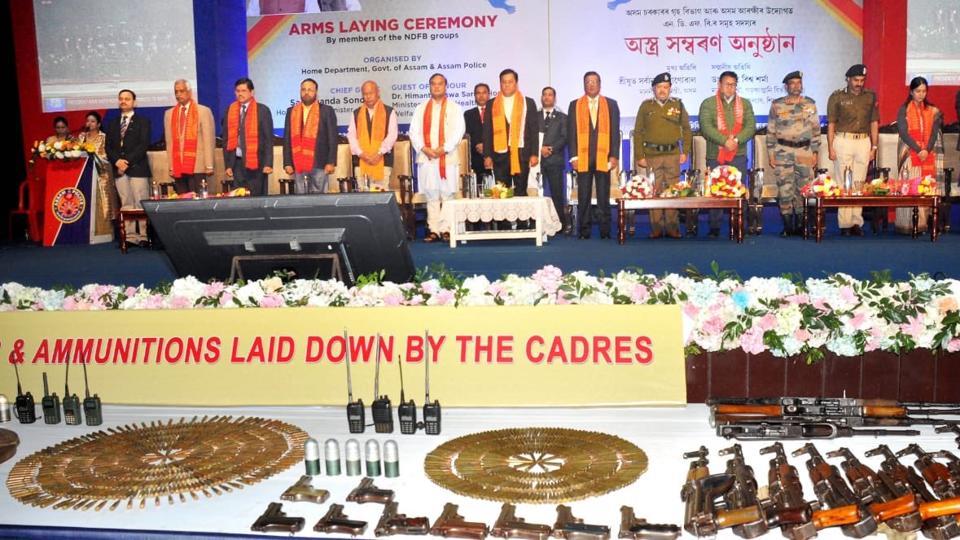
The move follows the signing of a memorandum of settlement (MoS) by all the factions of the rebel outfit with the Centre in January and the handing over of arms by 1615 their cadres the same month.
One of the deadliest militant outfits in Assam and entire Northeast, the NDFB was formed on October 3, 1986 under the name of Bodo Security Force with the aim of launching an armed movement to form a separate state for Bodos — the largest tribe in the state.
The outfit was rechristened NDFB in December, 1994. It later broke into four different factions - headed by B Saoraigwra, Govinda Basumatary, Ranjan Daimary and Dhirendra Boro. All four factions signed the agreement with the Centre in January.
The three factions headed by Sairaigwra, Daimary and Boro organised a joint disbandment ceremony on Monday at the designated camp the factions at Sonai in Udalguri district.
“The arms struggle has come to an end after the peace agreement. So, we resolve to dissolve ourselves, the NDFB organization, with a view to shun violence and to give peace a chance,” said a statement issued by the three factions.
On Tuesday, NDFB (Progressive), the faction headed by Govinda Basumatary announced it was disbanding after a special general assembly at the Khumguri designated camp of the outfit at Serfanguri.
“Since the organization has been able to resolve the Bodo peoples’ political, social, economic and cultural problem by signing MoS, the leadership doesn’t feel the necessity of continuance of armed struggle which look odd and unbecoming in a democratic country like India,” the outfit said in a statement.
“The leadership by a unanimous resolution adopted in the special general assembly hereby declare the disband(ing) of the NDFB and further declare that the existence of the organization shall cease for good,” it added.
NDFB becomes the second militant outfit in Assam and third in Northeast to disband itself after signing an accord with the Centre.
The Mizo National Army of Mizoram had ceased to exist after the signing of the Mizo Accord between the Centre and the Mizo National Front in 1986. The Bodo Liberation Tigers (BLT), which also fought for the Bodo cause, was disbanded after it signed a peace deal with New Delhi in 2002.