E-Paper



Nearly 12 million elderly yet to take their first Covid vaccine dose
A little over 125 million (125,800,368) of the country’s population above 60 years of age has received their first vaccine dose, and the second dose has been administered to about 109 million

 Prefer HTon Google


In what has emerged as a concern for universal coverage of Covid-19 vaccination among the elderly, about 12.2 million senior citizens, or nearly 10% of the estimated elderly population, are still to receive their first dose, official data indicated.
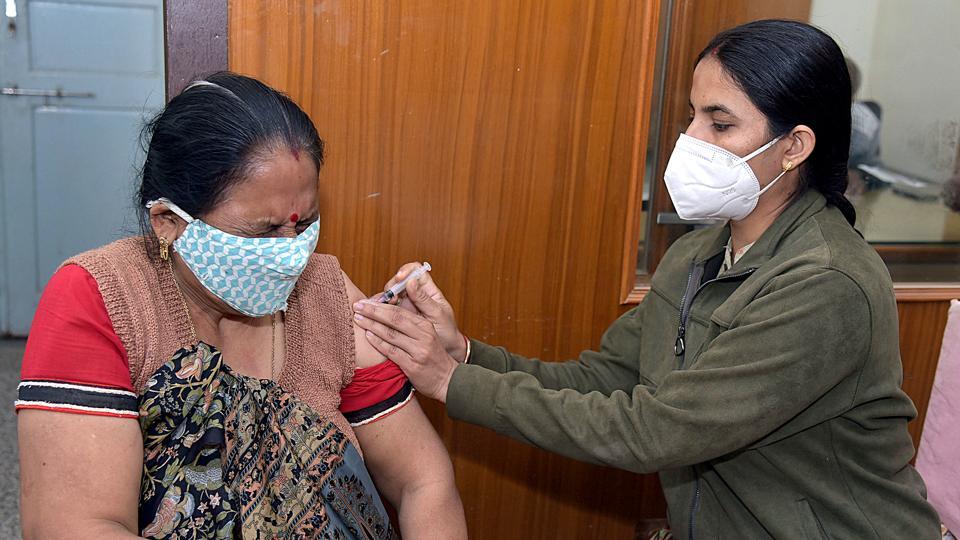
A little over 125 million (125,800,368) of the country’s population above 60 years of age has received their first vaccine dose, and the second dose has been administered to about 109 million (109,579,128) of the eligible people, according to data shared by the health ministry on Saturday.
Based on projections of population by Census 2011, there are an estimated 138 million people above 60 years of age, which means that there are still around 12.2 million people in the age cohort yet to receive a single shot.
This percentage is significant for an age group that is most vulnerable to hospitalization and death, and that has been eligible for shots for nearly a year now, with the government aggressively taking measures to dispel fears against getting vaccinated in this age group.
“This group should have been entirely covered by now as their advanced age automatically puts them at higher risk of developing serious disease,” said Dr Vijay Kumar, head of geriatrics department, Primus Super Speciality Hospital, and formerly with AIIMS, Delhi. “Also, with old age comes many chronic ailments related to major organs such as heart, lung, liver, kidneys, etc., and even certain cancers that adds to the risk.”
Also Read | No plan yet on booster shots for all, say officials
The central government opened up vaccination for the 60 plus population group, along with people above 45 years of age with 20 specified co-morbidities, on March 1 last year as part of the national Covid-19 immunisation programme. After the initial rush, most vaccination centres did not see many of the elderly coming in to receive shots.
Last year, an official survey found four in 10 unvaccinated adults above the age of 70 years were hesitant to take the shot against Covid-19.
The survey, conducted over the phone with 4,000-plus participants, also found that 57% of the unvaccinated in the 70-plus age cohort were concerned with the safety or efficacy of the vaccine, and 29% thought they were too old to receive the vaccine.
“The rush definitely went down at our centre after the first few months. We were mostly seeing the young crowd,” an administrative official in a hospital in Delhi said on condition of anonymity. “Vaccine hesitancy could have been an issue, so could have been accessibility, as many of the elderly suffer from some medical condition or the other. Therefore, they probably made use of the at-door vaccination facility that the government made available for those who couldn’t walk-in to a vaccination centre.”
The Centre has been regularly asking states to focus on fully covering this cohort, and to take appropriate measures to address hesitancy and other challenges.
The government’s focus should now be on identifying those on priority who want to get vaccinated, experts said.
“The priority should be to identify those elderly persons who are willing to get vaccinated, but for some reason have not been able to take the shot yet,” said Jugal Kishore, director, head of department, community medicine, Safdarjung Hospital. “Older persons anyway are difficult to convince. Therefore, for those who are hesitant, the government could probably make use of trained counsellors to convince them.”