E-Paper



New AIIMS in J&K to have ‘bunkers’ as safety measure
Because of AIIMS Jammu’s proximity to LoC, the masterplan has a provision for two bunkers with at least 50 beds for patients to handle mass casualties during disaster situations.


Beds for patients in overground bunkers, a single access gate with security cover, and a peripheral surveillance track road around the campus boundary. These are some of the security measures planned for the two All India Institutes of Medical Sciences to come up in troubled Jammu and Kashmir, according to the masterplan accessed by HT.
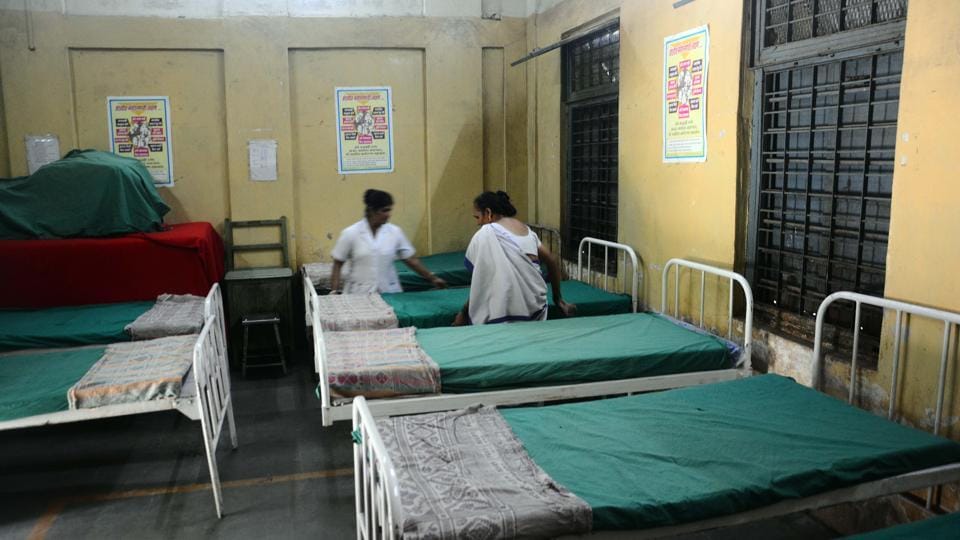
The AIIMS in the Jammu region will be set up at Vijaynagar in Samba, and the AIIMS in the Valley, at Awantipura in south Kashmir. Both locations are labelled “sensitive” from the security point of view because Vijaynagar is about 20km away from the Line of Control (LoC), and south Kashmir is a hub of militancy. Because of AIIMS Jammu’s proximity to LoC, the masterplan has a provision for two bunkers with at least 50 beds for patients to handle mass casualties during disaster situations.
The masterplan was discussed by Union health ministry officials on Monday, April 22.
“These bunkers with beds will be separate from the emergency department and will be equipped to handle mass casualty that is expected near border areas. It will also have an isolated decontamination area to treat chemical biological, radiological and nuclear exposure,” said Shakti Gupta, medical superintendent, RP Eye Centre, AIIMS-Delhi, who is also part of the core committee formed by the health ministry to oversee the project.
“Ideally, it should have been an underground bunker but since it is very expensive to set up, these bunkers will be created overground,” he said.
Jammu and Kashmir has four medical colleges with attached hospitals.
South Kashmir is especially deficient in medical facilities, and patients have to undertake a journey of up to two hours to reach Srinagar, the state’s summer capital, for treatment of serious ailments.
The coming up of AIIMS in the vicinity will improve the situation.
In January, the Union cabinet approved ₹1,600 crore to set up two 750-bed AIIMS in J&K, with 100 MBBS seats, 60 B.Sc (Nursing) seats, and 15-20 super specialty departments.
The hospitals will treat an estimated 1,500 people in the out-patient department (OPD) each day, and around 1,000 people in the in-patient department (IPD) per month.
The OPD is scheduled to start in a year and the IPD in two years; the two hospitals are expected to employ close to 3,000 staff each.
“Since security is a major concern, all major amenities will be inside the campus, including housing, school, shopping complex, auditorium and sports complex, so the staff doesn’t have to travel outside much. The peripheral track will be used for close monitoring and patrolling and provide the required isolation,” said Dr Gupta.
Recruiting medical staff will not be a problem if the security concerns are addressed.
“Risk of life is not a concern for medical professionals as hospitals are often high-risk areas. Security is a concern; so long as there is a sense of security and good incentives, people will work there,” said Dr KK Aggarwal, president-elect of the Confederation of Medical Associations in Asia and Oceania.