
Sign in

NTAGI suggests use of Covovax among 12-18 year olds

The final decision to allow the vaccine will be taken by the Union health ministry after which it will be included as one of the options on the Co-WIN platform.

Published on: Apr 29, 2022, 23:42:52 IST
By , New Delhi
Share
Share via
  • facebook
  • twitter
  • linkedin
  • whatsapp
Copy link
  • copy link

The government’s technical panel on immunisation recommended on Friday that the coronavirus vaccine Covovax be included in the government’s programme for children aged aged 12 and above, according to people familiar with the matter, who said a final decision will now be taken by the government.
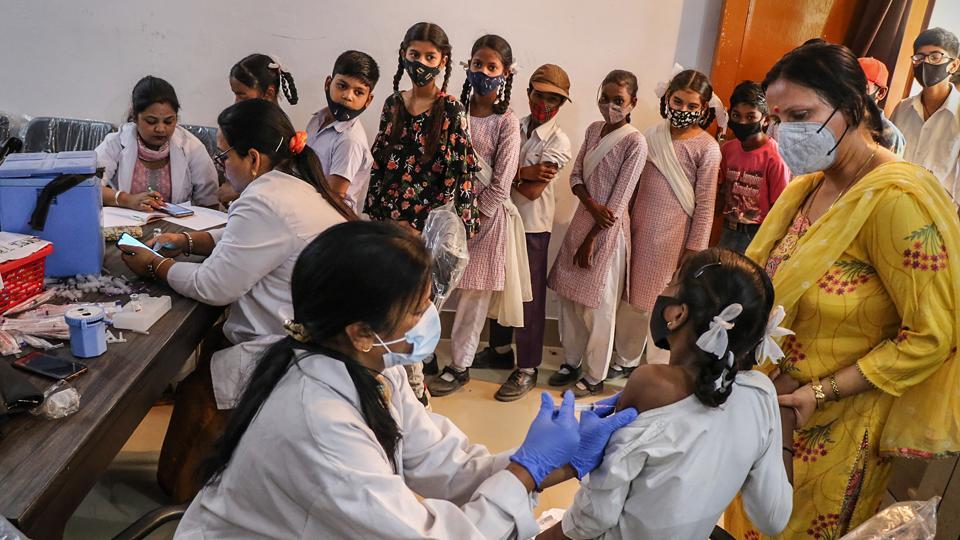
A healthcare worker administers a dose of Covid-19 vaccine to a student in the age group of 12-14 years, at a government school, in Jammu. (PTI)

The National Technical Advisory Group on Immunisation (NTAGI) looked into the data presented before the Drugs Controller General of India (DCGI) to put forth its recommendations. Both the wings of the technical panel— the working group as well as the standing technical sub-committee— made positive recommendations.

While the NTAGI recommendation paves the way for a final decision, the call still rests with the Union ministry of health and family welfare on this matter, after which it will be included as one of the options on the Co-WIN platform.

Covovax is the second Covid vaccine manufactured by Serum Institute of India, which makes the Covishield, the dose that is most widely used in the country. On December 28, the DCGI approved Covovax for emergency use in adults, and approved the vaccine for emergency use in those aged 12 and above in March this year, making it the fourth Covid vaccine approved for emergency use in children in this age group.

It is the only vaccine apart from mRNA platform doses that demonstrates an efficacy of more than 90% against the original Sars-Cov-2 virus, according to the company.
  • Rhythma Kaul
    ABOUT THE AUTHOR
    Rhythma Kaul

    Rhythma Kaul is the national health editor of the Hindustan Times. She has been reporting on public health, medicine, and medical research, with a particular focus on how government decisions and health system reforms shape people’s lives. Rhythma has over 25 years of journalistic experience. She joined Hindustan Times in 2008, and has since covered everything from pandemics and infectious diseases to cutting‑edge medical research and climate‑related health challenges. Her stories routinely track the work of the Ministry of Health and Family Welfare, department of pharmaceuticals, and key national health programmes, making complex medical science and policy accessible to a wide audience. One of her prominent news breaks has been the 2012 Baby Falak case: A two-year-old brutally battered baby girl was admitted to AIIMS-Delhi with severe head injuries, multiple fractures, human bite marks, and burns. The police investigation revealed this to be a case of multi-state human-trafficking racket. She was profiled by The Wall Street Journal for breaking this story. Rhythma holds a Master’s degree from Jawaharlal Nehru University, Delhi. Prior to Hindustan Times, she worked with the India Today Group. Rhythma can be contacted at rhythma.kaul@hindustantimes.com. Her X handle is @RamblingBrook.Read More