E-Paper



Number Theory: BJP’s big gamble on the JD (U) in Bihar
.

 Prefer HTon Google


Bihar sends 40 MPs to the Lok Sabha. The political contest in the state is between the Bharatiya Janata Party (BJP)-led National Democratic Alliance (NDA) and the INDIA bloc, led in Bihar by the Rashtriya Janata Dal (RJD). The NDA swept the polls in the state in 2019 winning 39 out of the 40 parliamentary constituencies (PCs) in the state. Will 2024 throw up a similar result in Bihar?
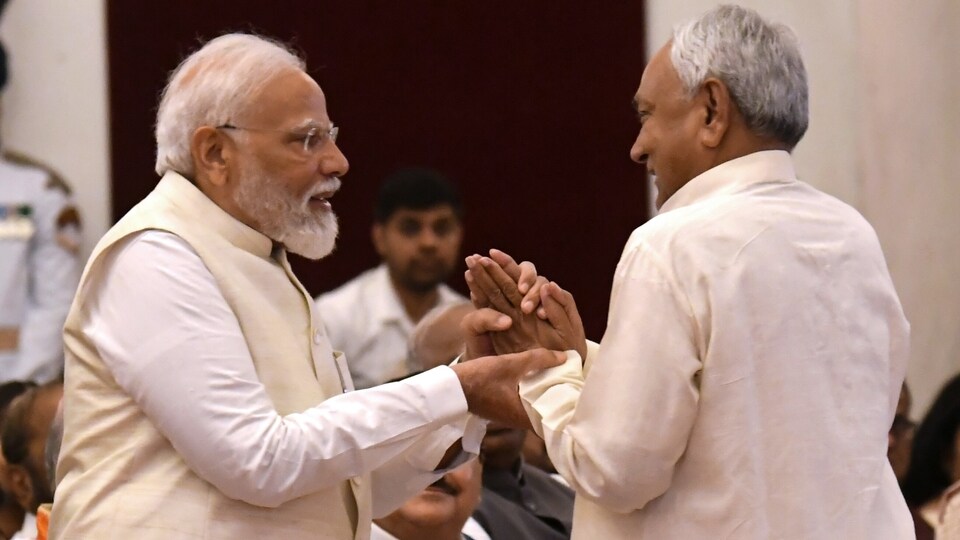
Reading the elections in Bihar havs been rendered complex this year because of the Janata Dal (United) switching sides twice between the 2019 and 2024 Lok Sabha polls. It first ditched the NDA to forge an alliance with the RJD, Congress and Left parties in 2022, and then rejoined the NDA in 2024. So far, Nitish Kumar and his party’s flip-flops are unprecedented in Indian politics. Will JD(U)’s repeated somersaults have an impact on the electoral outcome in Bihar? Here are three charts which answer this question.
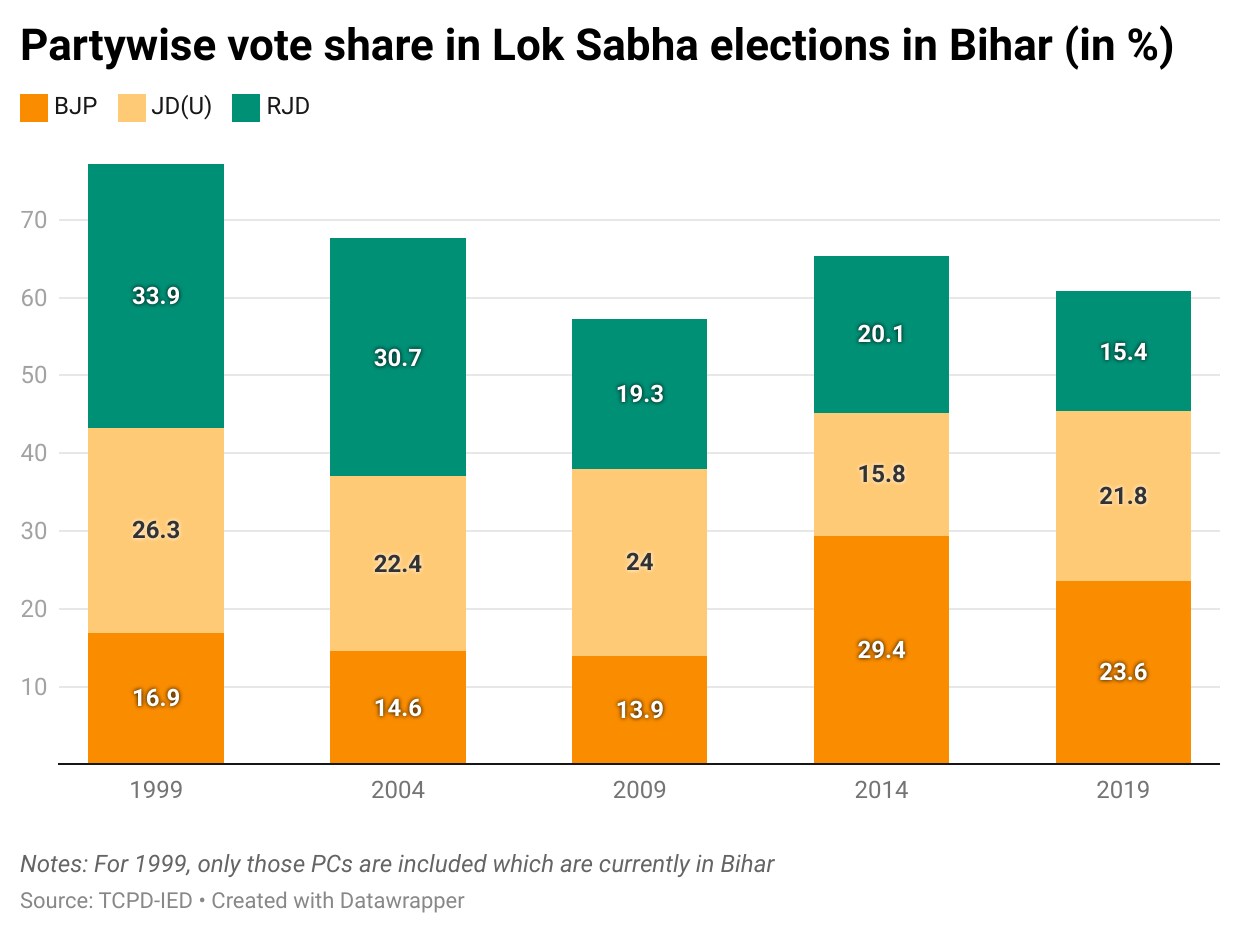
 The combined vote share of BJP, JD(U) and RJD has been continuously falling in BiharCounter-intuitive as may sound, the data shows this clearly. The BJP, the JD(U) and the RJD have contested every Lok Sabha elections in Bihar since 1999. The RJD split out of the Janata Dal in 1997. The JD(U) was also formed as part of a split in the Janata Dal in Bihar. The combined vote share of these three parties in 1999, if one excludes the PCs carved out to make Jharkhand in 2000, was 77%. This number has fallen in every elections, and reached 61% in 2019. While the JD(U) has been the number two party in terms of vote share in every Lok Sabha elections except 2009, the BJP and RJD have changed positions as the first and third party by vote share over this period. To be sure, these three parties have had a much larger seat share in Bihar and this number does not show a clear trend. The mismatch between vote share and seat share trends shows that even the major parties in Bihar need alliances to convert their votes into seats.
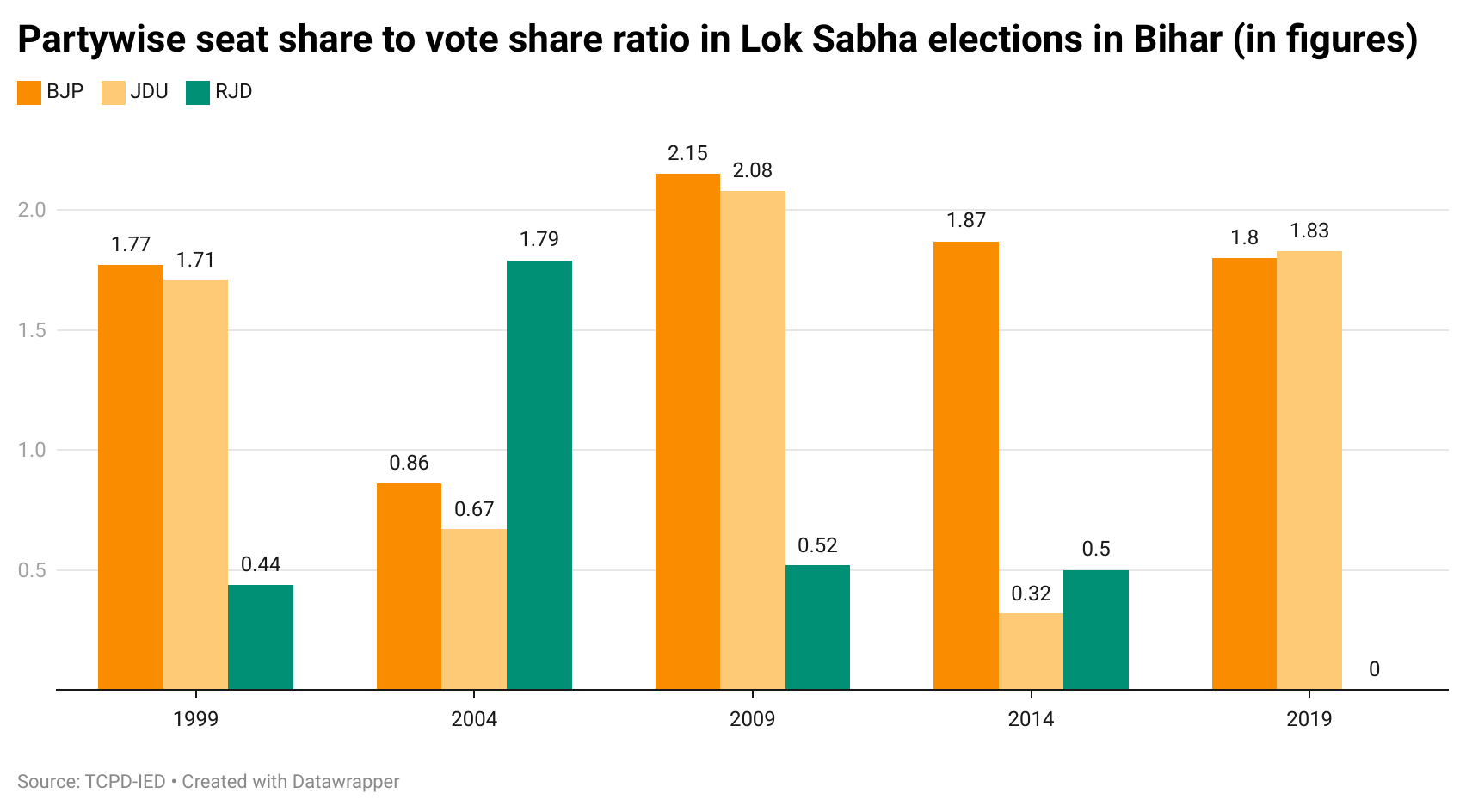
- RJD has lagged BJP and JD (U) in terms of converting votes to seats in all elections except one2019 was the first Lok Sabha elections in Bihar in which the RJD failed to even open its account in the state despite getting a 15% vote share. While 2019 was an extreme scenario, a long-term comparison of seat share to vote share ratio of the three major parties in the state shows that the RJD has lagged the BJP and the JD (U) on this count in a big way in every election except 2004. Seat share to vote share ratio is a good metric to measure a party’s ability to convert popular support into seats in a first-past-the-post system. In fact, a comparison of this number for the period before 1999 shows that the JD(U)’s entry in Bihar has had a favourable effect on BJP’s seat share to vote share ratio and brought down the RJD’s performance compared to what it was for the Janata Dal, the RJD’s predecessor in Bihar. Between the JD(U)’s extremely backward social groups and the BJP’s traditional “upper caste” supporters along with its newly cultivated lower OBCs, the NDA swept the 2019 Lok Sabha elections in the state. The RJD, on the other hand, has not had an alliance partner in Bihar that can take its camp beyond the majority mark, except in the 2015 assembly elections when the JD(U) joined hands with it.
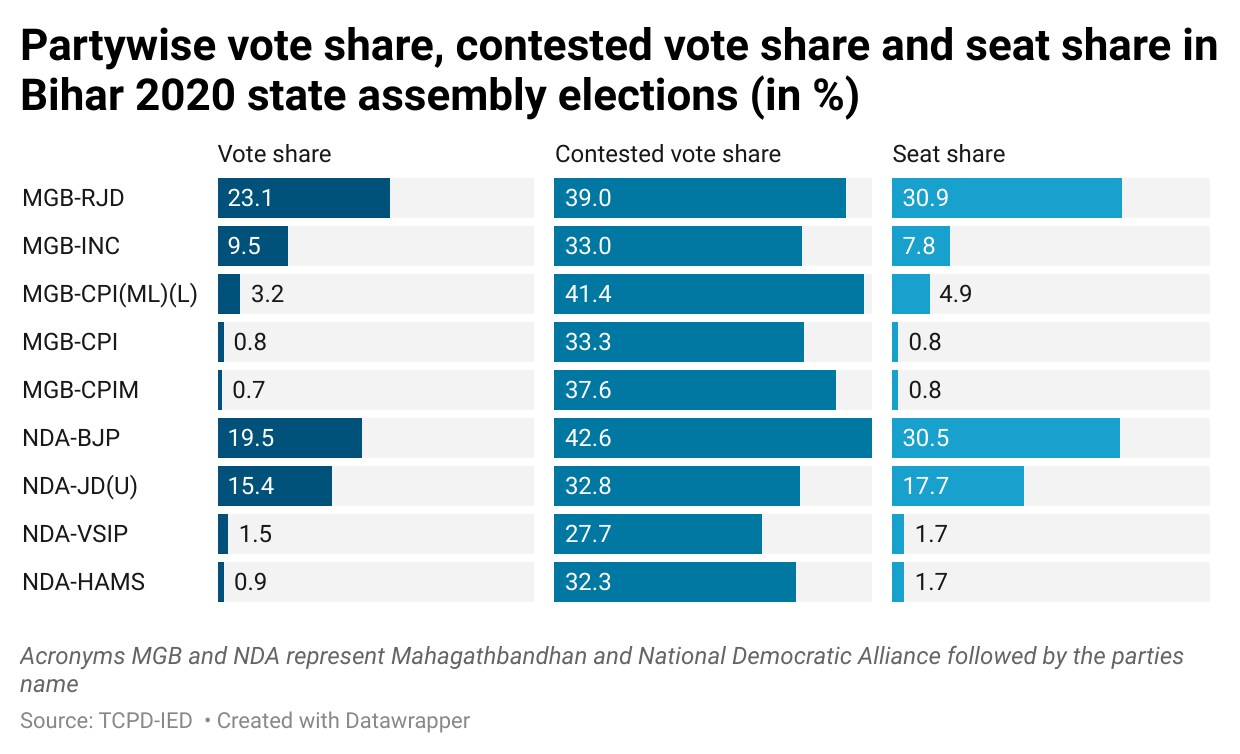
- Is JD(U)’s mojo still intact though?This is the most important unknown in the 2024 elections. The BJP’s decision to give 16 seats to the JD(U) as part of the NDA suggests that it still trusts its alliance partner to deliver in the elections. In 2019, the BJP and the JD(U) won 16 and 17 out of the 17 parliamentary constituencies that they contested in Bihar. But what if the JD(U)’s somersaults between 2019 and 2024 have created confusion in its ranks? The JD(U)’s performance in the 2020 assembly elections, in which it finished a distant third behind the RJD and the BJP in terms of number of MLAs and saw its seat share to vote share ratio fall to the lowest level since the 2000 assembly elections, suggests that this cannot be ruled out completely. To be sure, there are two factors that might generate tailwinds, or rather control headwinds, for the JD(U)’s political fortunes in these elections. One, voting decisions are more likely to be driven by voters’ like and dislike of Narendra Modi rather than Nitish Kumar in these elections; and two, Chirag Paswan will not be sabotaging the JD(U)’s prospects as he did in the 2020 elections. Having said that, the fact remains that the BJP has taken a leap of faith while giving 16 PCs to the JD(U) in Bihar.