E-Paper



Number Theory: The importance of Scheduled Tribe vote for the BJP
Here are the some charts that explain the importance of the ST outreach by the Prime Minister

 Prefer HTon Google


On November 15, Prime Minister Narendra Modi addressed a gathering in Khunti, Jharkhand, commemorating Janjatiya Gaurav Diwas — a day dedicated to honouring the sacrifices of freedom fighters from Scheduled Tribes (ST)

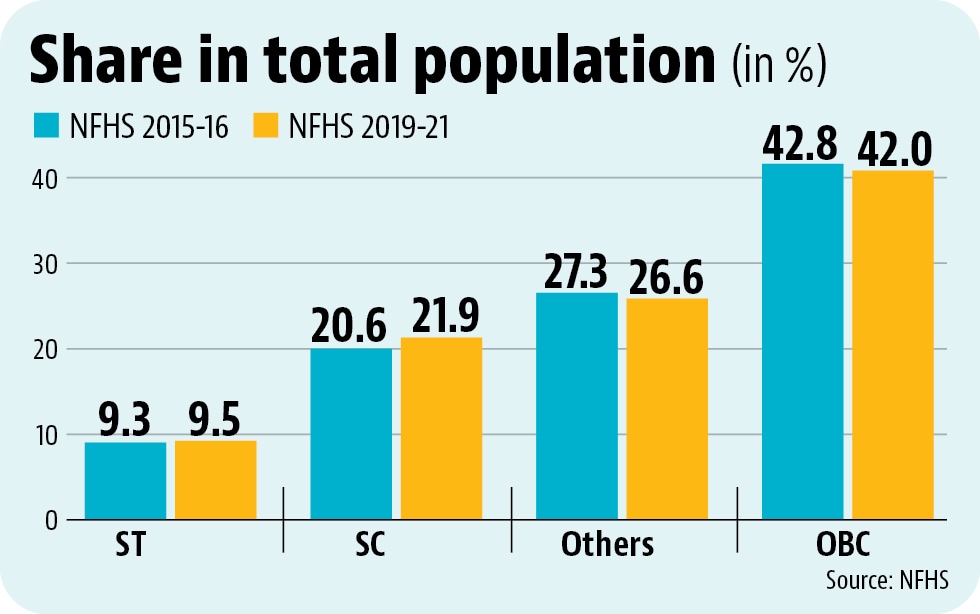
 How big is the ST population in India?Data from the 2011 census – it is the latest available data – puts India’s ST population at 104.5 million, which is 8.6% of the country’s total population of 1.2 billion in 2011. Data from other government surveys such as the National Family and Health Survey (NFHS) shows that STs are the smallest social group in India with a population share of 9.5%. Other backward classes (OBCs), Scheduled Castes (SCs) and non-SC/ST/OBC groups have a population share of 42%, 21.9% and 26.6% respectively according to the 2019-21 NFHS.
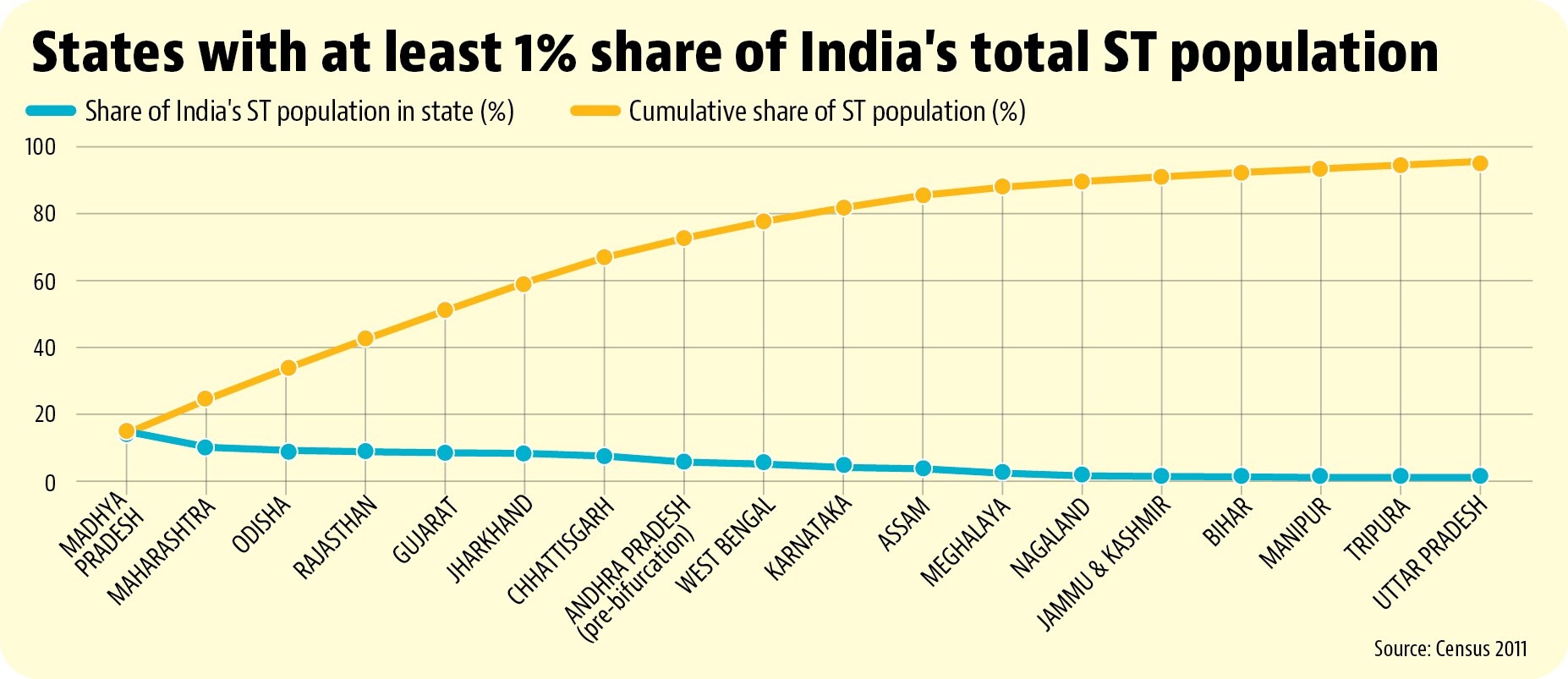
- But the ST population is concentrated in a few statesOnce again, 2011 census is the best statistical database is to examine the spread of the ST population. Of the 35 states and UTs in the 2011 census, just five had half of India’s 104.5 million ST population, and just eight were home to almost 75% of India’s 104.5 million ST population. None of these eight states are from the North-East, where the proportion of STs in state’s population is very high, but have low overall and ST populations in absolute terms. The concentration of the ST population becomes even more apparent if one looks at it at the district level. Of the 640 districts in the 2011 census, just 72 districts accounted for 50% of the total ST population, and just 251 districts accounted for 90% of the ST population.
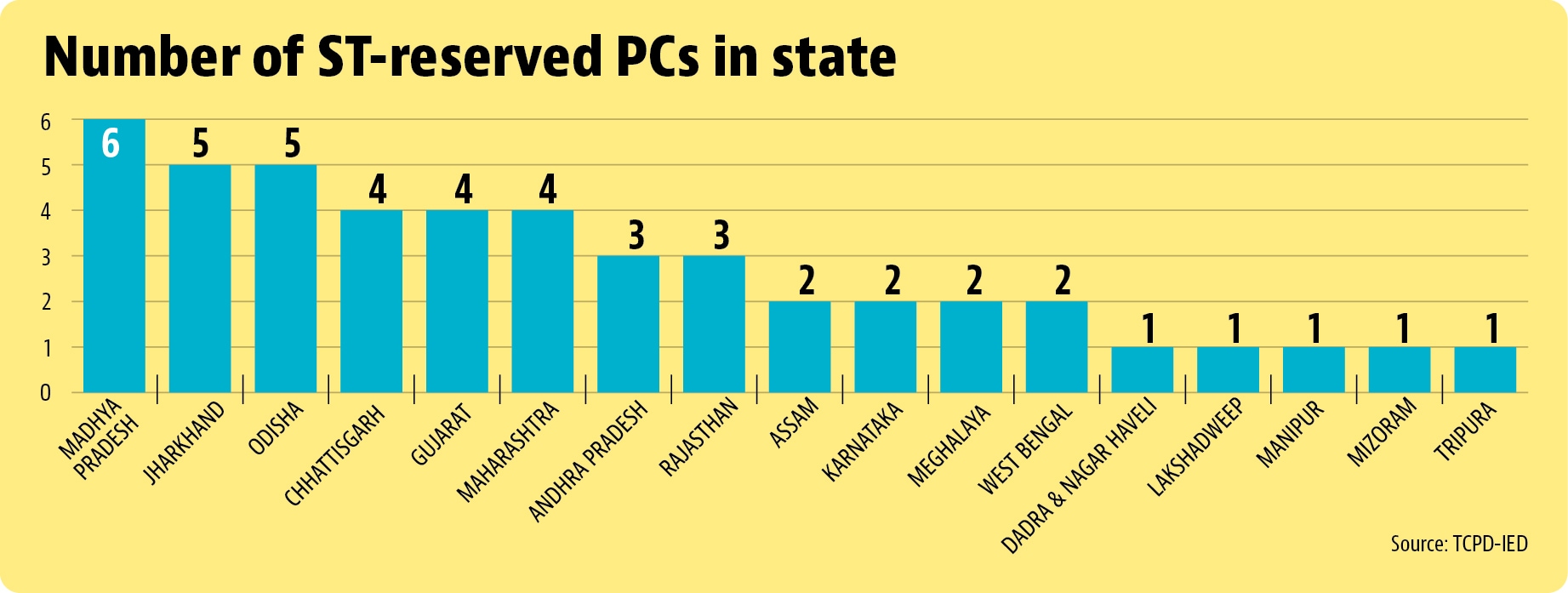
- From demography to political geographyOut of India’s 543 parliamentary constituencies (PCs), 47 are reserved for STs. This means that only an ST candidate can contest from these PCs. All of these PCs are located in 17 states and UTs; and only nine regions have over 75% of these PCs. Forty of the 47 ST-reserved PCs are outside the northeastern states. This is expected because the north-eastern states have very few PCs because of their small population overall.
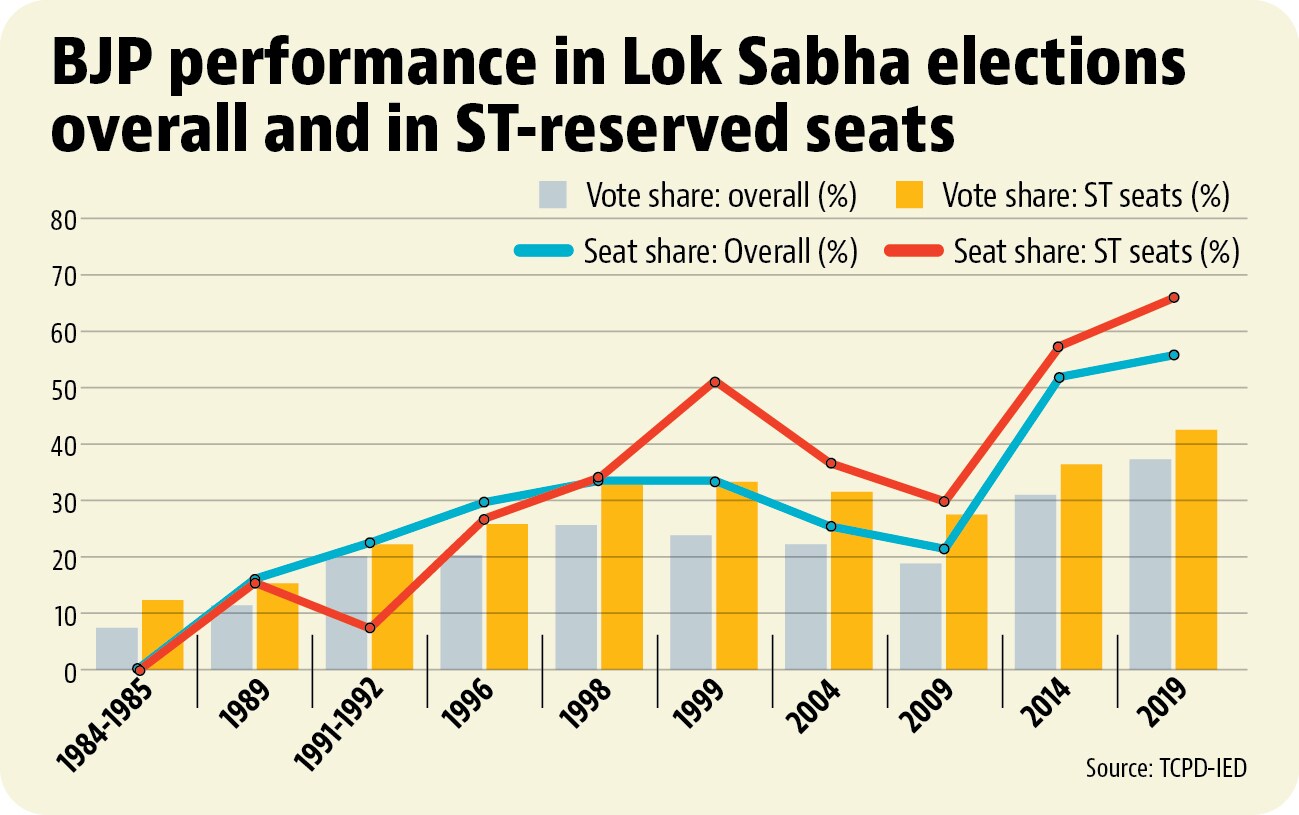
- The BJP won a majority in ST seats even before 2014 and 2019Not only did the BJP win a majority on its own in the Lok Sabha in 2014 and 2019, it also won a majority of the 47 ST-reserved seats. In fact, it had a slightly better seat share in ST-reserved seats than overall. This latter trend is in keeping with BJP’s long-term performance. Since the 1998 elections, the BJP’s seat share in ST-reserved PCs has been better than its overall seat share. While BJP’s overall seat share remained 33.5% in both the 1998 and 1999 elections, the party won a majority in the ST-reserved ACs even in 1999. Though it could not maintain this majority in ST-reserved PCs in 2004 and 2009 elections, its seat share in these PCs was still better than its overall seat share. What is interesting about the party’s 2014 and 2019 performance in these PCs is that both its vote share and seat share in ST-reserved PCs was higher than it was in 1999.
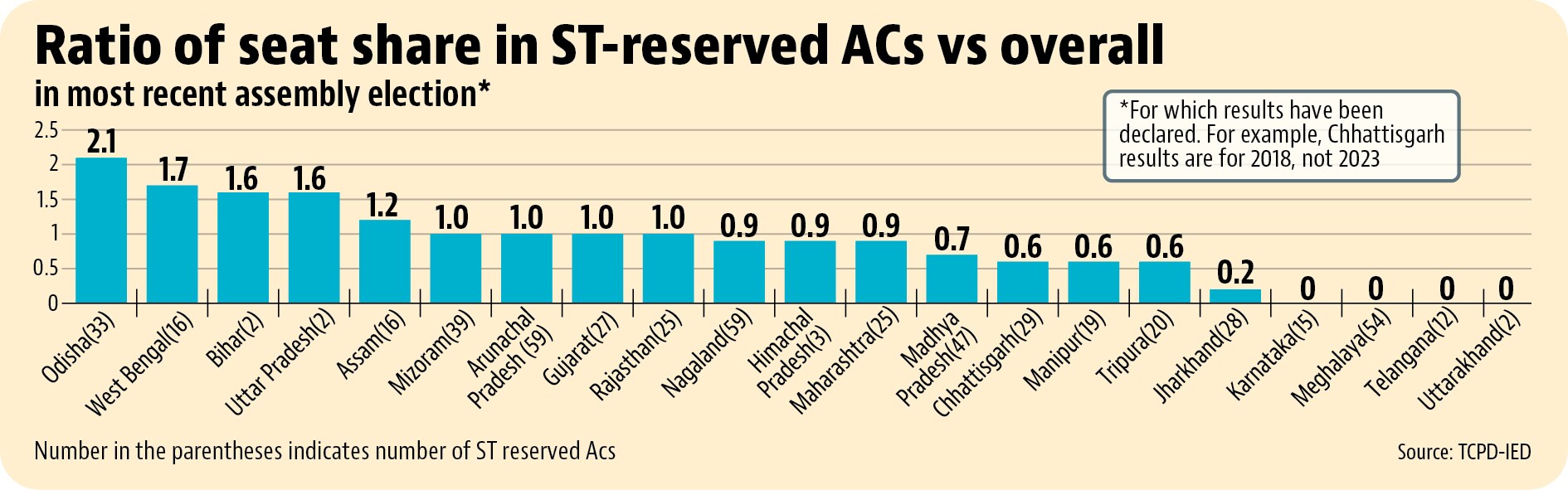
- But it still struggles at the state levelUnlike at the national level, the BJP does not always perform better in ST-reserved assembly constituencies (ACs). Among the most recently held state elections (for which results have been declared) , the BJP’s performance in ST seats was better than its overall performance in only a few states – seven of the 17 states where the party has won any ACs. Among the remaining 10 states, its performance in ST seats trailed its overall performance the most in Jharkhand, Tripura, Manipur, and Chhattisgarh (2018).
groups. The occasion coincided with Jharkhand’s state foundation day and the birth anniversary of Birsa Munda, an iconic freedom fighter hailing from the Munda ST group in the Santhal Pargana region. At this event, the PM unveiled a series of welfare programs for tribal communities, including the Pradhan Mantri Particularly Vulnerable Tribal Groups (PVTGs) Development Mission, a ₹24,000 crore initiative aimed at enhancing the socioeconomic conditions of PVTGs. This outreach holds significance amid the ongoing state assembly elections and the approaching Lok Sabha elections in 2024. Here are the some charts that explain the importance of this ST outreach by Modi over and above the ongoing election cycle.