E-Paper



Odisha panchayat polls from February 16: SEC
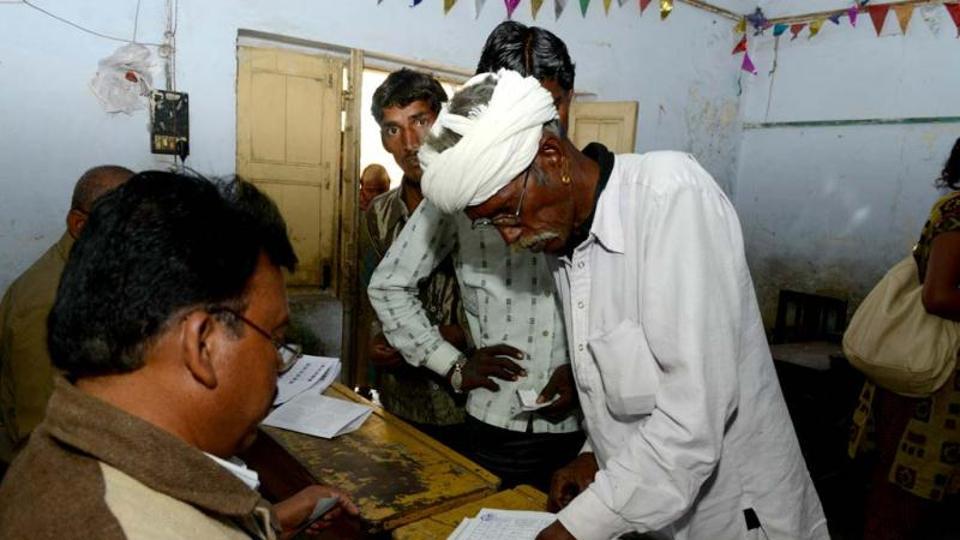
Odisha panchayat election 2022 date: The three-tier panchayat elections in Odisha will be held in five phases from February 16 to 24 amid strict adherence to Covid-19 protocols, the state election commission said.

 Prefer HTon Google


The three-tier panchayat elections in Odisha will be held in five phases from February 16 to 24 amid strict adherence to Covid-19 protocols, the state election commission (SEC) announced on Tuesday.
While no political rallies and victory processions will be permitted, door-to-door campaigns with the participation of maximum five people, including the candidate, will be allowed, it added.
The state poll body’s announcement came even as a few political parties sought to halt the forthcoming panchayat elections if reservation for Other Backward Classes (OBCs) is not ensured. The Odisha high court had last month directed that there must be no reservation for backward classes in the panchayat elections — in compliance with recent Supreme Court orders.
Addressing reporters here, SEC Aditya Prasad Padhi said voting for 853 zilla parishad seats, 91,916 wards and 6,794 gram panchayats will be held on February 17, 18, 20, 22 and 24 between 7 am and 1 pm. The counting of votes, which will be carried out at the block sardar level, will be held on February 26, 27 and 28.
“In view of the Covid cases, only door-to-door campaigning with not more than five people including the candidate would be allowed. No physical rally of political parties or probable candidates or any other group related to election would be allowed,” he said.
The model code of conduct has come into effect from Tuesday and will be in place till February 28, he added.
“Only fully-vaccinated persons after a negative RT-PCR report will be allowed into the counting centres,” Padhi said.
With the high court last month ruling out reservations for OBC, the state, perhaps for the first time, is going to witness an election on the basis of caste as political parties rush to give more representation to the community. The OBCs constitute at least 54% of the total population.
While the ruling Biju Janata Dal (BJD) had initially said it would give 27% of the tickets to the OBCs, last month, it raised the figure to 40%. While the Bharatiya Janata Party (BJP) and Congress are yet to make announcements in this regard, they are likely to match or surpass BJD’s allocation for the community.
The BJP said it would challenge the high court order on OBC reservation in the top court. “We will challenge the HC order on OBC reservation before the Supreme Court in the next couple of days. Let the poll process go on. We are determined to get at least 27 per cent reservation for the OBCs in the panchayat polls,” Surath Biswal, head of BJP’s OBC morcha, said.
Congress leader and MLA Suresh Routray said: “It’s good that panchayat polls are happening on schedule. We will win 40 per cent of the seats in the zilla parishad.”