E-Paper



On World Wildlife Day, Assam’s Kaziranga National Park records gharial sighting
The reptile species (Ganvialis gangeticus) is listed in Schedule 1 of the Wildlife Protection Act, 1972 and is critically endangered in the IUCN (International Union for Conservation of Nature) Red List. According to Word Wide Fund for Nature (WWF), only around 800 of them exist at present.

 Prefer HTon Google


In a rare coincidence on World Wildlife Day, forest officials and wildlife experts on Thursday recorded the first documentary evidence of the presence of the critically endangered gharial in Assam’s Kaziranga National Park and Tiger Reserve (KNPTR).
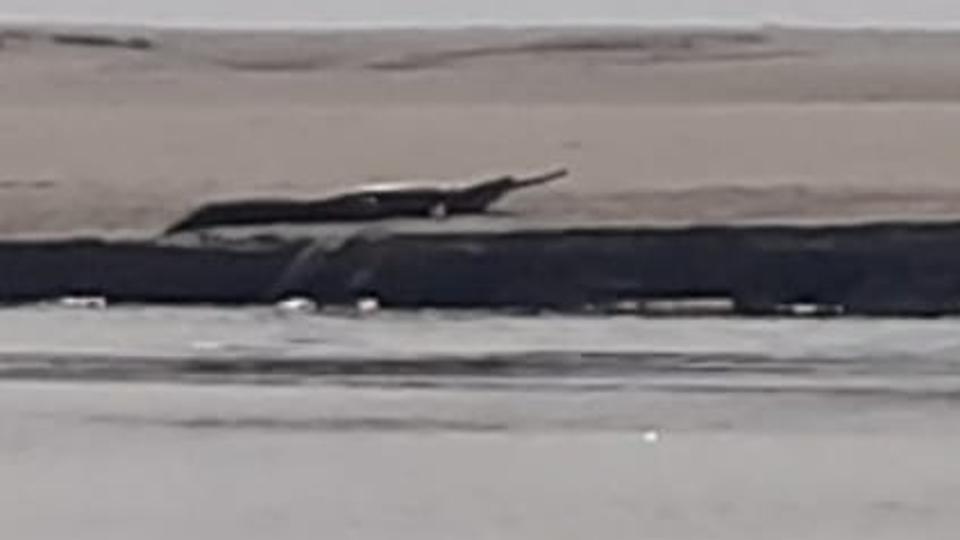
A team saw the animal, on a sandbar on the Brahmaputra River at Silghat area. Though there have been reports of sightings of the animal in the past, this was the first time it was caught on camera in the national park.
The reptile species (Ganvialis gangeticus) is listed in Schedule 1 of the Wildlife Protection Act, 1972 and is critically endangered in the IUCN (International Union for Conservation of Nature) Red List. According to Word Wide Fund for Nature (WWF), only around 800 of them exist at present.
“It’s a rare find. A team was doing a survey when they saw the animal and was able to record it on camera. Though there have been reports of some sightings many years ago, this is the first documentary proof of a gharial’s presence in KNPTR,” said Ramesh Gogoi, divisional forest officer, Kaziranga.
According to experts, gharials have been sighted in parts of western Assam in areas like Goalpara and Manas, but the last time anyone reported seeing the animal in the KNPTR region, which is in central Assam was in the 1980s.
The sighting of the animal in the area could indicate that it is its natural habitat or it could be sporadic presence. More surveys would be needed to know if there is presence of more members of the species in the area.
“We were conducting a survey of wildlife distribution and presence in the area when we noticed the gharial on the sandbar. At first, we were not sure whether it was a gharial or not, but its long slender snout confirmed it for us,” said Tridip Sarma, project officer, WWF-India.
“From the size and shape of the snout we could gather that it was an adult female. Since we were on a speedboat, it was not possible to get very clear photos. When the animal noticed us, it jumped into the river. More surveys would be needed to find if any other gharials are present,” he added.
The gharial derives its name from ‘ghara’ or a pot due to the shape of the bulbous growth at the tip of the snout in adult males. The growth is absent in females. While males can grow up to 6 metres, females usually are not longer than 4 metres.