
 E-Paper



Don’t ratchet up tensions in region, India warns Pakistan
On Pakistan’s letter to the United Nations alleging human rights violations in Jammu and Kashmir, the external affairs ministry said “the letter is not even worth the paper on which it was written. Don’t want to give credence to it by reacting”.

 Prefer HTon Google


India on Thursday condemned what it said were provocative and irresponsible statements by the Pakistani leadership following the effective revocation of Kashmir’s special status even as defence minister Rajnath Singh questioned Pakistan’s claim on Jammu and Kashmir.
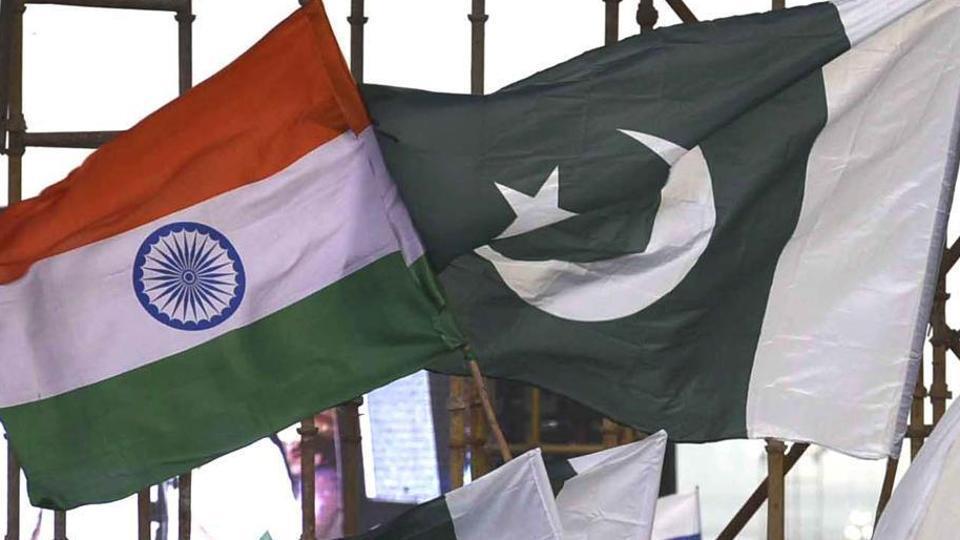
The stinging reaction to comments by Prime Minister Imran Khan and other Pakistani ministers, who have repeatedly spoken of the possibility of war, came against the backdrop of heightened tensions between the two countries over the changes effected by Parliament in the status of Jammu and Kashmir on August 5 and 6.
“We strongly condemn the highly irresponsible statements made by the Pakistani leadership on matters internal to India. These statements include references to jihad, and to incite violence in India,” external affairs ministry spokesperson Raveesh Kumar told a news briefing in response to several questions on statements by Pakistan’s top leadership.
Watch | ‘Lies & deceit’: India slams Pak’s ‘interference’ over J&K | Art 370
“This is intended to project an alarmist situation which is far from the ground realities. Pakistan needs to understand the world has seen through their provocative and unsubstantiated rhetoric which is based on lies and deceit,” he said.
The comments came on the heels of Pakistan testing its nuclear-capable, surface-to-surface Ghaznavi ballistic missile, with a range of 290km. Kumar said Pakistan had informed India about the test. “According to established confidence-building measures, we were informed about the test by Pakistan,” he said.
Earlier in the day, defence minister Singh said at Leh in Ladakh that Pakistan has no locus standi on Jammu and Kashmir and should stop making statements on India’s internal affairs.
Pakistan had illegally occupied parts of Kashmir and Gilgit-Baltistan, he told a gathering of security personnel and scientists at an event organised by the Defence Institute of High Altitude Research. A resolution passed unanimously by Parliament in February 1994 had clarified India’s position on Kashmir, he said.
“I want to ask Pakistan – when was Kashmir with Pakistan? Even Pakistan was created out of India. We respect the existence of Pakistan but that doesn’t mean it should continue indulging in rhetoric on Kashmir,” he said in Hindi.
“There was never any doubt in this country that Kashmir was ours. The truth is that Pakistan has illegally occupied PoK (Pakistan-occupied Kashmir) and Gilgit-Baltistan. Pakistan should focus on violation of the human rights of the residents of PoK,” he added.
Kumar reiterated India’s demand that Pakistan crack down on terrorists operating from its soil, who were being used to create disturbances in the Kashmir Valley and other parts of the country.
“We are all aware that Pakistan has been using terrorism and cross-border terrorism as an instrument of its state policy, we have continued to highlight our concerns in this regard with them,” he said.
“Pakistan has an obligation to take action against terrorists and terror groups operating from its soil and it is important for them to now start behaving like a normal neighbour.”
Kumar said normal neighbours didn’t “push terrorists into a neighbouring country” and instead engaged in “normal talk” and “normal trade but this is not something which is happening from Pakistan”.
Over the past few weeks, Khan and other ministers have spoken of the possibility of war with India even as New Delhi maintained that the changes in Kashmir were an internal matter. The Indian government has largely refrained from responding to these comments.
People familiar with the developments said India had informally taken up provocative tweets and comments by Prime Minister Khan and other Pakistani ministers with world leaders to highlight the “war-mongering” by Islamabad.
“They have resorted to a hashtag war and a misinformation campaign to create an alarming picture which doesn’t match the ground realities. This is because they have run out of options. The military option is clearly ruled out,” said an official who didn’t want to be named.
Pakistan PM Imran Khan on Thursday also called for nationwide demonstrations to protest over the Kashmir issue. “I want all Pakistanis to come out tomorrow (Friday) 12 noon -12.30 pm to show solidarity with the Kashmiri people... We must send a strong message to Kashmiris that our nation stands resolutely behind them,” he wrote on Twitter.
The international community was largely satisfied by India’s stance that the changes in Kashmir were an internal matter and this had been reflected in public statements by world leaders, the people cited above said. Pakistan’s efforts to internationalise the Kashmir issue hadn’t gained much traction, they said.
India’s efforts to pressure Pakistan on the issue of cross-border terrorism received support from Poland following talks between visiting external affairs minister S Jaishankar and his Polish counterpart Jacek Czaputowicz in Warsaw on Thursday. Without naming Pakistan, a joint statement issued after the meeting said Czaputowicz “expressed the commitment of Poland to support global efforts to combat terrorism in all its forms and manifestations, particularly cross-border terrorism”.
In a related development, the Mundra Port, run by Adani Ports and Special Economic Zone, and state-owned Kandla Port said on Thursday they had been warned by the Coast Guard and intelligence agencies that Pakistan-trained commandos had entered the Gulf of Kutch to carry out attacks on ports. Both ports directed their employees and ship operators to be vigilant.
The external affairs ministry spokesperson said he had no information in this regard, but added: “Our security forces are always prepared to deal with any eventuality.”



