
 E-Paper



Pakistan using US anti-tank missiles to target Indian army bunkers on LoC
Army officers say Islamabad has adopted a three-pronged strategy to keep Jammu and Kashmir on the edge.

 Prefer HTon Google


At least 10 Pakistani soldiers and nine Indian ones have died in ceasefire violations on the Line of Control (LoC) thus far this year, according to army officers familiar with the matter who expect the violations to continue despite an uneasy quiet along the 740km de-facto border this week.
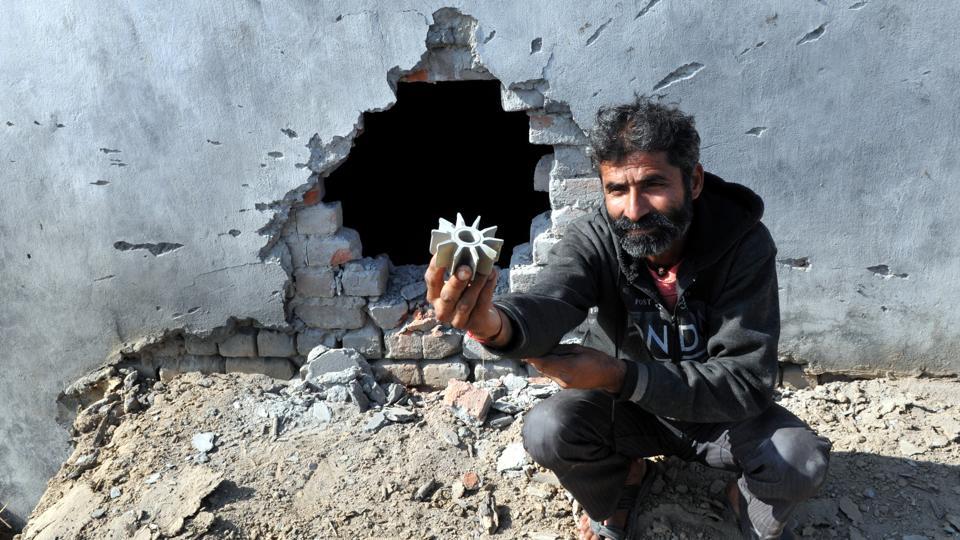
According to the officers, who asked not to be identified, Pakistan has been escalating tensions and is using US TOW-2 anti-tank guided missiles (ATGMs) and 120 mm heavy mortars to target Indian army bunkers in the Rajouri and Poonch sectors.
The officers say that based on intelligence inputs and communication intercepts, Pakistan lost 136 soldiers in 2017 as a result of the action-and-reaction on the LoC.
The officers, from Army HQ, say Islamabad has adopted a three-pronged strategy to keep Jammu and Kashmir on the edge. “On the face of it, Pakistan is offering talks at the level of Director General of Military Operations (DGMO) ostensibly to enforce ceasefire along the LoC, even as it is terrorists, like it did in the February 6 attack in Srinagar, to escalate violence to destabilise the Valley.
Meanwhile, south of the Pir Panjal, it is using ATGMs and heavy mortar to target the civilian population and at the same time push terrorists across the borders under the cover of fire,” said a senior army officer.
Captain Kapil Kundu and three other troopers lost their lives to a direct hit by a 120 mm mortar shell in the Bhimber Gali sector.
The Pakistan Army is using Raytheon’s TOW 2A anti-armour missiles which it purchased from the US for self-defence needs and in support of US operations against terrorists in Afghanistan.
The use of missiles by Pakistan has dramatically escalated tensions across borders with guns now being used in a direct firing mode by Indian troopers in response against positions of adversary.
One unexploded Pakistani missile has been brought down to Army HQ in Delhi to understand and highlight the threat from across the LoC, the army officers said.
Although the Indian Army has decided to respond to latest aggravation at appropriate time, Army HQ’s assessment is that due to a dry winter Pakistan is pushing infiltrators across the LoC, taking advantage of the lack of snow on mountain ridges and pastures below, the army officer mentioned in the first instance said.
With the Narendra Modi government indicating that it will not talk to Pakistan till terrorism and violence continues in Kashmir, the Indian Army is in no mood to let any escalation go unpunished for the moment, this person added.


