
 E-Paper



Parliament security breach: Gurugram cab driver hosted accused but did not know of plan, say police
Parliament security breach: A police officer said Vishal Sharma was aware of the protest at Parliament but not that it will happen inside the House

 Prefer HTon Google


NEW DELHI: Behind a pair of rusting brown gates stands a cramped two-bedroom house, its stained paint peeling off the walls, blemished by blobs of dampness. Just off the colony road in Gurugram housing board neighbourhood, the decades-old house is sparsely furnished – the walls adorned by the scrawny sketches of a youngling, heaps of drying clothes threatening to snap the string on which they are piled, and crude slabs of cement hiding the holes left behind by time and the elements.
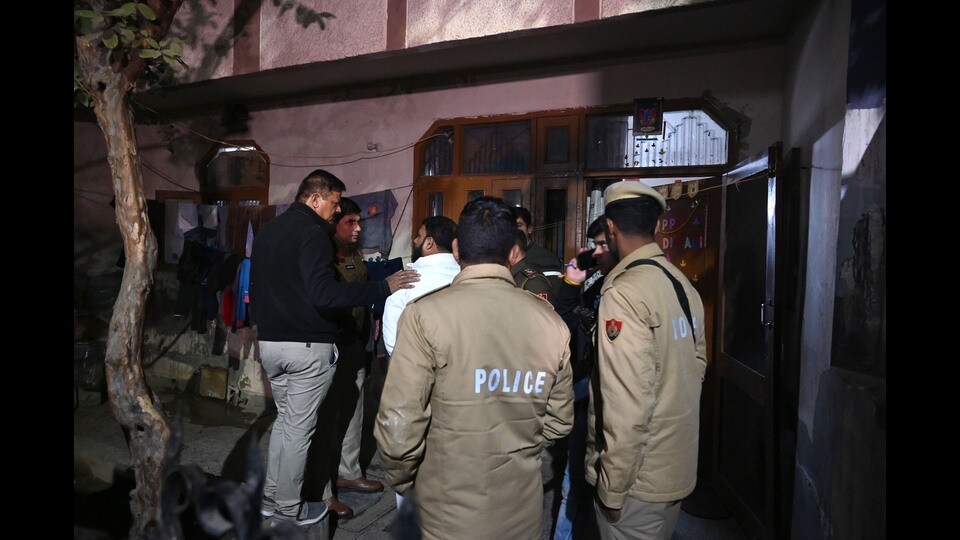
In short, the kind of dwelling no one would give another look to.
Yet, on Tuesday, this nondescript house played host to five people who are now on headlines across the world, having mounted a daring breach of security at the highest seat of Indian democracy.
Sagar Sharma, Manoranjan D, Neelam Singh, Amol Shinde and Lalit Jha all stayed at this house, having congregated in Delhi from different states earlier this day.
Also Read: From Che to Bhagat, how Lucknow youth hero-worshipped revolutionaries
The owner of this house is Vishal Sharma, alias Vicky, who earlier worked as a private car driver before suffering pain in his left hand in 2022. And despite the perpetrators of the brazen incursion living in his house, police say he may have had little clue of what his guests were planning.
Gurugram assistant commissioner of police Varun Dahiya said that Sharma, along with his wife Brinda, were questioned by the police and returned to Gurugram around 6.30pm on Thursday. “They were let go after Delhi Police did not find their involvement in the case. They were unaware of their planning,” he said.
Also Read: How Bhagat Singh endures, even for the misguided
The house was bought by Sharma’s step parents, who gifted him the property in 1990. The old-fashioned structure and its mosaic floor was strewn with photographs of freedom fighters Bhagat Singh, Sukhdev, Rajguru, and Ram Prasad Bismil and a wealth of literature on them – perhaps holding clues to the misguided streaks of inspiration behind the attack.
Police said Sharma met Manoranjan D in 2016-17 during a protest in Chandigarh over not naming the local airport after Bhagat Singh. “For this protest, Manoranjan came from Bengaluru to Delhi by flight and went to Vishal’s residence. From there, they went to Chandigarh protest in Vishal’s car,” investigators said on the condition of anonymity.
Police said Sharma met one of the other attackers – Sagar Sharma – two years ago in Gurugram, and the rest this week. “Vishal was aware of the protest at Parliament but was not aware that it will happen inside the House,” said an investigator, requesting anonymity.
Dahiya said Sharma earlier used to work as a motorbike rider in an export house and became a freelance driver 1.5 years ago. “He had developed some medical conditions with his arms and was known as krantikaari (revolutionary) among his neighbours,” Dahiya said.
“He has several nicknames and was notorious for aggressive behaviour,” he added. Sharma’s financial condition was bad, showing in the shabby upkeep of his house.
Vijay Parmar, the president of the local Resident Welfare Association, alleged that Sharma would assault his wife in an inebriated state. “We hardly maintained any communication with him due to his behaviour. His lifestyle had a shroud of secrecy,” Parmar said.
Yogender Pal Singh, who lived in the house opposite, corroborated this. “He used to start drinking from 6am almost everyday. His financial state was poor and used to take whatever job he got,” he said. Neighbours said that a close relative settled in London used to send Sharma money, that was mostly for their daughter’s education and food.
As the crowds thinned in front of the house on Thursday evening, the couple returned home, and remained indoors. They did not meet any neighbours and ordered food from outside, said locals.
The ordeal has left the family traumatised, most of all their 16-year-old daughter who spent the day with a three-member Gurugram Police team that ordered pizza for her and counselled her. “I want to study and become a doctor to serve my nation…I hope I will be able to face my friends and society,” she said.


