
 E-Paper



Parliamentary Panel suggests study on long-term Covid effect
The suggestion is significant as a large number of people who have recovered from Covid-19 continue to suffer from various ailments.


A parliamentary committee has recommended the Union government to conduct a study on the long-term effect of Covid-19 on human organs while suggesting a host of measures to tackle any future health emergencies.
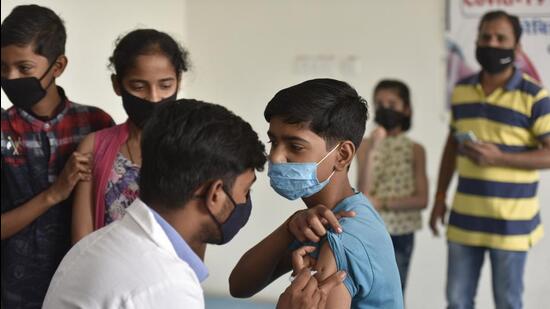
Reviewing the Covid-19 management over the last two years, the standing parliamentary committee on external affairs, headed by Bharatiya Janata Party (BJP) Lok Sabha member PP Chaudhury, also recommended research on the digital divide in education, which was highlighted during the pandemic. It also suggested that services of private television channels, apart from Doordarshan, should also be used in dissemination of online education.
“The committee would like to recommend the government to organise planned study research in various parts of the country on the long-term impact of Covid-19 on human organs and increase the awareness in people based on such studies,” the panel said in its report, submitted in Parliament on Thursday.
The suggestion is significant as a large number of people who have recovered from Covid-19 continue to suffer from various ailments. Some scientific journals in the West have also identified more than 50 types of side effects of Covid-19 in the long term.
The panel has also suggested the expansion of ‘eSanjeevani’, Centre’s web-based comprehensive telemedicine solution, saying it could help reduce the crowd and pressure on government hospitals across the country.
Suggesting a “comprehensive survey on the impact of digital divide”, the report asked the government to “chalk out an institutional mechanism” to address the issue. Debate around the digital divide gained steam during the ongoing pandemic as educational institutions remained shut for almost two years leaving students with little option but to study online.
The panel observed that a survey was necessary “to ensure that those without online learning devices also get access to free and compulsory education, which is a fundamental right enshrined in the Constitution.”
“For this purpose, Doordarshan should not remain the only mode of dissemination, but all private channels should also be roped in in this national effort,” the report said, while asking the ministry of external affairs to facilitate students who want to study in foreign countries “join their institutions abroad in an appropriate way”.
In its comprehensive review, the committee strongly recommended that the government should make “all possible efforts with the collaboration of the external and internal investors” to create more conducive environment to “boost MSMEs (micro, small and medium enterprises) and reduce dependency upon imports”.
It also asked the Centre to enforce the National Disaster Management Act and issue strict directions to states with high Covid-19 positivity rates for “imposing restrictions particularly to prevent spread of infections and to minimise the chances of mutation”.
The panel added that a comprehensive research ecosystem for strengthening research on virology and development of diagnostics, therapeutics and vaccines was needed. It recommended “setting up of a chain of research institutes/laboratories for the purpose in each state/Union territory to supplement the functions of the National Institute of Virology (NIV)”. It will help the country become fully capable to deal with Covid-19 timely and effectively and any such pandemic in future, the panel said.
The report cautioned against “any carelessness and complacency” in tackling Covid-19 and asked the government to sharpen focus on preventive intervention. It also asked for an efficient surveillance system. “Sero surveys should continue on a regular basis and state-wise with increased sample size,” the report said.
It also suggested a “national action plan” to ensure sustainability and self-reliance in the indigenous production of medical items.


