
 E-Paper



After chai, PM Modi adds coffee to his charcha: Koraput brew in Mann ki Baat | Watch
Narendra Modi recalled last year’s Mann Ki Baat, when he spoke about Araku coffee and highlighted India’s diverse coffee varieties.

 Prefer HTon Google


Prime Minister Narendra Modi, who is famously associated with tea, turned the spotlight on coffee during the 127th edition of his monthly radio address, ‘Mann Ki Baat’.
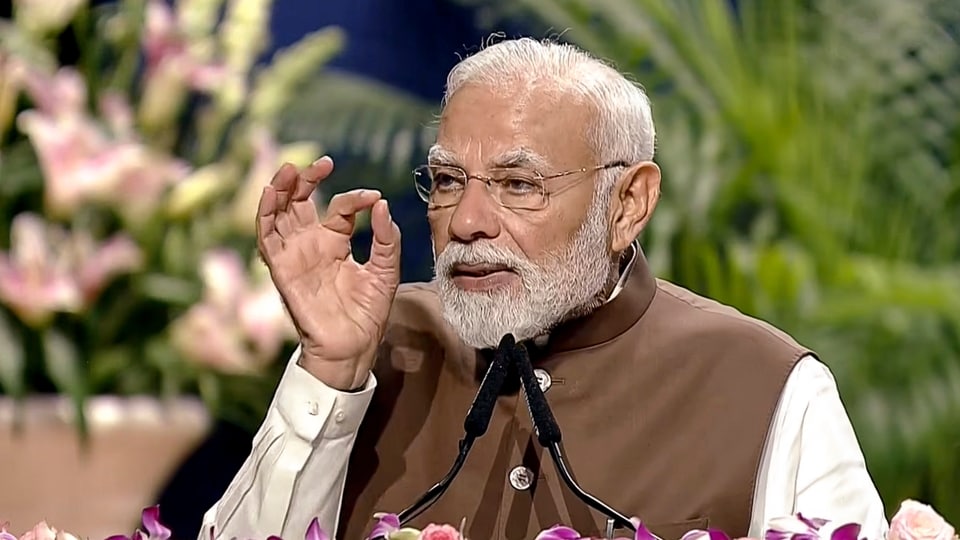
“You all know my connection with tea, But today, I thought why not talk about coffee in ‘Mann Ki Baat’,” the Prime Minister said. He then went on to highlight the growing global popularity of Indian coffee and gave a special mention to Odisha’s Koraput region.
Modi recalled last year's edition of the radio programme where he talked about Araku coffee of Andhra Pradesh.
“Some time ago, many people from Odisha also shared their feelings with me about Koraput coffee. They wrote letters to me, requesting that Koraput coffee be discussed in ‘Mann Ki Baat’ as well,” the Modi said.
‘Koraput coffee is simply amazing’
He termed the taste of Koraput coffee as “simply amazing".
Beyond the flavour, he noted, coffee cultivation is bringing tangible benefits to local communities.
He highlighted the passion of certain growers in Koraput, who left well-paying corporate jobs to pursue coffee farming. “Such is their love for coffee that they left those jobs and are now working successfully in this field,” he added.
“There are also many women whose lives have seen pleasant changes because of coffee. Coffee has brought them both respect and prosperity. Truly, it is rightly said—Koraput coffee is exceptionally delicious,” Modi said.
Coffee production and exports
- Koraput is known for its unique agro-climatic conditions, ideal for high-quality Arabica coffee. Around 5,000 hectares in the state are under coffee cultivation, according to news agency PTI.
- The Tribal Development Co-operative Corporation of Odisha Ltd (TDCCOL) manages the end-to-end processing, from procurement to drying, grading, and marketing, and ensures the quality of the produce.
- India primarily cultivates Arabica and Robusta coffee, with Karnataka accounting for nearly 70% of national production, followed by Kerala and Tamil Nadu.
- Non-traditional regions like Andhra Pradesh and Odisha are gradually emerging as new cultivation hubs.
- During April-September this fiscal year, India’s coffee exports rose 12.5% to USD 1.05 billion.
Traditional coffee regions
The Prime Minister also highlighted that the Northeast is progressing in coffee cultivation, further strengthening the global identity of Indian coffee.
“Indian coffee is becoming very popular all over the world. Be it Chikmagalur, Coorg and Hassan in Karnataka; the areas of Pulney, Shevaroy, Nilgiri, and Annamalai in Tamil Nadu; the Niligiri region on the Karnataka-Tamil Nadu border; or the areas of Wayanad, Travancore, and Malabar in Kerala—the diversity of Indian coffee is truly remarkable,” he said.


