E-Paper



Modi blames Congress for meting out step-motherly treatment to villages
Addressing panchayat representatives on the National Panchayati Raj Day from Madhya Pradesh’s Rewa, Modi expressed happiness that the village councils were implementing the government’s schemes for villages and the poor


Prime Minister Narendra Modi on Monday blamed the previous Congress governments for meting out “step-motherly” treatment to villages post-independence while underlining the importance of the panchayati raj system for creating a developed India.
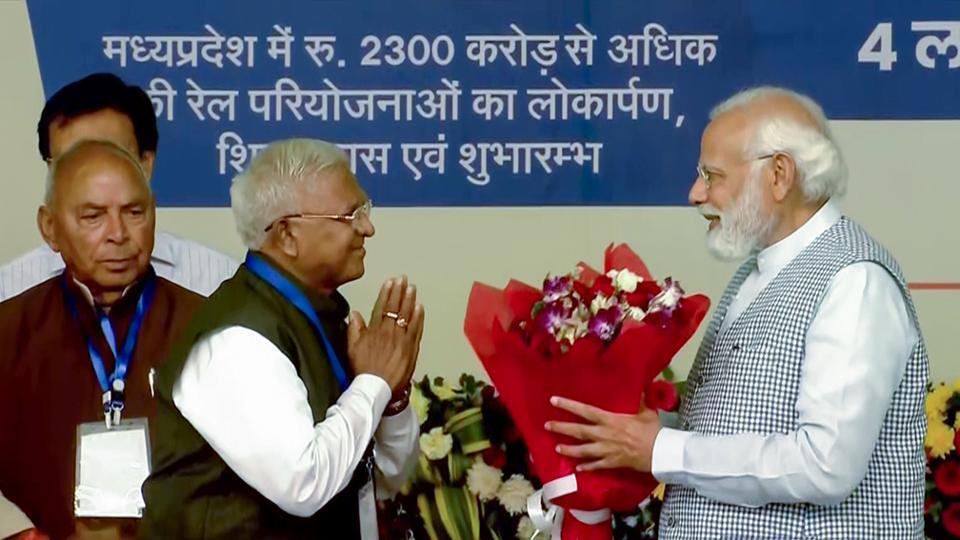
Addressing panchayat representatives virtually on the National Panchayati Raj Day from poll-bound Madhya Pradesh’s Rewa, Modi expressed happiness that the village councils were implementing the government’s schemes for villages and the poor with full dedication.
He said every citizen is working towards fulfilling the dream of a developed India with dedication. “It is important to develop the social system, economy, and panchayati raj system to create a developed nation.”
Modi referred to the government’s “tireless work” in creating a robust panchayat system and expanding its scope. He added the previous governments discriminated against the panchayats. “Before 2014, the budget of panchayati raj was less than 70,000 crores. But after 2014, this grant was increased to more than 2 lakh crores.”
He said 10 years before 2014, only 6,000 panchayat buildings were constructed. “...we have constructed more than 30,000 panchayat buildings in the last eight years. Money was not spent on villages...villages were not considered vote banks.”
Modi quoted Mahatma Gandhi saying India lives in villages and attacked the previous government for ignoring the ideals of the father of the nation. “...the previous government barely paid any heed...the panchayati raj institutions were neglected for decades. Today, panchayats are coming up as the life force of India’s development. Gram Panchayat Vikas Yojana is helping panchayats to work effectively.”
Modi attacked state Congress chief Kamal Nath without naming him. He asked the people of Chhindwara, which Nath represented in Lok Sabha, why the people they trusted for a long remained indifferent to the development of the area. “The answer lies in their thinking. After independence, the party which ran the government broke the trust of the villages. During the Congress rule, the villages were kept at the bottom.”
He said the country cannot progress through step-motherly treatment to the villages. He added 200000 panchayats have been given optical fibre connectivity since his government was voted to power in 2014. “The present government is working hard to bridge the gap between villages and cities.”
Modi highlighted the schemes for empowering panchayat raj institutions. “Every panchayat, every institution, every representative, every citizen of the country will have to unite for a developed India. This is possible only when basic facilities reach 100% beneficiaries quickly and without any discrimination.”
Modi also inaugurated projects under the Jal Jeevan Mission, which seeks to provide safe drinking tap water by 2024 to all households.
Madhya Pradesh chief minister Shivraj Singh Chouhan thanked Modi for Jal Jeevan Mission. “If you open the tap, water will come to every house. The country is moving forward under the leadership of the Prime Minister, who lives in our hearts.”