E-Paper



Political executive should handle Bengal law and order, not courts: Supreme Court
The Supreme Court said it expected the state machinery to discharge its responsibilities without the need for judicial intervention

 Prefer HTon Google


The Supreme Court on Monday declined to urgently entertain a plea seeking continued deployment of central forces in West Bengal in view of apprehensions of post-poll violence, observing that maintaining law and order squarely falls within the domain of the political executive. With counting of votes underway for the assembly elections, the court said it expected the state machinery to discharge its responsibilities without the need for judicial intervention.
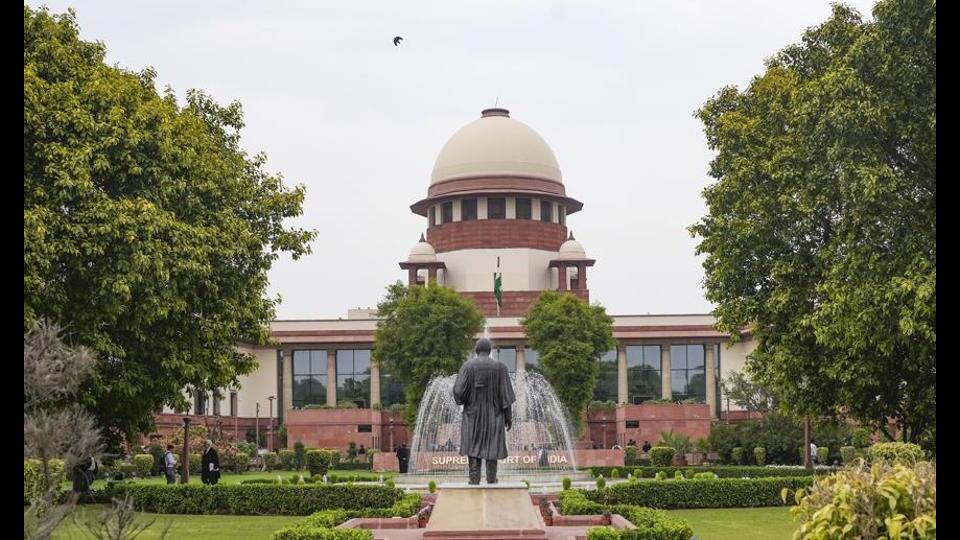
A bench comprising Chief Justice of India (CJI) Surya Kant and Justice Joymalya Bagchi said that no judicial order by the top court was warranted at this stage. “Let the state be run by political executives. They will decide. We expect they understand their responsibilities,” remarked the bench, as it refused to urgently hear a plea seeking directions for the continued deployment of central police forces.
The observations came after senior advocate V Giri mentioned a plea on behalf of Sanatani Sangsad for a direction to ensure the presence of central forces even after the conclusion of polling, along with a monitoring mechanism under a former Supreme Court judge. Giri referred to instances of alleged violence in previous election cycles and urged the court to intervene pre-emptively.
The bench appeared unconvinced about the urgency of the plea at a stage when the electoral process had concluded and only counting remained. “Elections are over, counting is underway. What is the urgency?” asked the court, suggesting that the appropriate forum for such grievances would be the jurisdictional high court.
The court noted submissions on behalf of the Election Commission of India (ECI), represented through DS Naidu, that its role effectively ceases once polling is completed. It will take up the plea on May 11 as scheduled earlier.
The petitioner cited past instances wherein post-poll violence marred the electoral landscape in the state, often triggering legal and political debate over the adequacy of security arrangements.
In its application filed in February, the petitioner alleged that despite the West Bengal government’s assurances, violence, property destruction, and intimidation of election officials persisted to bypass voter eligibility criteria during the special intensive review (SIR) process. It highlighted the state’s highest Booth Level Officer (BLO) suicides, attributing them to government pressure and TMC threats, forcing illegal voter enrolments. The petition demanded a special task force (STF) under the state’s director general of Police, in consultation with the Election Commission of India (ECI), staffed by central or out-of-state officers for time-bound investigations.
In a previous affidavit, ECI had cited a “pattern of organised violence and intimidation” against election officials in West Bengal, adding that local police showed reluctance to register cases based on BLO complaints. The affidavit compiled incidents “spanning vandalisation of BDO offices, arson, road blockades, physical assaults, threats, and inflammatory speeches”. These, according to the commission, established “beyond doubt that these are not stray incidents but part of a systematic and coordinated effort to derail SIR in West Bengal”.
In a batch of matters relating to the special intensive revision (SIR) in the state, the Supreme Court stepped in to ensure the integrity of the electoral process, including directing the deployment of forces or protecting officials during the sensitive exercise.
The closely-watched assembly election in West Bengal was conducted in two phases amid heightened political contestation. Polling was held over two phases to manage security and logistical concerns, with central forces deployed extensively during the voting period to ensure free and fair elections.