E-Paper



Presumption of innocence ‘far from reality’ for India’s undertrials, says Justice Nath
According to statistics maintained by the undertrial review committee established under a 2015 Supreme Court judgment, there are 530,333 prisoners, with undertrials accounting for 74%

 Prefer HTon Google


New Delhi: Supreme Court judge Justice Vikram Nath on Saturday said that the foundational principle that every accused person is presumed innocent until proven guilty has become “far from reality” for the overwhelming majority of undertrial prisoners, who make up more than 70% of India’s prison population.
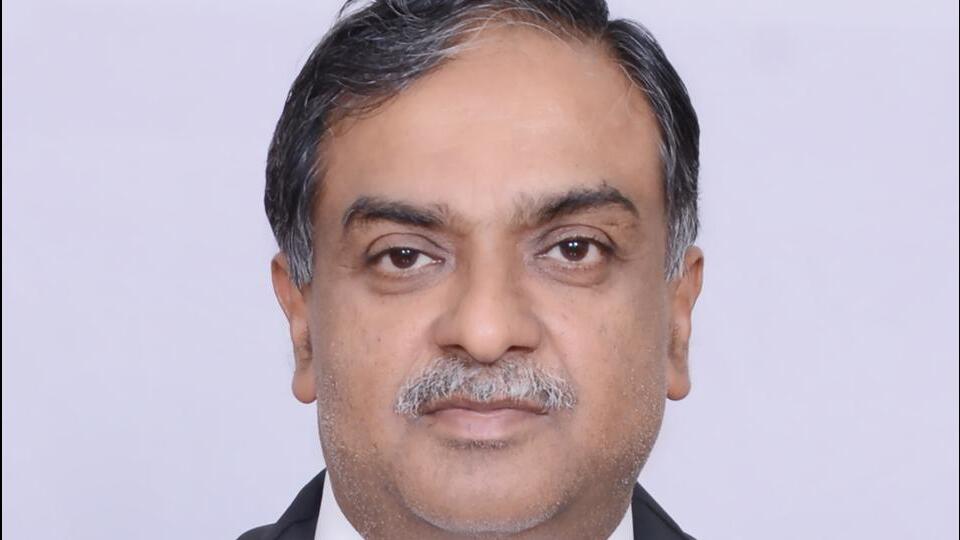
The senior judge said that lakhs of people continue to languish in custody not because the law requires it, but because the criminal justice system has failed them at multiple levels. According to statistics maintained by the undertrial review committee established under a 2015 Supreme Court judgment, there are 530,333 prisoners, with undertrials accounting for 74%.
“The contradiction we are here to discuss today is that between the constitutional promises and the lived reality of undertrial prisoners. It is a golden rule of our criminal jurisprudence that one is innocent until proven guilty. Yet for these undertrials, this is far from reality,” said Justice Nath, delivering the keynote address at a symposium on “Between Custody and Constitution: Field Lessons in Delivering Fair Trial Rights,” organised by the Square Circle Clinic, a criminal justice initiative at the National Academy of Legal Studies and Research (NALSAR).
Referring to cases in which undertrial prisoners have already spent more time behind bars than the maximum sentence prescribed for the offences they are accused of, the judge said that many others remain in jail for bailable offences simply because they cannot furnish bail or produce sureties. “There are undertrials who would have been acquitted or given suspended sentences had their trials concluded promptly — yet they continue to languish,” he said, adding that the injustice is magnified when the accused are poor, marginalised, or unaware of their rights.
Justice Nath noted that although the law guarantees free legal aid, only 7.91% of undertrial prisoners have actually been able to use it, with many unaware that such a right exists. Others, he said, distrust state-provided advocates due to past experiences of mechanical or ineffective representation. “He just waits, not because the law makes him, but because the system has failed him,” he said.
Recounting notable judicial interventions, including the Hussainara Khatoon case (1979) which led to the release of over 40,000 undertrial prisoners, the judge said that landmark judgments alone cannot restore public faith in the justice process. “The faith of people in the system will be restored not by monumental judgments alone, but by the everyday decency of those who serve within it… When legal aid becomes meaningful, justice becomes visible. And when that happens, our democracy breathes a little easier,” he said.
Notably, a bench led by Justice Nath on October 27 sought the response of the Centre, the Attorney General and the Solicitor General on whether prisoners who are acquitted after years of incarceration should receive compensation for the wrongful deprivation of liberty. The bench indicated that the question now is whether the system will acknowledge that when liberty is taken away unjustly, restoration must go beyond release.
Justice Nath highlighted research undertaken by the Square Circle Clinic in prison legal aid, which has helped secure the release of nearly 1,700 inmates since 2019. The report, he said, demonstrates that legal aid currently functions in disconnected institutional silos and requires the creation of a continuous and accountable chain of representation from the first court appearance to the conclusion of trial. Legal aid, he added, must shift from a procedural obligation to a “constitutional and moral duty”, embedded in Articles 21 and 39A, to ensure that poverty or ignorance does not dictate a person’s liberty.
Calling for greater data transparency, he urged the creation of national and state-level longitudinal databases tracking undertrial detention patterns, disaggregated by caste, gender, economic status and geography, to shape evidence-based reform. He also stressed the need for differentiated protections for women undertrials, transgender persons, and those with mental health concerns, whose vulnerabilities are often compounded by systemic invisibility.
“If we are to err, let us err on the side of liberty and dignity,” Justice Nath said, quoting Justice H.R. Khanna. “The measure of our legal system lies not in the elegance of our jurisprudence, but in how we treat the most vulnerable within it. Every undertrial languishing beyond his due, every person denied effective legal aid, is a reminder that our work is far from complete,” he added.