
 E-Paper


Follow the latest breaking news, major developments and agenda-setting stories from India and around the world with the newsdesk at Hindustan Times. Operating round the clock, the desk brings together experienced editors, reporters and correspondents to deliver fast, accurate and contextual reporting across subjects that influence public policy, governance, business, society and international affairs. The HT News Desk covers politics, elections, government policies, the economy, business and markets, science and technology, the environment, law and order, infrastructure, education, climate issues and geopolitics, while closely tracking developments across states, institutions and global capitals. The team also leads coverage of major breaking news events, policy announcements, court proceedings, natural disasters, public emergencies and significant international developments. Reports published by the newsdesk are based on information gathered from reporters on the ground, official statements, government agencies, court records, regulatory filings, recognised institutions and other authoritative sources. Stories undergo editorial scrutiny and verification processes to ensure accuracy, fairness and relevance, and are updated as events evolve and additional information becomes available. Whether covering a key political decision in New Delhi, an economic policy shift affecting millions, a landmark court ruling or a major global event, the HT News Desk aims to provide readers with reliable, fact-based journalism that delivers not only the latest developments but also the context and analysis needed to understand their wider implications.
Arrival of Rafale jets will send a clear message to India’s ‘adversaries’: Officials
The IAF has been on a high alert for the last two weeks in view of escalation in tension with China following clashes between troops of the two countries in Galwan Valley in eastern Ladakh in which 20 Indian Army personnel were killed. The two armies are locked in a bitter standoff in the region for seven weeks.


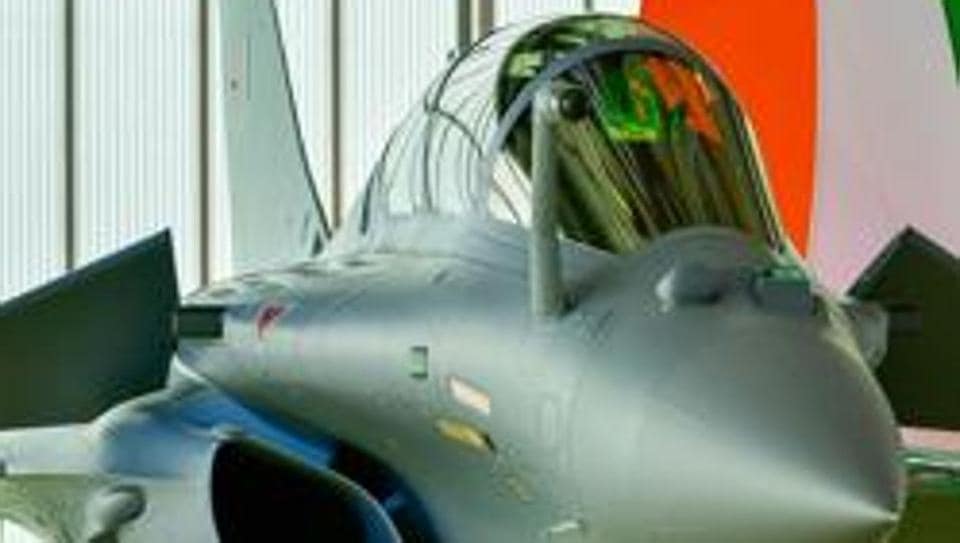
India is likely to receive by July 27 the first batch of six Rafale fighter jets which are expected to significantly boost the combat capability of the Indian Air Force, people familiar with the development said.
The IAF has been on a high alert for the last two weeks in view of escalation in tension with China following clashes between troops of the two countries in Galwan Valley in eastern Ladakh in which 20 Indian Army personnel were killed. The two armies are locked in a bitter standoff in the region for seven weeks.
On June 2, Defence Minister Rajnath Singh held a telephonic conversation with his French counterpart Florence Parly during which she conveyed that the Rafale jets will be delivered to India as scheduled notwithstanding the coronavirus pandemic in France.
Military officials, on the condition of anonymity, said the arrival of the Rafale jets will significantly enhance the IAF’s overall combat capability and will send a clear message to India’s “adversaries”.
When asked about the matter, the IAF did not comment.
The first squadron of the aircraft will be stationed at Ambala air force station, considered one of the most strategically located bases of the IAF.
India had signed an inter-governmental agreement with France in September 2016 for procurement of 36 Rafale fighter jets at a cost of around Rs 58,000 crore.
The aircraft is capable of carrying a range of potent weapons. European missile maker MBDA’s Meteor beyond visual range air-to-air missile and Scalp cruise missile will be the mainstay of the weapons package of the Rafale jets Meteor is the next generation of BVR air-to-air missile (BVRAAM) designed to revolutionise air-to-air combat. The weapon has been developed by MBDA to combat common threats facing the UK, Germany, Italy, France, Spain and Sweden Besides the missile systems, the Rafale jets will come with various India-specific modifications, including Israeli helmet-mounted displays, radar warning receivers, low-band jammers, 10-hour flight data recording, infra-red search and tracking systems among others The IAF has already completed preparations, including readying required infrastructure and training of pilots, to welcome the fighter aircraft.
The second squadron of Rafale will be stationed at Hasimara base in West Bengal. The IAF spent around Rs 400 crore to develop infrastructure like shelters, hangars and maintenance facilities at the two bases Out of the 36 Rafale jets, 30 will be fighter jets and six will be trainers. The trainer jets will be twin-seater and they will have almost all the features of the fighter jets.
The Congress had raised questions on the deal, including on rates of the aircraft, and alleged corruption, but the government had rejected the charges.


