
 E-Paper



Rationalisation has ‘mutilated’ books: Chief advisers to NCERT
NCERT officials have said the changes were made to “reduce content load on students” in view of the Covid-19 pandemic in 2022


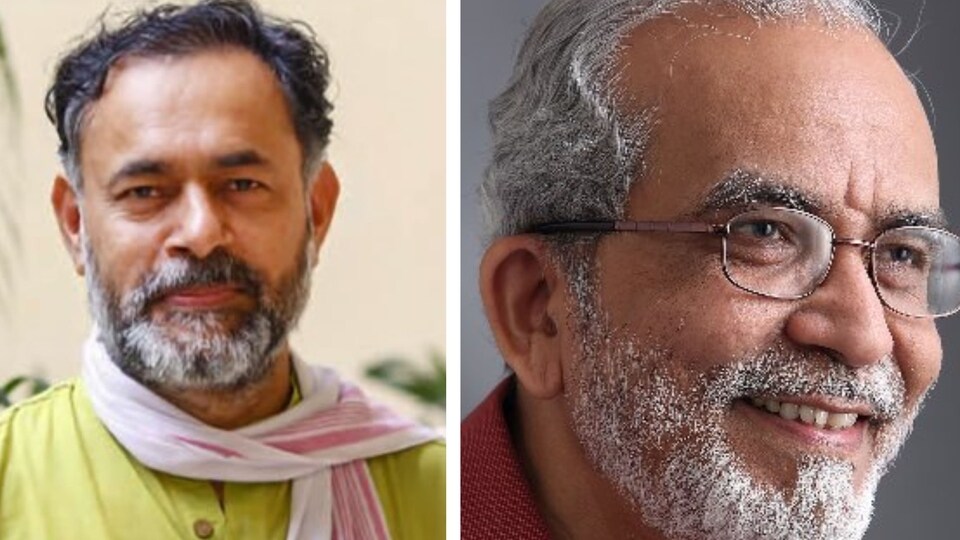
A rationalisation process carried out by the National Council of Educational Research and Training (NCERT) has “mutilated” textbooks “beyond recognition” and rendered them “academically dysfunctional”, Suhas Palshikar and Yogendra Yadav told the council while opting out as chief advisers for political science books for classes 9 to 12.
Read here: 'Mutilated beyond recognition...remove our names': Experts to NCERT on textbook revision
In a letter to NCERT director Dinesh Prasad Saklani on Thursday, Palshikar and Yadav asked the council to drop their names from the textbooks that were originally published in 2006-07 on the basis of the 2005 version of the National Curriculum Framework (NCF). Their names are mentioned in a “letter to students”, and in the textbook development team mentioned at the beginning of each book.
Palshikar is chief editor of the journal Studies in Indian Politics and a former political science professor at Savitribai Phule Pune University in Pune, and Yadav is the founder of Swaraj India.
Their letter to NCERT came amid a controversy over the removal of several topics from the syllabus in 2022, including passages on the theory of evolution, references to the Cold War, the Mughal courts, and industrial revolution, the 2002 Gujarat riots, the contribution of agriculture to the Indian economy, and a section on challenges to democracy.
Among topics removed from the political science textbooks are the position of Hindu extremists on Mahatma Gandhi’s pursuit of Hindu-Muslim unity, and the ban on the Rashtriya Swayamsevak Sangh after his assassination.
NCERT officials have said the changes were made to “reduce content load on students” in view of the Covid-19 pandemic in 2022. The changes were reflected in new textbooks published earlier this year.
In April, the council described the omissions in political science textbooks as a possible oversight, and said that “minor changes need not be notified” and that they were made on the recommendation of the experts.
In their letter, Palshikar and Yadav said they failed to see any “pedagogical rationale” in the modifications in NCERT textbooks.
Read here: NCERT drops chapters on Periodic Table, Challenges to Democracy, others from class 10 textbooks
“While the modifications have been justified on grounds of rationalisation, we fail to see any pedagogical rationale at work here. We find that the text has been mutilated beyond recognition. There are innumerable and irrational cuts, and large deletions often without any attempt to fill the gaps thus created. We were never consulted or even informed of these changes,” they said.
“If NCERT did consult other experts for deciding on these cuts and deletions, we explicitly state that we fully disagree with them in this regard,” they added.
Palshikar and Yadav also said that “as academics organically associated with the preparation of these textbooks, we are embarrassed that our names should be mentioned as chief advisors to these mutilated and academically dysfunctional textbooks”.
“We wish to explicitly record our full disagreement with the entire process of reshaping the text in the name of rationalisation. Both of us would like to dissociate ourselves from these textbooks and request the NCERT to drop our names as chief advisors from all political science textbooks of classes 9th, 10th, 11th and 12th, mentioned in the ‘letter of the students’ and also in the list of textbook development team at the beginning of each textbook,” they added.
Despite repeated attempts, NCERT director Saklani did not respond to HT’s calls and messages for a comment on the letter.
Read here: NCERT drops references to Khalistan demand from class 12 political science textbook
Last year, NCERT said that several factors – “overlapping” topics, topics “not relevant or outdated in the present context”, or topics that were “difficult” or “easily accessible to children and can be learned through self-learning or peer-learning” – were taken into account during the rationalisation process.


