
 E-Paper



Record spike in aerosol in Hindu Kush region: Study
The increase in aerosols in the Hindu Kush-Himalaya-Tibetan Plateau region could be the reason behind increase in temperatures, altering rainfall patters and accelerating glacier retreat, a study by Isro’s Physical Research Laboratory has shown

 Prefer HTon Google


New Delhi: The Hindu Kush-Himalaya-Tibetan Plateau region has been witnessing an alarming increase in aerosol levels that could be driving increased temperatures, altering rainfall patterns, accelerating glacier retreat and initiating changes in the hydrological cycle in the region, a new analysis by the Indian Space Research Organisation’s (Isro) Physical Research Laboratory has shown.
The study, the first of its kind, used ground-based observations, satellite data, and simulations, to assess aerosol characteristics and radiative forcing — the change in energy flux in the atmosphere caused by natural or anthropogenic factors of climate — in several locations in the Indo-Gangetic Plains (IGP), the Himalayan foothills and the Tibetan Plateau. Data shows that the aerosol radiative forcing efficiency (ARFE) — which shows the effect of anthropogenic aerosols on the radiative fluxes at the top of the atmosphere — was significantly higher in the Himalayan foothills.
“The mean ARFE is two to four times higher here than over other polluted sites in south and east Asia, owing to higher AOD (aerosol optical depth) and aerosol absorption. Further, the observed annual mean aerosol-induced atmospheric heating rates (0.5–0.8 Kelvin/day), which are significantly higher than previously reported values for the region, imply that the aerosols alone could account for over 50% of the total warming, including aerosols and greenhouse gases, of the lower atmosphere and surface over this region,” the study said.
Researchers also highlighted that the current models used in climate assessments in the region “significantly underestimate” aerosol-induced heating, efficiency and warming over the Hindu Kush–Himalaya–Tibetan Plateau region, indicating the need for a more realistic representation of aerosol properties.
“The significant, regionally coherent aerosol-induced warming that we observe in the high altitudes of the region, is a significant factor contributing to increasing air temperature, observed accelerated retreat of the glaciers, and changes in the hydrological cycle and precipitation patterns over this region. Thus, aerosols are heating up the Himalayan climate, and will remain a key factor driving climate change over the region,” the study added.
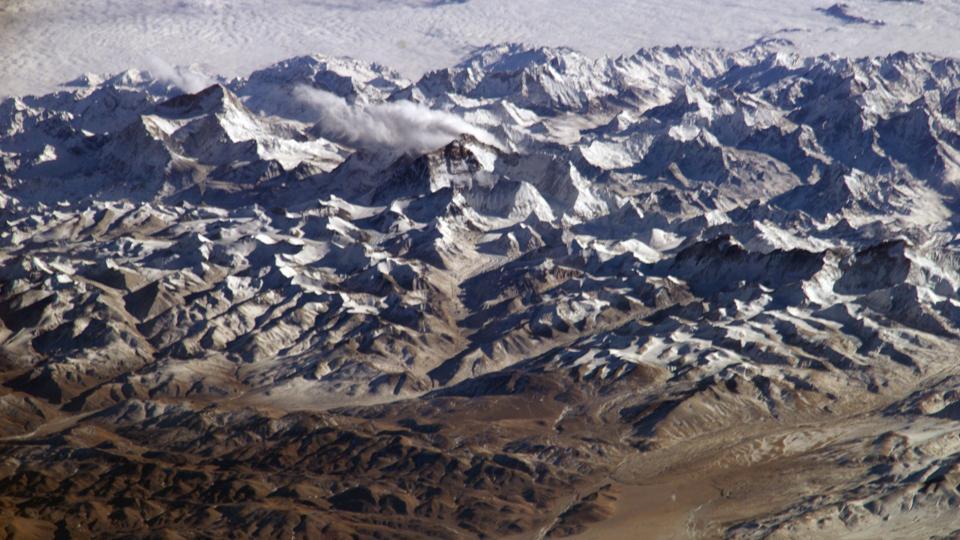
The Hindu Kush-Himalaya-Tibetan Plateau region contains the largest ice mass outside Antarctic and Arctic polar regions, and has witnessed a pronounced retreat in glaciers, which also feed into most major rivers of Asia.
A 2019 report by the International Centre for Integrated Mountain Development (ICIMOD) found that the Hindu Kush Himalayas are warming faster than the global average, and that the consequences of it in the region were severe.
That ICIMOD report highlighted that 1.5 degrees Celsius is “too hot” for the Hindu Kush Himalayas.
David Molden, former director-general of ICIMOD, said that global warming of 1.5 degrees Celsius will actually mean in a 2 degrees Celsius temperature increase in the mountains.
“This would affect half the glaciers in the HKH region, destabilising Asia’s rivers and endangering the lives and livelihoods of billions of people.”
The PRL study also warned of similar consequences. Researchers have also observed ice loss along the entire 2000-km transect of the Himalayas, which, they said, could be the result of direct heating of the atmosphere by aerosols.


