
 E-Paper



Keeping up with UP: RSS chief cautions against raking up temple-mosque disputes
Advice ahead of the Mahakumbh in Prayagraj, where the Akhil Bhartiya Akhada Parishad is likely to take a position on issues.

 Prefer HTon Google


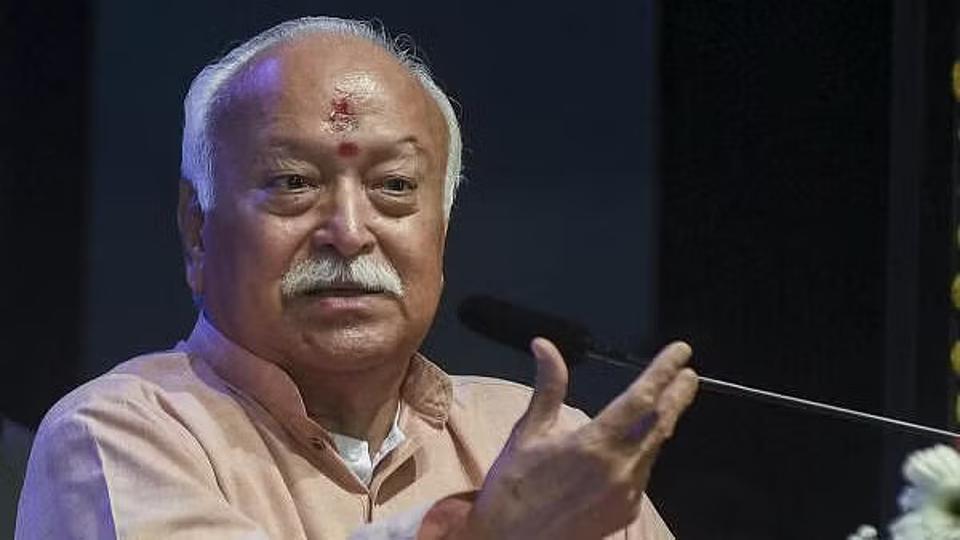
Rashtriya Swayamsewak Sangh (RSS) chief Mohan Bhagwat has raised hackles with his advice against raking up temple-mosque disputes, especially in Uttar Pradesh. The advice ahead of the Mahakumbh in Prayagraj, where the Akhil Bhartiya Akhada Parishad, the highest body of 13 Akhadas (Hindu monastic organisations), is likely to take a position on issues, which may include the growing claims of Hindus on temples Muslim rulers allegedly demolished to build mosques.
The RSS chief’s statement came against the backdrop of violence in Sambhal over the survey of the Shahi Masjid that emperor Babur said to have been built in 1529 after demolishing a temple. The Akhada Parishad may take a divergent view.
On December 19, Bhagwat said the Ram Temple in Ayodhya was built to respect the sentiments of the Hindus but to use it to become a “Hindu leader” was unacceptable.
Several parishad members have appreciated chief minister Yogi Adityanath, and he may once again muster their support for his ongoing campaign to restore historical temples.
Swami Jitendranand Saraswati criticised the RSS chief’s remarks, saying despite Bhagwat’s similar comments in the past, temple structures have been identified at 56 sites, signalling sustained interest in the contentious issues. He emphasised that religious organisations often align their actions with public sentiment rather than political agendas.
The efforts to reclaim the Kashi and Mathura temples is the other contentious issue on which the Akhada Parishad may take a contrary view.
The RSS is not pushing for Kashi and Mathura temples. It neither controls nor spearheads the movement for it. The Vishwa Hindu Parishad, an ancillary body of the RSS, had demanded the liberation of Ayodhya, Mathura, and Kashi temples. It sought the Akhada Parishad’s support for the Ayodhya temple.
Kashi is more state-sponsored. Adityanath has been hinting at the renovation of Mathura temple.
Earlier, Bhagwat advised Hindus against looking for Shivlinga under every mosque and creating social disharmony. There have been few takers for his advice even in the Sangh’s associated organisations amid heightened Hindu assertiveness.
The has also been a fresh campaign to find abandoned and deserted temples in Muslim areas in places such as Muzaffarnagar, Meerut, and Kanpur which have a history of communal riots.
The demographic profile of districts in western Uttar Pradesh changed after communal clashes from 1987 to 2013. In Kanpur, Muslim families started moving from the Hindu-dominated Mall Road, Kamla Towers, Ludhera, Dalelpurva, etc since the 1931 riots.
Kanpur mayor Premlata Pandey recently inspected Muslim areas, reopening temples, and ordering their renovation. Some of these deserted temples were encroached upon.
Pandey vowed to revive temples. She claimed there were 125 ancient temples in Muslim areas, including Bekanganj, earlier known as Sunar Wali Gali. She ordered the removal of encroachments and warned of “bulldozer action” if Muslim residents created any obstruction. Small and big temples are being cleaned and whitewashed so that daily worship can resume.
Sudhir Dwivedi, vice president of Sanatan Math Mandir Raksha Samiti, is restoring temples with the help of the local community. The focus remains on Raja Yayati Fort said to be centuries old at Jajmau in Kanpur. ASI declared it a protected heritage site after it was discovered in 1968 during the construction of a bridge.
In Muzaffarnagar, Hindus and Muslims relocated in the 1990s and this continued until after the 2013 riots. Large-scale migrations to safer zones in western Uttar Pradesh led to a change in demographics.
A Hindu, who moved from Muslim-dominated Mehmoodnagar, told HT the situation worsened after homes were attacked during the 1990 riots. “I sold my house for a song and moved out after living there for 26 years. Two Hindu lanes sandwiched between Muslim settlements in a locality have virtually disappeared.”
Muslims have been leaving Kakra village 20 km away. The mosque here is abandoned and Gayoor, the last of the Muslim inhabitants, is preparing to leave.
“Migration of Muslims from urban areas began after the 1987 riots. [Farmer leader] Mahendra Singh Tikait tried to regain the confidence of Muslims but Arya Samaj threw a spanner while the Sangh Parivar’s temple movement put up a barrier,” Allahabad-based professor A Satyanarayana said.
Also Read: RSS chief Mohan Bhagwat calls for ‘right interpretation’ of religion: ‘Half knowledge leads to..’
The ghettos that developed after every communal riot in these cities hampered interactions between the two communities that could have addressed conflicts and averted violence. People abandoned temples and mosques.
In Kanpur, two mosques in Kamla Nagar have not been functional for decades. There are examples of Muslims manning deserted temples and the Hindus deserted mosques.
Every year, people belonging to all castes and communities used to assemble at Lucknow’s Cathedral Church. But this year while worshippers silently celebrated Christmas at the church, a few metres away near a temple, people assembled and did loud bhajan-kirtan.
Peace prevailed despite provocations, but it was a trailer of the things to come.


