
 E-Paper



Russia shouldn’t interfere in disputes between India and China, says top Russian lawmaker
Russia shouldn’t interfere in disputes between India and China and instead act as an “honest broker” to contribute to solutions that don’t involve the use of military force, the chairman of the Russian upper house committee on foreign affairs said on Wednesday.


Russia shouldn’t interfere in disputes between India and China and instead act as an “honest broker” to contribute to solutions that don’t involve the use of military force, the chairman of the Russian upper house committee on foreign affairs said on Wednesday.
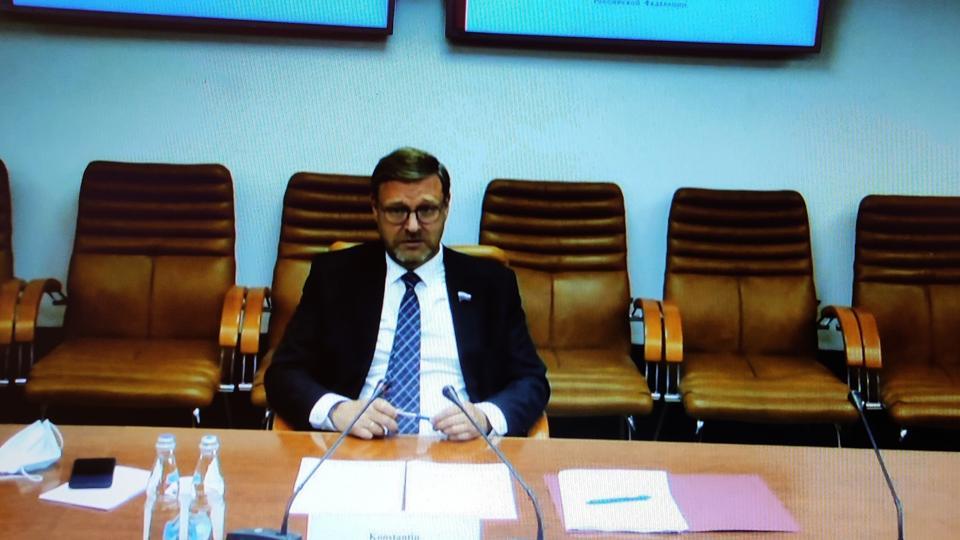
Konstantin Kosachev, the head of the Federation Council’s committee on foreign affairs, also said the Taliban are “a very influential and important” part of the peace process in Afghanistan even though Russia continues to see the group as an extremist movement. India, as a neighbour of Afghanistan, also has a key role in the process to find a solution in the war-torn country, he added.
Interacting with a small group of journalists in New Delhi via video conference from Moscow, Kosachev was sceptical of US President Donald Trump’s move to invite India, Russia, Australia and South Korea to an expanded G7 Summit later this year, saying the move appeared to be aimed against China.
Asked whether Russia could play any role in the stand-off between Indian and Chinese troops along the Line of Actual Control (LAC), he replied Moscow’s log-standing position is that such bilateral disputes should be handled by the countries involved.
“Russia should not interfere in these kinds of disputes, but our role…is to be an honest broker to contribute to a dialogue and to do the utmost in order to prevent and avoid any solutions connected with the use of military force,” said Kosachev, who plays an influential role in Russia’s foreign policy set-up.
This is the political message Russia keeps sending to “Chinese and Indian friends” as it respects the sovereignty of both countries, he said. Russia-China ties, which are “in the best shape ever” in decades, aren’t aimed against any other country, he added.
Russia’s good relations with both China and India are “factors that mutually strengthen each other and provide good opportunities for the solution of problems that still exist between India and China”, Kosachev said.
Responding to a question on the Taliban’s role in the Afghan peace process and India being kept out of most discussions on the future of Afghanistan, he said Russia perceives the Taliban as a “very difficult partner”.
The Taliban is classified in Russia as an “extremist movement” though it isn’t prohibited. “At the same time, we are realists and we understand that the Taliban is a very influential and very important part of the ongoing processes in Afghanistan,” he said.
“If you just try to exclude the Taliban from any type of political dialogue, you will not reach anywhere. So whether you like the Taliban [or not], you have to recognise the existence of the Taliban and the potential of the Taliban as a part of the ongoing processes,” Kosachev said.
Other countries, including Russia and India, should contribute to the fragile political dialogue between the authorities in Kabul and the Taliban, he said. “India is a neighbour of Afghanistan…So I’m absolutely in favour of having India as an equal and very important participant in the ongoing discussions,” he added.
Referring to US President Trump’s recent move to invite Russia and India to the G7 Summit in September, Kosachev said the American leaders doesn’t have the right to expand the grouping. Trump is free to invite additional participants to the summit but they won’t be able to join the preparations or to influence the outcomes and decisions, he said.
There was also no unity among the other members of the G7, such as the UK and Canada, which have opposed the invitation to Russia, he said. Besides, Trump appears to be interested in bringing together other countries to create a joint opposition to China, and Russia is opposed to blocs that are arrayed against a third country, Kosachev said.


