
 E-Paper



Sajad Lone of JKPC wins Jammu and Kashmir's Handwara constituency, loses Kupwara
Sajad Lone was briefly with Hurriyat in the early 2000s and became chairman of People's Conference after his father's assassination in 2004.

 Prefer HTon Google


People's Conference chief and former minister Sajad Gani Lone won in North Kashmir's Handwara by over 600 votes against Chowdry Mohammad Ramzan of the National Conference. However, he lost the Kupwara constituency by a significant margin of over 20,000 votes to Mir Mohammad Fayaz of the Jammu and Kashmir People's Democratic Party (JKPDP) during the assembly election, the results of which are being announced on Tuesday, October 8.
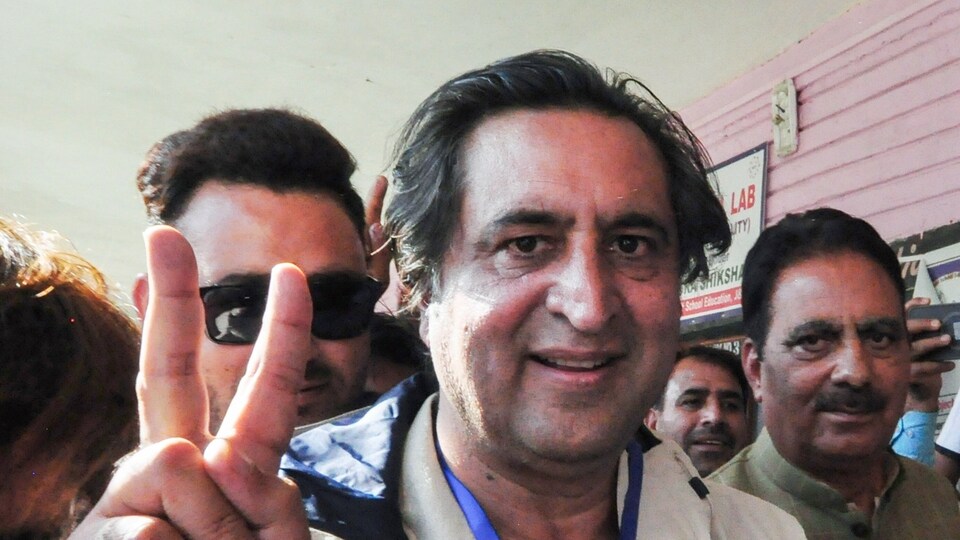
According to the Election Commission of India (ECI), a total of 12 rounds of counting were completed in Handwara and 10 rounds in Kupwara assembly constituencies.
At 57, Lone is posing a strong challenge to National Conference's Choudhary Ramzan, who previously won the seat in 2008. However, in Kupwara, early trends indicated that Lone was falling behind, with National Conference provincial president and former minister of state for home Nasir Aslam Wani emerging as his competitor.
In the 2014 assembly elections, Lone defeated Ramzan by over 5,000 votes in Handwara and subsequently served as a minister in the PDP-BJP coalition government under Mufti Mohammad Sayeed.
In 2018, shortly after the BJP withdrew its support from the PDP-BJP coalition government in Jammu and Kashmir, Sajad Lone staked his claim to form a new government, citing support from the BJP and other lawmakers.
However, then governor Satya Pal Malik dissolved the state assembly before Lone could prove his majority.
Lone’s father, Abdul Gani Lone, the founder of People's Conference, won the Handwara seat three times 1967, 1972 and 1977, making it a party stronghold.
Shortly thereafter, National Conference’s Choudhary Ramzan established his dominance in the constituency, winning it four times in 1983, 1987, 1996, and 2008.
Sajad Lone was briefly associated with the Hurriyat in the early 2000s. However, after his father’s assassination in 2004, he took over as chairman of People's Conference.
In 2008, during the peak of the Amarnath land transfer controversy, Lone believed the protests reflected a mass uprising against the Centre, prompting him to boycott the assembly elections.
The following year, he contested the 2009 Lok Sabha election from Baramulla as an independent candidate but was defeated by National Conference’s Sharifuddin Shariq.
In 2019 Lok Sabha election, Sajad Lone contested against National Conference leader Akbar Lone, who emerged victorious in the Baramulla seat.
Five years later, in 2024, he faced off against independent candidate Engineer Rashid in Baramulla. Rashid emerged victorious, defeating Omar Abdullah as well.
Lone studied at Burn Hall School in Srinagar and graduated from the University of Wales, College of Cardiff, UK, in 1989.
He is married to Asma Khan, the daughter of the late Amanullah Khan, a prominent Pakistan-based leader of the Jammu and Kashmir Liberation Front.


