
 E-Paper



Sansad TV: Cost-cutting, content rejig behind merger of RS, LS TV
The merger was approved a year after a former Prasar Bharati chairman A Surya Prakash-led panel formed in 2019 to assess ways to rationalise the two channels submitted its report to the presiding officers of the two Houses

 Prefer HTon Google


Indian Parliament this week decided to merge the separate channels dedicated to its two Houses, Lok Sabha and Rajya Sabha, and launch Sansad TV under one administration. Sansad TV is expected to be launched in two weeks even as the status quo will be maintained, for now, an official aware of the matter said. The proceedings of the second phase of the Budget Session from March 8 are expected to be telecast on Lok Sabha TV (LSTV) as well as Rajya Sabha TV (RSTV).
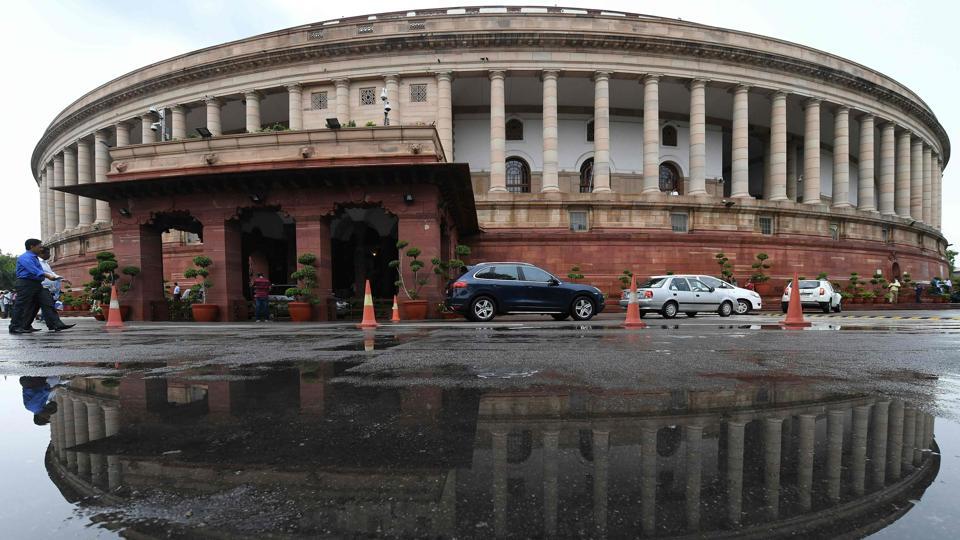
The merger was approved a year after a former Prasar Bharati chairman A Surya Prakash-led panel formed in 2019 to assess ways to rationalise the two channels submitted its report to the presiding officers of the two Houses. The panel has suggested cost-cutting, streamlining of the management of the two channels and content rejig to make it more attractive for viewers and advertisers.
Also Read | Lok Sabha, Rajya Sabha channels merged to create new platform, Sansad TV
People aware of the matter said the panel has recommended two channels, Sansad 1 and Sansad 2, to broadcast programmes in English, Hindi, and regional languages. There is no clarity on whether both channels will be launched.
According to a person familiar with the matter, RSTV was launched initially with a budget of ₹100 crore. “Rajya Sabha TV had 500 posts, while Lok Sabha TV had 134 employees... these may be scaled down to 250,” the person said. “The recruitment process is also likely to start all over again, with current employees also having to be vetted.”
The two channels got advertisements primarily from the public sector and the government. The person said the LSTV turned profitable for some time, but RSTV continued incurring losses. LSTV is based in Parliament and RSTV operates from New Delhi’s Talkatora Stadium. “The rent for the [RSTV] space is around ₹30 crore,” the person said. “It was only after Rajya Sabha chairman Venkaiah Naidu intervened that the rent was scaled down a little.”
People familiar with the matter said there is also little clarity on how the integration will proceed as the salary structures of the two channels are different. Another issue is who the Sansad TV CEO will report to, the Lok Sabha speaker or vice-chairman of the Rajya Sabha. RSTV was completely independent while the Lok Sabha secretariat controlled the LSTV. This will also have to be addressed, the people added.
Congress leader Manish Tewari, who is also a former information and broadcasting minister, said he has not looked at the mechanics of the move. “From what I am given to understand, they want to brand LSTV as a Hindi channel and RSTV as the English Channel. They will continue to perform their parliamentary functions. If there is going to be synergy in sharing of resources, equipment, and have one person looking after it, it is not a bad idea.”
Former RSTV editor-in-chief Gurdeep Sappal said the channel was consciously designed differently at variance with LSTV. “We developed it as an effective public broadcaster, not limiting it to just parliamentary proceedings and members of parliament,” Sappal said. He said the channel’s Content Advisory Committee, comprising leaders from major parties in Rajya Sabha, brainstormed the content. “That is the reason that there was a general consensus on the approach and content delivery and its neutrality could be ensured,” said Sappal. “I do not know the philosophy of the new avatar of the channel and whether it has been discussed in the Content Advisory Committee. I sincerely hope that the character and neutrality of the channel will be maintained and all parties in both the Houses will have a say in shaping up the new format.”
Somnath Chatterjee, the then speaker of Lok Sabha, came up with the idea of a dedicated channel for parliamentary coverage in 2005 when Doordarshan chose to telecast a cricket match instead of the House proceedings. “Doordarshan...had its commercial reasons for deciding that the cricket match should be aired,” said former Lok Sabha TV editor-in-chief Ashish Joshi.
Lok Sabha TV began its 24-hour transmission on July 24, 2006, with the commencement of the eighth session (Monsoon) of the 14th Lok Sabha. Rajya Sabha TV was launched in 2011.
The parliamentary proceedings were first televised when Doordarshan aired the President’s address on December 20, 1989. “In 1991, during the Tenth Lok Sabha, telecast/tele-filming of Question Hour began that was followed by the live telecast of Railway Budget and General Budget during 1992. Since April 1994, the entire proceedings of the Lok Sabha were tele-filmed for archival purpose,” according to a government note on Lok Sabha TV.
In July 1994, a transmitter was installed in Parliament for the live telecast of Lok Sabha proceedings from the following month.


