E-Paper



‘Principles of science originated in Vedas, but repackaged as western discoveries:’ ISRO chairman S Somanath
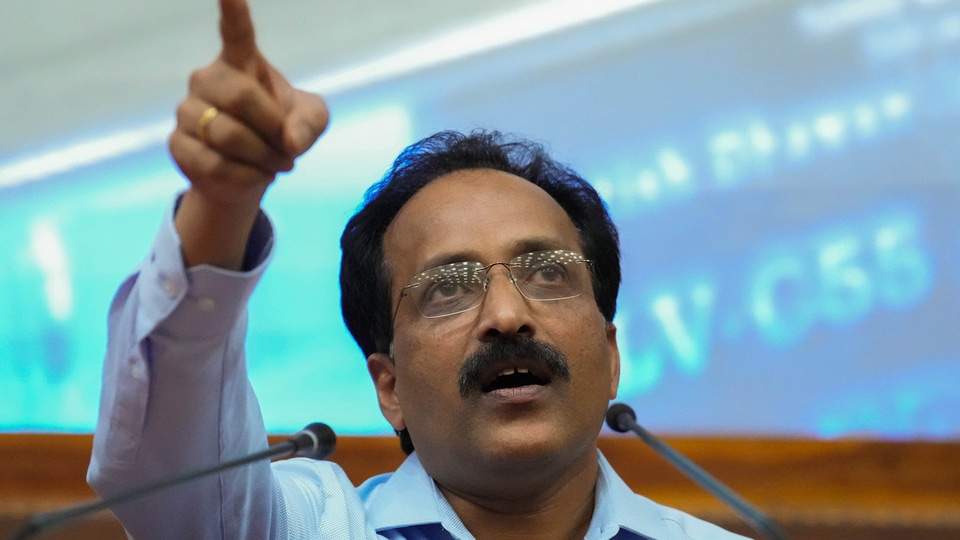
Somanath was speaking at the convocation of the Maharishi Panini Sanskrit and Vedic University in Ujjain, Madhya Pradesh.

 Prefer HTon Google


Algebra, square roots, concepts of time, architecture, the structure of the universe, metallurgy, even aviation were first found in the Vedas, travelled to Europe through Arab countries, and were subsequently posited as discoveries of scientists of the western world, S Somanath, the chairman of the Indian Space Research Organisation (Isro) said on Wednesday.
Also read: ISRO's missions to moon, sun likely to take place in July
Part of the problem, added Somanath, secretary of the department of space and chairman of the space commission, was that the language the Indian scientists of the time used, Sanksrit, had no written script. “It was listened to, and learnt by heart, which is how the language survived.” It was only later that people started using the Devanagari script for Sanskrit.
Somanath was speaking at the convocation of the Maharishi Panini Sanskrit and Vedic University in Ujjain, Madhya Pradesh. Panini is believed to be the person who wrote down the rules of Sanskrit grammar. The language’s syntax and structure make it ideal to “convey scientific thoughts and processes”, Somanath said. He added : “Engineers and scientists like Sanskrit a great deal. Its suits the language of computers and those learning artificial intelligence learn it. Lots of research is being done on how Sanskrit can be used for computation.” To be sure, much of this is still work in progress, although the narrative itself has become taller in the telling.
There are other benefits to Sanskrit, Somanath added, and these extend beyond science.
“Indian literature written in Sanskrit is extremely rich in its original and philosophical form. It is also important in the scientific form. There is no separation of cultural, spiritual and scientific study in Sanskrit,” he said.
Somanath said that the imprints of the contribution of scientists in Sanskrit can be seen in the journey of Indian culture over thousands of years. “Findings in astronomy, medicine, sciences, physics, chemical sciences and aeronautical sciences were written in Sanskrit. But they was not full exploited and researched,”he pointed out, and gave the example of Surya Siddhanta, a book on astronomy that is believed to data back to the 8th century. “Being a rocket scientist I was fascinated by this book in Sanskrit that talks about the solar system, time- scale, and the size and circumference of Earth,” he said.
Isro is working on several key space missions, including the Chandrayaan-3 lunar mission, and the Aditya-1 mission to study the Sun.