E-Paper



SC denies govt plea for death penalty deadline
A bench comprising justices Vikram Nath, Sandeep Mehta and NV Anjaria observed that there was no merit in the application and that the 2014 Shatrughan Chauhan judgment, which the Centre wanted modified, was complete in all aspects

 Prefer HTon Google


The Supreme Court on Wednesday summarily rejected the Union government’s plea seeking stricter timelines for death row convicts to avail legal remedies, and for executions to be carried out within seven days after rejection of a mercy petition.
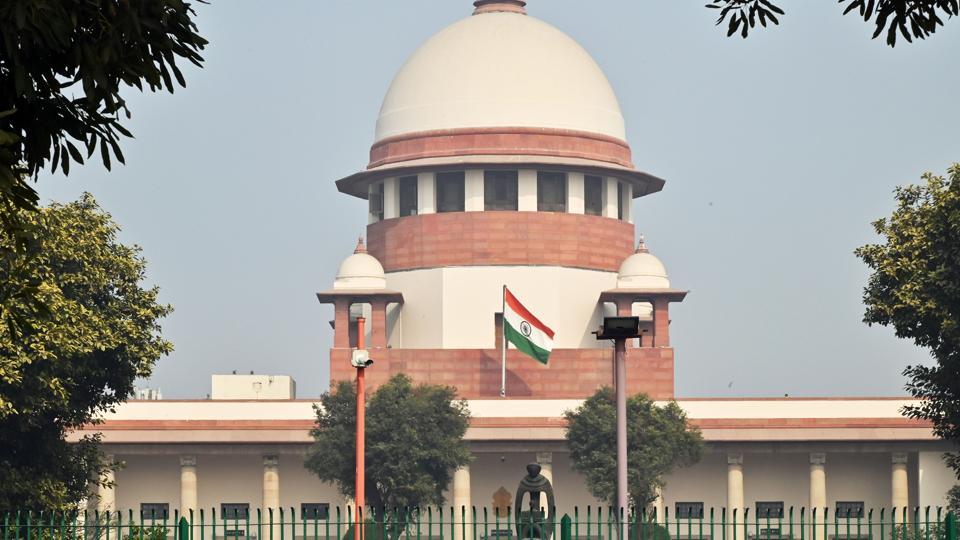
A bench comprising justices Vikram Nath, Sandeep Mehta and NV Anjaria observed that there was no merit in the application and that the 2014 Shatrughan Chauhan judgment, which the Centre wanted modified, was complete in all aspects.
The Centre’s plea, argued through Additional Solicitor General (ASG) KM Nataraj, wanted certain modifications to the 2014 judgment so that the framework for death penalty cases factored in the rights and agony of victims, besides addressing the prolonged uncertainty faced by convicts.
During the brief hearing on Wednesday, the top court refused to modify the previous judgment even as it told ASG Nataraj that the Centre would be at liberty to push for some of the measures it has pressed for in its application in appropriate proceedings.
In Shatrughan Chauhan’s case, the top court held that delays beyond of the convicts’ control qualify as grounds for commuting the death penalty, holding that the pain and suffering brought on by the delay warrant commutation of sentence to life in prison.
On September 24, ASG Nataraj mentioned the matter for an expedited hearing of the Centre’s plea. “The government is seeking modifications in the earlier judgment to ensure that the process does not continue endlessly with mercy petitions, review and curative pleas. Victims also suffer when executions are delayed,” ASG Nataraj told the bench on the day. He added that the delay not only causes excruciating wait for convicts but also frustrates the victims’ families and society at large.
The government’s push for strict timelines on executions came on a day when, in a separate case, the same bench pulled up the Centre for sitting over Balwant Singh Rajoana’s mercy plea and failing to execute him even 15 years after his death sentence was confirmed, despite there being no stay from the court. Rajoana was sentenced to death in connection with the 1995 assassination of former Punjab chief minister Beant Singh.
In the present case, the Ministry of Home Affairs (MHA) had moved the modification application in 2020 when multiple legal remedies filed one after the other by the four convicts in the 2012 Delhi gangrape and murder case delayed their execution. They were eventually hanged in March 2020 after the Supreme Court, in a midnight sitting, dismissed their last petition.
In its application, the Centre urged the court to declare that curative petitions must be filed only within a stipulated time after dismissal of a review petition. Additionally, it asked for a clarification that a mercy petition must be filed within seven days of issuance of a death warrant. Finally, the application sought a directive that executions take place within seven days of rejection of a mercy plea, regardless of pending proceedings by co-convicts.
The government argued that the Shatrughan Chauhan ruling, while safeguarding convicts from inordinate delay, “does not take into account irreparable mental trauma, agony, upheaval and derangement of the victims and their family members.”
The application said convicts in heinous crimes such as terrorism, rape and murder “take the judicial process for a ride” under the garb of Article 21 (right to life). It emphasised that public interest and the deterrent effect of capital punishment must not be undermined.
While the Shatrughan Chauhan judgment held that undue delay in executing death penalty has a “dehumanising effect” and laid down guidelines to safeguard convicts, including a minimum 14-day notice period before execution, the Centre has maintained that these guidelines are entirely “accused-centric” and require balancing with the interests of victims and society.
The plea was first filed against the backdrop of the Nirbhaya convicts’ petitions, which delayed their execution. On January 22, 2020, they were scheduled to hang, but the date was deferred due to pending pleas. Fresh death warrants were eventually issued, and the four convicts — Akshay Kumar Singh, Pawan Gupta, Vinay Sharma and Mukesh Singh — were executed simultaneously at Tihar Jail on March 20, 2020.