
 E-Paper



SC junks plea for Arvind Kejriwal’s removal as Delhi CM
Maintaining that Kejriwal’s position cannot be challenged through legal means, the top court said that ultimately, it is up to the Lieutenant Governor (LG) of Delhi to address such matters

 Prefer HTon Google


There is no legal right to demand the removal of Arvind Kejriwal as Delhi’s chief minister following his arrest in the Delhi excise policy case, the Supreme Court held on Monday, rejecting a petition that challenged Kejriwal’s continued authority in office.
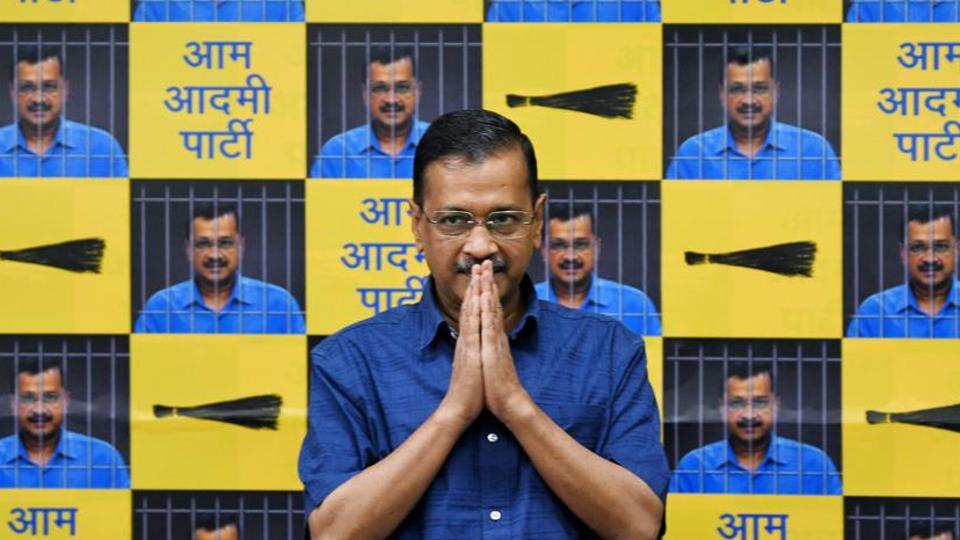
Maintaining that Kejriwal’s position cannot be challenged through legal means, the top court said that ultimately, it is up to the Lieutenant Governor (LG) of Delhi to address such matters.
“What is the legal right (to seek Kejriwal’s removal)? He wants to continue. That’s for him to decide. On propriety, you may have something to say, but where is the legal right?” a bench of justices Sanjiv Khanna and Dipankar Datta asked the petitioner’s lawyer.
Dismissing the petition filed by Delhi resident Kant Bhati, the bench added: “LG will take action if he wants to... But there is no legal right. We are not inclined to interfere with the decision of the Delhi high court.”
The bench also pointed out that Bhati was not a petitioner before the high court and was challenging a judgment rendered in a plea filed by someone else.
Bhati had challenged an April 10 ruling by the high court nixing a petition by former Aam Aadmi Party (AAP) legislator Sandeep Kumar, who sought Kejriwal’s removal from the post of Delhi CM. The court had also imposed a penalty of ₹50,000 on Kumar for bringing a frivolous litigation.
Also Read: ‘If you choose jhadu, I will not have to go back to jail’: Kejriwal
Since Kejriwal’s arrest in the Delhi excise policy case on March 21, a flurry of petitions has inundated the Delhi high court, demanding Kejriwal’s removal as CM.
The spectrum of cases has prompted colorful reactions from the high court, which labelled some petitions as “publicity litigation” and emphasised its indisposition to be dragged into political matters.
The top court on Friday ordered releasing Kejriwal on interim bail until June 1 in the excise policy case, rejecting the Enforcement Directorate (ED)’s contention that the CM’s release for political campaigning would connote preferential treatment to politicians, and underlining the importance of elections in a democracy.
In an order that may have significant implications for both the ongoing general elections and the political landscape of Delhi, the court on May 10 resorted to a “holistic and libertarian view” while noting that although serious charges of money laundering have been levelled against the Aam Aadmi Party (AAP) chief, he has not been convicted nor does he have any criminal antecedents or is a threat to the society. Lok Sabha elections are the most significant and an important event this year, highlighted the bench, adding these elections supply the “vis viva” (living force) to a democracy.
Simultaneously, the bench of justices Khanna and Datta imposed several conditions on the interim bail.
It directed Kejriwal to refrain from performing his official duties as the CM of Delhi during the bail period, adding Kejriwal must surrender before the Tihar jail authorities on June 2, marking the end of his interim bail period.
The bench said Kejriwal cannot visit the CM’s office and the Delhi secretariat — a measure aimed at preventing any potential conflicts of interest or interference in governmental affairs while he is out on bail.
It further ordered Kejriwal not to sign any official files unless necessary to obtain approval from the lieutenant governor of Delhi. Additionally, the court prohibited the CM from making public statements about his role in the excise case or interacting with any witnesses related to the case while also barring him from accessing official files connected with the case.
With a deluge of petitions demanding Kejriwal’s removal, the Delhi high court has remained vocal in its reprimand as it dealt with such pleas, describing these efforts as a mockery of the judicial system and attempts to drag the court into a “political thicket”.
Apart from rejecting Kumar’s plea, the high court had last month dismissed similar petitions from social activist Surjit Singh Yadav and Hindu Sena president Vishnu Gupta. All these petitions demanded Kejriwal’s ousting, which the court declined, underlining that such decisions rest with constitutional authorities like the LG or the President and are not within the judiciary’s purview.
The excise policy case stems from allegations of irregularities in Delhi’s excise policy, which the Central Bureau of Investigation (CBI) began probing following a recommendation by Delhi’s LG in July 2022.
Kejriwal is the third AAP leader arrested in this connection. Sisodia has been in jail since February 2023, and Rajya Sabha MP Sanjay Singh was granted bail by the top court in April this year after six months of custody.
ED, in its submissions before all courts, has accused the CM of being the “kingpin” and “key conspirator” of the alleged corruption in the 2021-22 Delhi excise policy, adding he acted in cahoots with ministers of his cabinet and other AAP leaders for seeking benefit from some businessmen involved in the liquor business.



