
 E-Paper



SC to consider on Oct 12 if pleas challenging note ban still valid
A constitution bench, headed by Justice SA Nazeer, fixed the case for a hearing on October 12, making it clear that it would take a call on that day if it is appropriate for the five-judge bench to devote any more time to the matter.


New Delhi: Wondering whether it should conduct an “academic exercise” while pendency of cases keeps rising, the Supreme Court on Wednesday expressed its indisposition to examine further a clutch of petitions that challenged the Union government’s demonetisation policy of 2016 by which bank notes of ₹500 and ₹1,000 denominations were taken out of circulation.
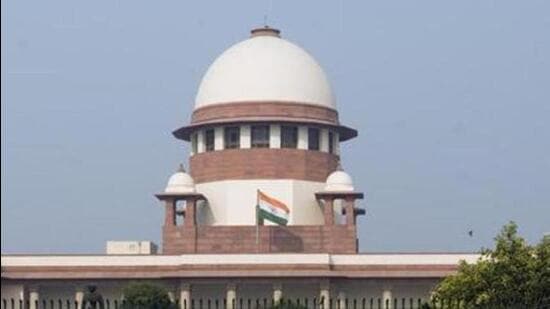
A constitution bench, headed by Justice SA Nazeer, fixed the case for a hearing on October 12, making it clear that it would take a call on that day if it is appropriate for the five-judge bench to devote any more time to the matter.
“We are going to only examine on the next date whether it has become academic for all purposes and whether it needs to be examined at all,” said the bench, which also comprised justices BR Gavai, AS Bopanna, V Ramasubramanian and BV Nagarathna.
A bunch of over three dozen petitions have challenged the Centre’s November 8, 2016 decision as being violative of fundamental rights and contrary to the law laid down under the Reserve Bank of India Act, 1934.
The petitioners claimed their constitutional rights to life and trade were infringed by the government due to an unreasonable and arbitrary manner of implementing the scheme. Besides the validity of the scheme, several individual petitioners who were unable to deposit the demonetised notes within the stipulated time frame also approached the top court. In December 2016, all the petitions were referred to a constitution bench.
On Wednesday, when the matter came up before the five-judge bench for the first time after almost six years, the bench began by asking: “Does this (case) survive at?”
Solicitor general Tushar Mehta, representing the Centre, replied that the matter may not survive for all practical reasons due to the passage of time. “For academic purposes, this court may decide to hear but I am submitting this does not survive at all for practical purposes,” Mehta added.
To this, Justice Gavai retorted: “Should we spend our time in deciding an academic issue? We are already burdened with so much of pendency.”
At this point, advocate Pranav Sachdeva, appearing for one of the intervenors in the case, pointed out that individual applicants who could not deposit money were asked to approach the constitution bench for suitable reliefs.
But the bench remained unmoved. “How will the constitution bench deal with individual cases? Why should that happen? We will have to first see whether it survives or not.”
SG Mehta, on his part, left it to the bench to decide whether to examine the 2016 policy as an academic exercise or draw the curtains with the efflux of time.
Advocate Vivek Narayan Sharma, who is the lead petitioner in the case, told HT that the matter has lost its relevance and any further consideration would only waste the time of the five judges on the bench.
“I had filed petition back then to create cushion for people who were affected by sudden withdrawal of money tender of ₹500 and ₹1,000, as an interim measure...The issues framed in the December 2016 reference order have no relevance now,” Sharma said. “The decision on the same would only waste valuable time of five judges sitting in the constitution bench, which time can otherwise be best utilised for other relevant and necessary purposes.”
In its December 2016 reference order, a three-judge bench had framed nine questions for consideration by the constitution bench. It included whether the demonetisation violated fundamental rights relating to equality, life and liberty, property and the freedom to carry out profession and trade. It also sought to scrutinise the legality of the demonetisation notification on the anvils of the 1934 Act, besides examining whether the procedure adopted was fair.
The petitioners included individuals, lawyers, district cooperative banks, social organisations and political parties such as the Communist Party of India (Marxist). The Centre had objected to the political party filing a writ petition and even this became one of the issues referred to the constitution bench.
In addition, the five-judge bench was called upon to consider the scope of judicial review in matters relating to fiscal and economic policy of the government.
The petitions filed by cooperative banks further questioned the government’s decision to exclude them from accepting deposits and exchanging demonetised notes. These banks claimed that because of freezing the deposited demonetised notes received by them between November 11 and 14, 2016, demonetised cash worth about ₹8,000 crore was lying with them.


