
 E-Paper



‘Search soul’: Supreme Court slams governors for sitting on bills
The apex court emphasized that governors have limited power and should not compel state governments to pursue legal recourses.

 Prefer HTon Google


Governors must remember that they are not the elected representatives of states and have limited power over legislative actions of an elected government, the Supreme Court said on Monday, seeking a detailed account of action taken by Punjab governor Banwarilal Purohit on four bills, which the state government claimed he has withheld for an inordinate period and inexplicable reasons.
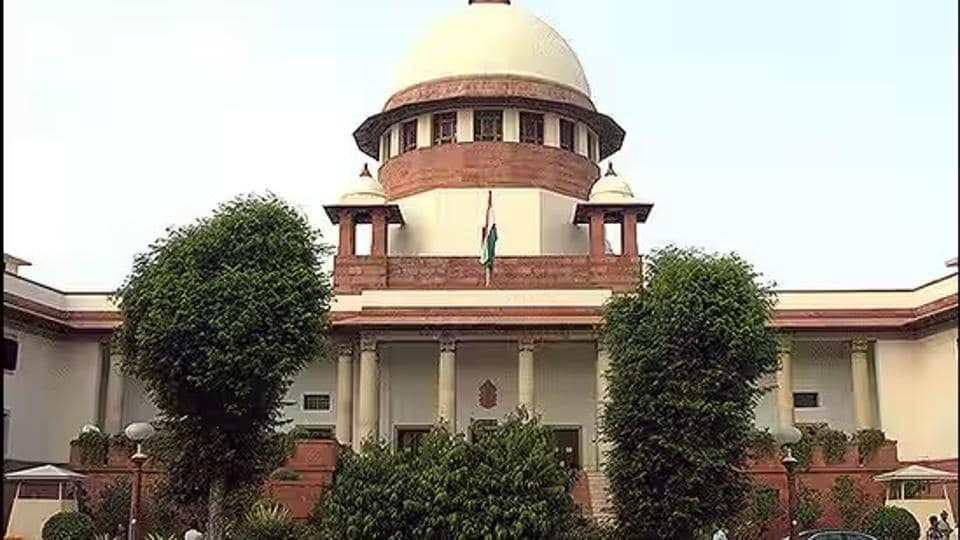
Expressing its anguish over a trend of governors acting on bills only after the states approached the Supreme Court, a bench led by Chief Justice of India Dhananjaya Y Chandrachud said that governors should not compel the state governments to pursue legal recourses each and every time the latter exercised their legislative powers.
Also Read: Tamil Nadu passes resolution seeking timeframe for Governors to clear bills
“It happened in Telangana also. There are other states also approaching this court regarding pending bills. Why do parties have to come to the Court? Governors must act even before they come to the Supreme Court. After they come to the Court, Governors start acting. This has to stop,” the bench, which also comprised justices JB Pardiwala and Manoj Misra, told solicitor general Tushar Mehta, who appeared for the Punjab governor.
As Mehta said that the governor has acted on the bills and that he can put on record an updated status report, the bench fixed the next hearing of the petition filed by the Bhagwant Mann-government on November 10.
Earlier in April, hours before the Supreme Court was scheduled to hear a petition filed by the Telangana government against governor Tamilisai Soundararajan for creating a “constitutional impasse” by refusing to act on several bills, the governor signed off on three bills. The petition was later disposed of even as the top court held that the expression “as soon as possible” under Proviso 1 of Article 200 has significant constitutional intent and must be borne in mind by all constitutional authorities. The provision states that “the governor may, as soon as possible, after the presentation to him of the bill for assent, return the bill if it is not a money bill”.
Also Read: Supreme Court reminds governors not to delay assent to bills
In the last one week, state governments of Kerala and Tamil Nadu have also moved the top court against the alleged inaction and delay by their respective governors in clearing several bills. Those petitions are yet to come up for hearings. All four states are ruled by parties other than the Bharatiya Janata Party, which runs the government at the Centre.
The deluge of cases reaching the doorstep of the highest court of the land has raised serious questions over the role of governors and delineation of power between the constitutional offices they hold as President’s representatives and the rights and powers of the elected governments, which exercise their authority through legislatures.
Mehta emphasised that the Punjab government has resorted to an unusual practice of adjourning a session of the House instead of proroguing it, only to be able to reconvene it at any time and “abuse” one or the other authority, in response to which the bench underscored that a “soul-searching” is required by both sides.
“A little bit of soul-searching is required on the part of the governor and a little bit of soul-searching is required on the part of the chief minister...We have been a democracy since the birth of our Constitution. The governor and the CM should be able to resolve it among themselves. We are there to enforce the Constitution but surely this is something that the Governor and the CM should be able to decide it,” the bench told Mehta and senior counsel Abhishek Manu Singhvi, who appeared for Punjab.
It emphasised that governor can withhold assent to a bill and send it back only once. “Why would he sit on a bill, particularly on money bill? Why should parties be compelled to approach the Supreme Court,” added the court.
Singhvi, along with Punjab’s advocate general Gurminder Singh, appeared for the Punjab government, complaining that there are certain crucial bills, including those pertaining to fiscal management and gurudwara’s administration, have been withheld by Punjab governor Banwarilal Purohit since June. According to the senior lawyers, Purohit relied on a legal opinion, raising objections to the manner in which the bills were passed by reconvening the assembly which was adjourned and not prorogued (terminated) as per the assembly rules.
Even as Singhvi stressed that the governor had a very limited role in keeping a bill pending or reconvening of the assembly after a bill has been duly passed by the House, the bench asked the senior lawyer whether it was permissible for the state government to adjourn a session sine die and not prorogue it.
“The assembly was adjourned sine die on March 22, 2023 without being prorogued and then speaker reconvenes the house three months later. Can this be done constitutionally? You have to hold a session in six months. The governor says you adjourned the session for three months and reconvened it in June. Really speaking, the budget session merges with the monsoon session. Is this really the scheme of the Constitution?” it asked Singhvi, who responded that he would explain the proceedings in the House when the bench hears the matter next.
An assembly is prorogued by the governor on the recommendation of the state cabinet
Article 174 of the Constitution states that the governor shall, from time to time, summon the House or each House of the legislature of the state to meet at such time and place as he thinks fit, but six months shall not intervene between its last sitting in one session and the date appointed for its first sitting in the next session. Clause 2(a) of Article 174 states that the governor may, from time to time, prorogue either house or dissolve the legislative assembly.
During the hearing, advocate general Singh pointed out that of the seven bills mentioned in the state’s petition, four bills still remained pending before Purohit. “Three other bills required governor’s approval before their introduction and two of them have since received his nod.”
This is not the first time that the Aam Aadmi Party (AAP) government in the state has approached the Supreme Court against the Governor. In February this year, the Punjab government approached the top court challenging a February 23 communication issued by governor seeking legal opinion on the Cabinet’s proposal to summon the House. The state sought a direction from the court for summoning the Budget session.
Disposing the petition on February 28, the court said: “It is inconceivable that the Budget Session of the Legislative Assembly would not be convened. We can only hope that mature constitutional statesmanship will ensure that such instances do not occur in the future as much as we reiterate our expectation that constitutional functionaries must be cognizant of the public trust in the offices which they occupy.”
The present petition, filed through advocate Nupur Kumar, claimed that delay to clear the bills is unconstitutional and sought an urgent direction from the court to direct that the proposed bills be cleared forthwith. It stated that the governor has restricted powers under Article 200 of the Constitution where he cannot indefinitely sit on the bills forwarded for assent.



