
 E-Paper





Follow the latest breaking news, major developments and agenda-setting stories from India and around the world with the newsdesk at Hindustan Times. Operating round the clock, the desk brings together experienced editors, reporters and correspondents to deliver fast, accurate and contextual reporting across subjects that influence public policy, governance, business, society and international affairs. The HT News Desk covers politics, elections, government policies, the economy, business and markets, science and technology, the environment, law and order, infrastructure, education, climate issues and geopolitics, while closely tracking developments across states, institutions and global capitals. The team also leads coverage of major breaking news events, policy announcements, court proceedings, natural disasters, public emergencies and significant international developments. Reports published by the newsdesk are based on information gathered from reporters on the ground, official statements, government agencies, court records, regulatory filings, recognised institutions and other authoritative sources. Stories undergo editorial scrutiny and verification processes to ensure accuracy, fairness and relevance, and are updated as events evolve and additional information becomes available. Whether covering a key political decision in New Delhi, an economic policy shift affecting millions, a landmark court ruling or a major global event, the HT News Desk aims to provide readers with reliable, fact-based journalism that delivers not only the latest developments but also the context and analysis needed to understand their wider implications.
Shanghai Cooperation Organisation economic heft to rise after India’s inclusion, say experts
The 18th Shanghai Cooperation Organisation summit will explore ways to expand cooperation among the eight member countries in security, trade and investment and cultural exchanges, besides connectivity.


India’s inclusion in the Shanghai Cooperation Organisation (SCO) will strengthen the bloc’s economic heft and people-to-people exchanges, experts have said.
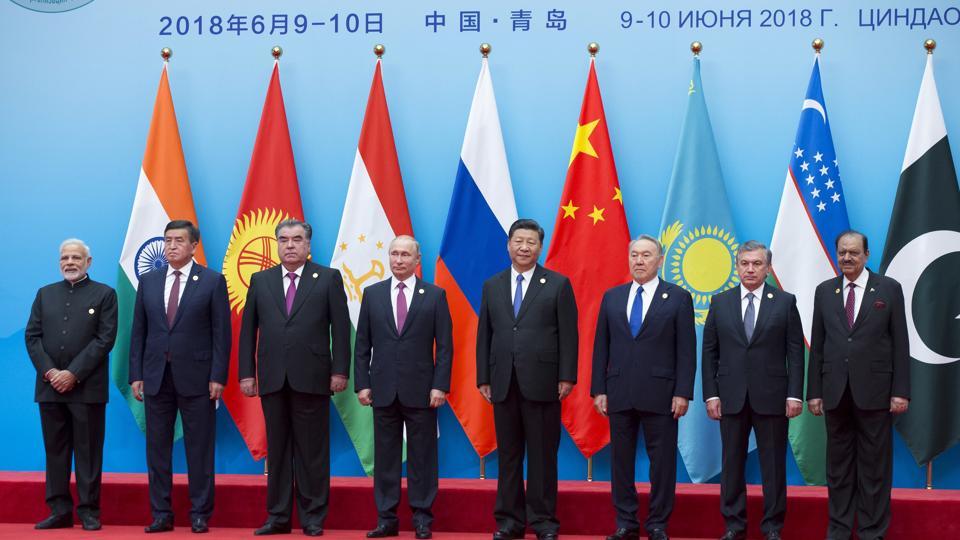
The 18th SCO summit, which formally began on Sunday, will explore ways to expand cooperation among the eight member countries in security, trade and investment and cultural exchanges, besides connectivity.
“Security cooperation has been a priority for the SCO. But due to the complexity of security ties between (new members) India and Pakistan, it will take some time for the SCO to adapt to a new format to promote security,” said Li Li, senior fellow at the Institute for International Relations in Tsinghua University.
The SCO currently has eight member countries representing around 42% of the world’s population and 20% of the global GDP.
In his maiden speech at the summit, Prime Minister Narendra Modi is likely highlight challenges facing the SCO, such as counter-terrorism, but also talk about boosting trade and investment in the region.
“So in near term, more focus will be put on economic and people-to-people ties. Moreover, as another important emerging economy, India along with China and Russia can make SCO as a platform for regional economic integration,” Li said.
Given the difficult ties between India and Pakistan, terrorism is not an issue that can be easily resolved, said Wang Jin from the Charhar Institute, a think-tank.
“Terrorism is a complicated problem related with not only economic and social development but also political and cultural histories,” Wang said, indicating that focusing on all-around development will be the SCO’s focus.
“As an important international power, India’s new inclusion into SCO will surely on the one hand help consolidate the regional cooperation and trust, while on the other hand facilitate the more in-depth cooperation among different regional states.”
“The SCO can broaden its geographical area, become more inclusive of diverse cultures, represent greater interests and better promote negotiations among the countries,” said Zhang Henglong, vice-director of the Shanghai-based Public Diplomacy Institute of the SCO.
“Any member state is a great contribution to cultural diversity. India as an SCO member will surely contribute to the development of the SCO,” he added.


