
 E-Paper



Shots fired at Pak drone near Punjab border. 11 Pak-made grenades seized
Border Security Force soldiers fired at a Pakistani drone spotted on the Indian side of the border in Punjab on Saturday night

 Prefer HTon Google


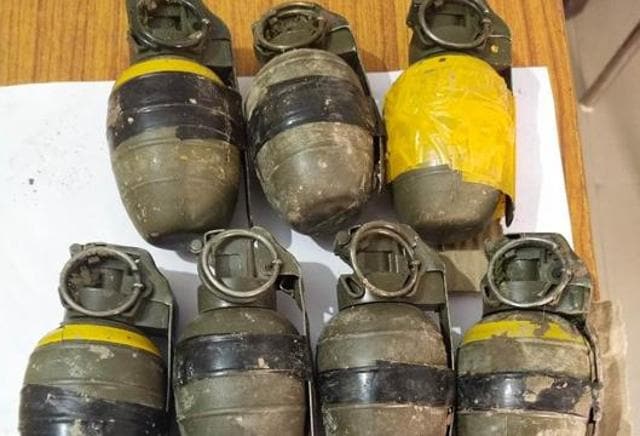
Security forces have seized 11 hand grenades suspected to have been dropped by a drone flying in from across the Pakistan border into Punjab’s Gurdaspur district, a senior police officer said on Monday. The grenades are suspected to have been made by an ordnance factory in Pakistan’s Rawalpindi.
The consignment of Arges Type HG-84 series grenades, packed in a plastic box, is the eight instance of seizure of firearms and grenades smuggled into the country for terrorists from across the border in the last 15 months, a senior Punjab Police officer said.
The Arges HG-84 is an anti-personnel fragmentation grenade designed to inflict massive damage against soft targets within its blast radius, spraying shrapnel out to a distance of 30 meters at speed. The Arges grenade, manufactured by an Austrian firm, have been used in major attacks in India – including the 2008 Mumbai strike, the 1993 Mumbai blasts and the 2001 Parliament attack. The Wah Cantonment Ordnance factory in Rawalpindi earlier had a franchise to manufacture the high-explosive grenades.
The seizure comes weeks after an alert by intelligence agencies that cautioned security personnel about Pakistan’s Inter Services Intelligence’s moves to acquire upgraded versions of drones from China that can carry large quantities of firearms in every sortie.
The first instance of ISI-backed terror groups using drones to smuggle weapons in Punjab was on 19 August 2019 when security personnel spotted a large quadcopter dropping a weapon consignment of 10 kg including AK 47 rifles, MP9 rifle, pistols and fake Indian currency. This drone, however, ran out of battery on its way back and fell within Indian territory.
Counter-terror officials in Delhi said Pakistani terror groups and the ISI could have been using drones for arms trafficking for much longer.
“Lately, the drones have been getting bigger and more powerful, triggering concerns that these could not only be used to carry larger quantities of arms but also rain explosives at security camps in border areas,” an official said.
This improves the capacity of the ISI to supply weapons for Khalistani terror groups as well as its groups in Jammu and Kashmir.
Police teams found the packet with 11 grenades during a search on Sunday morning.
Border Security Force personnel at the Chakri border outpost in Gurdaspur sector had spotted a drone entering Indian territory shortly before Saturday midnight. The soldiers, and later Punjab police officers also, fired at the drone but couldn’t bring it down. They also alerted Punjab Police who also tried to bring down the drone.
The packet was found near Dhussi bandh in Salach village of Gurdaspur’s Dorangla area. A senior police officer said the box of grenades had been attached with a wooden frame and lowered from the drone to the ground from a nylon rope.


